Toronto Western Research Institute, University Health Network, Departments of Ophthalmology and Visual Science, and Laboratory Medicine and Pathobiology, University of Toronto, Toronto, Ontario, Canada.
Oncogene. 2012 Nov 29;31(48):5019-28. doi: 10.1038/onc.2011.654. Epub 2012 Jan 30.
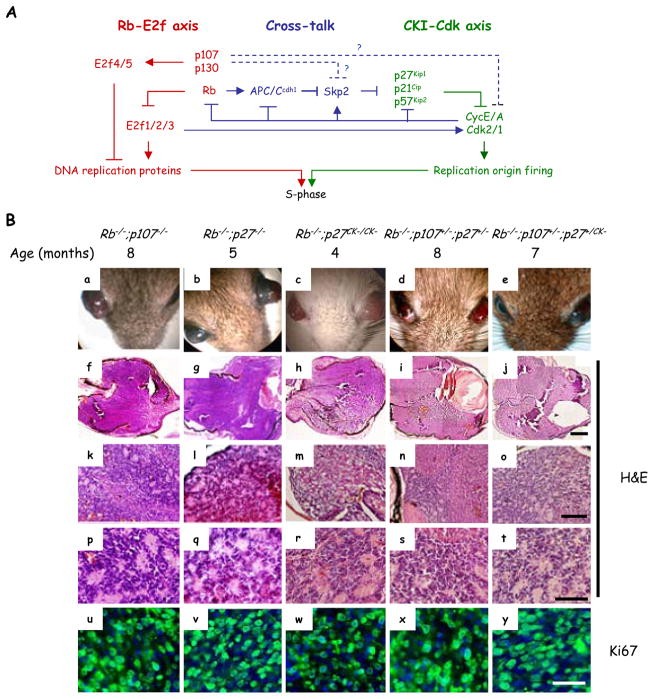
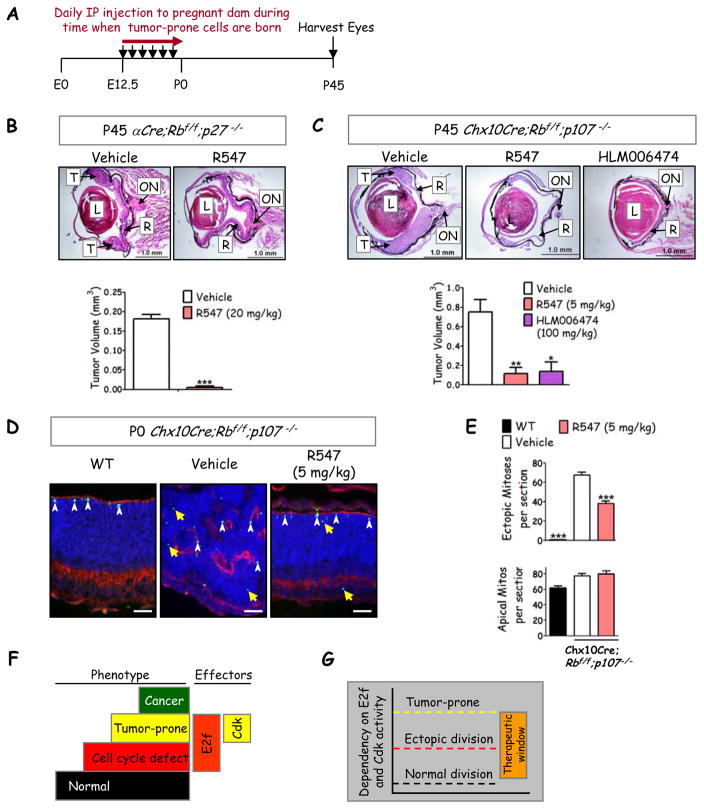
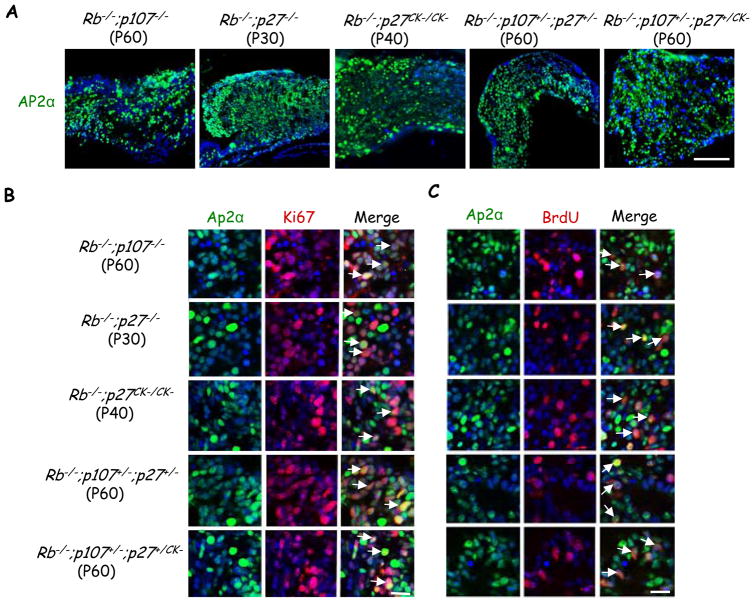
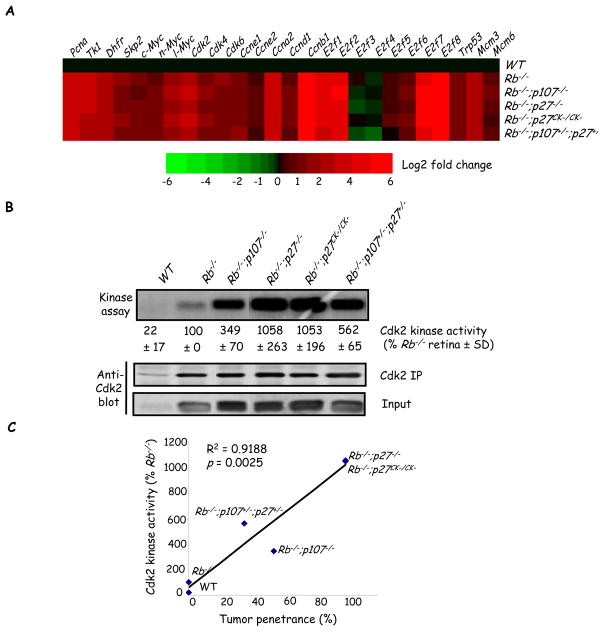
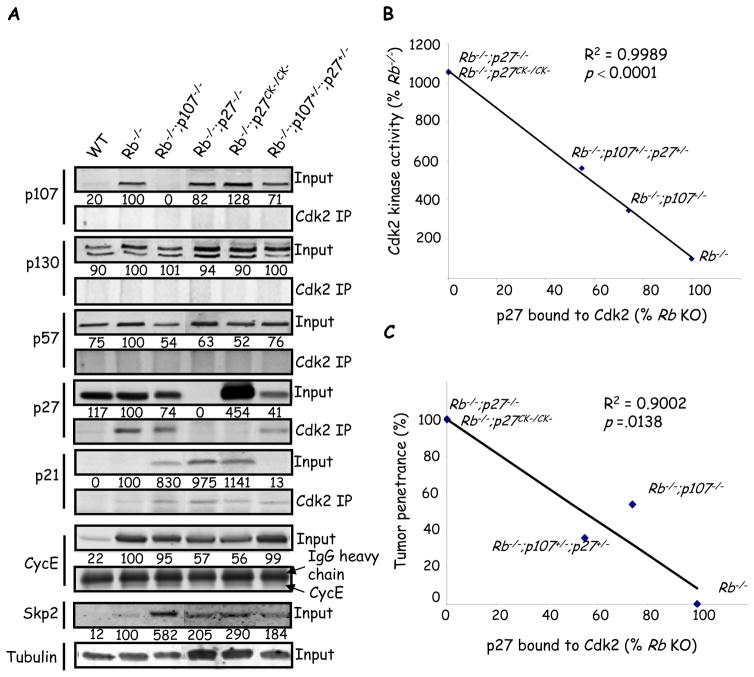
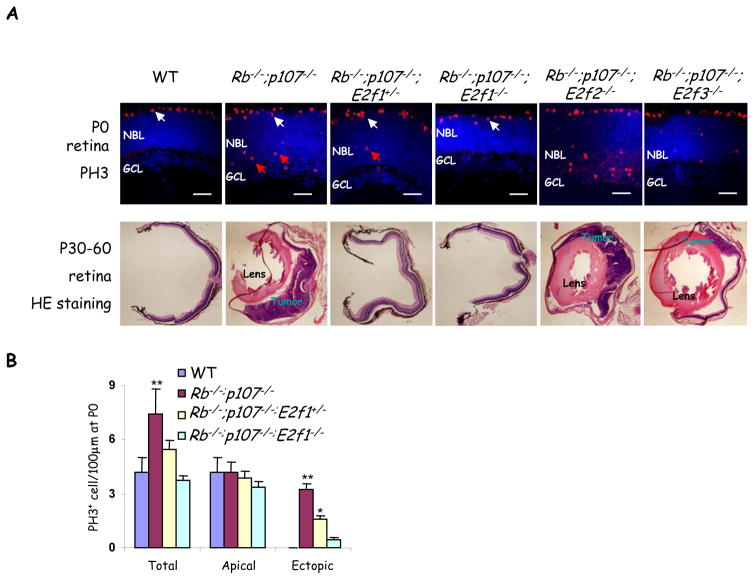
RB(+/-) individuals develop retinoblastoma and, subsequently, many other tumors. The Rb relatives p107 and p130 protect the tumor-resistant Rb(-/-) mouse retina. Determining the mechanism underlying this tumor suppressor function may expose novel strategies to block Rb pathway cancers. p107/p130 are best known as E2f inhibitors, but here we implicate E2f-independent Cdk2 inhibition as the critical p107 tumor suppressor function in vivo. Like p107 loss, deleting p27 or inactivating its Cdk inhibitor (CKI) function (p27(CK-)) cooperated with Rb loss to induce retinoblastoma. Genetically, p107 behaved like a CKI because inactivating Rb and one allele each of p27 and p107 was tumorigenic. Although Rb loss induced canonical E2f targets, unexpectedly p107 loss did not further induce these genes, but instead caused post-transcriptional Skp2 induction and Cdk2 activation. Strikingly, Cdk2 activity correlated with tumor penetrance across all the retinoblastoma models. Therefore, Rb restrains E2f, but p107 inhibits cross talk to Cdk. While removing either E2f2 or E2f3 genes had little effect, removing only one E2f1 allele blocked tumorigenesis. More importantly, exposing retinoblastoma-prone fetuses to small molecule inhibitors of E2f (HLM006474) or Cdk (R547) for merely 1 week dramatically inhibited subsequent tumorigenesis in adult mice. Protection was achieved without disrupting normal proliferation. Thus, exquisite sensitivity of the cell-of-origin to E2f and Cdk activity can be exploited to prevent Rb pathway-induced cancer in vivo without perturbing normal cell division. These data suggest that E2f inhibitors, never before tested in vivo, or CKIs, largely disappointing as therapeutics, may be effective preventive agents.
RB(+/-)个体可发展成视网膜母细胞瘤,随后还可能发展出许多其他肿瘤。Rb 相关蛋白 p107 和 p130 可保护肿瘤抗性的 Rb(-/-)鼠视网膜。确定这种肿瘤抑制功能的机制可能会揭示出阻止 Rb 通路癌症的新策略。p107/p130 最常被认为是 E2f 抑制剂,但在这里我们表明 E2f 非依赖性 Cdk2 抑制是体内 p107 肿瘤抑制功能的关键。与 p107 缺失一样,删除 p27 或使其 Cdk 抑制剂(CKI)功能失活(p27(CK-))与 Rb 缺失协同诱导视网膜母细胞瘤。从遗传学上讲,p107 表现为 CKI,因为失活 Rb 以及 p27 和 p107 的一个等位基因即可致瘤。尽管 Rb 缺失诱导了典型的 E2f 靶基因,但出人意料的是,p107 缺失并没有进一步诱导这些基因,而是导致 Skp2 诱导和 Cdk2 激活的转录后。引人注目的是,Cdk2 活性与所有视网膜母细胞瘤模型的肿瘤穿透性相关。因此,Rb 抑制 E2f,但 p107 抑制与 Cdk 的交叉对话。虽然去除 E2f2 或 E2f3 基因几乎没有影响,但仅去除一个 E2f1 等位基因即可阻止肿瘤发生。更重要的是,仅用 E2f(HLM006474)或 Cdk(R547)的小分子抑制剂处理易患视网膜母细胞瘤的胎儿 1 周,就可显著抑制成年小鼠随后的肿瘤发生。这种保护作用是在不破坏正常增殖的情况下实现的。因此,可以利用细胞起源对 E2f 和 Cdk 活性的高度敏感性,在体内预防 Rb 通路诱导的癌症,而不会干扰正常细胞分裂。这些数据表明,E2f 抑制剂(以前从未在体内进行过测试)或 CKIs(作为治疗剂令人失望)可能是有效的预防剂。