Gabirot Marianne, López Pilar, Martín José
Départamento de Ecología Evolutiva, Museo Nacional de Ciencias Naturales, CSIC, José Gutiérrez Abascal 2, 28006 Madrid, Spain.
Int J Evol Biol. 2012;2012:698520. doi: 10.1155/2012/698520. Epub 2012 Jan 11.
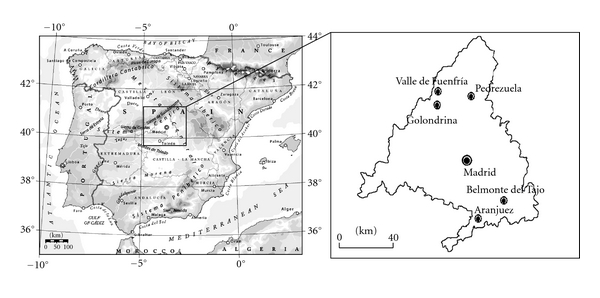
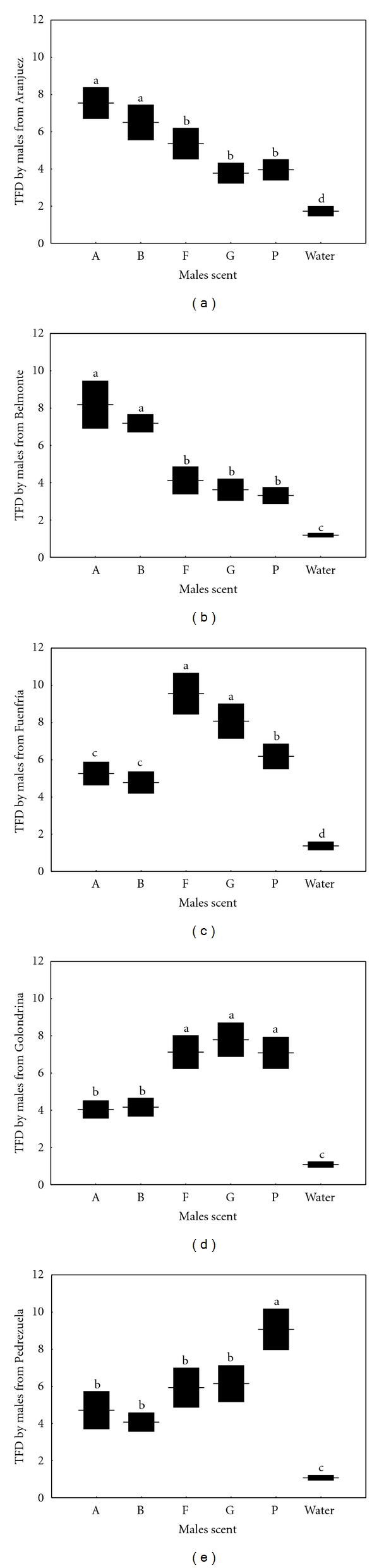
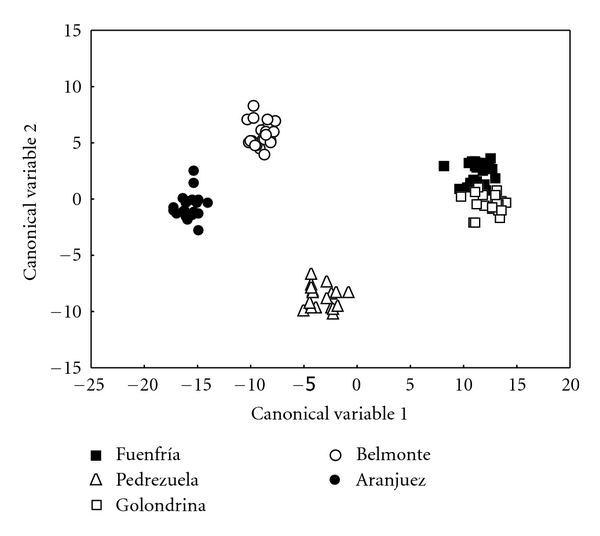
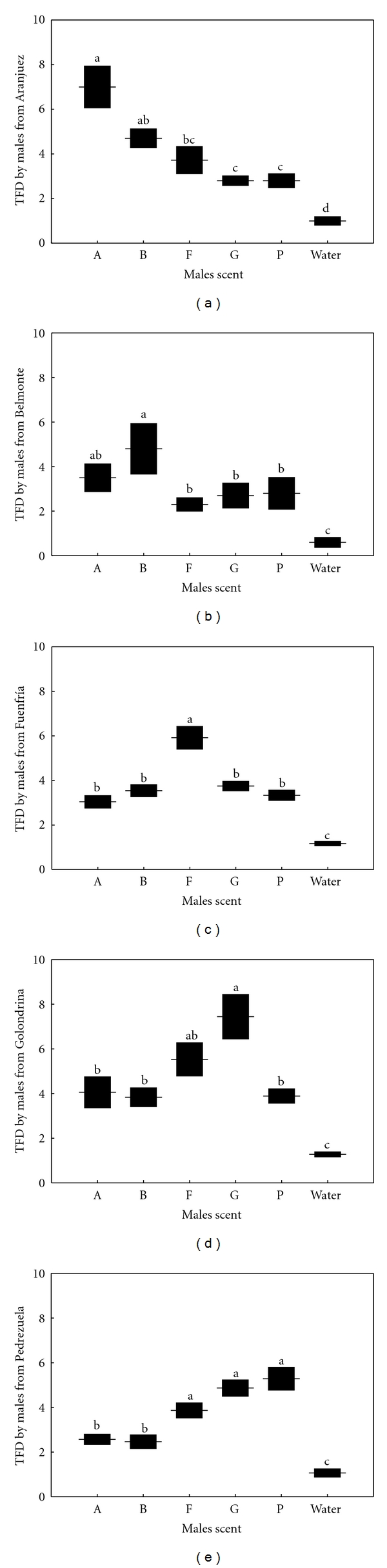
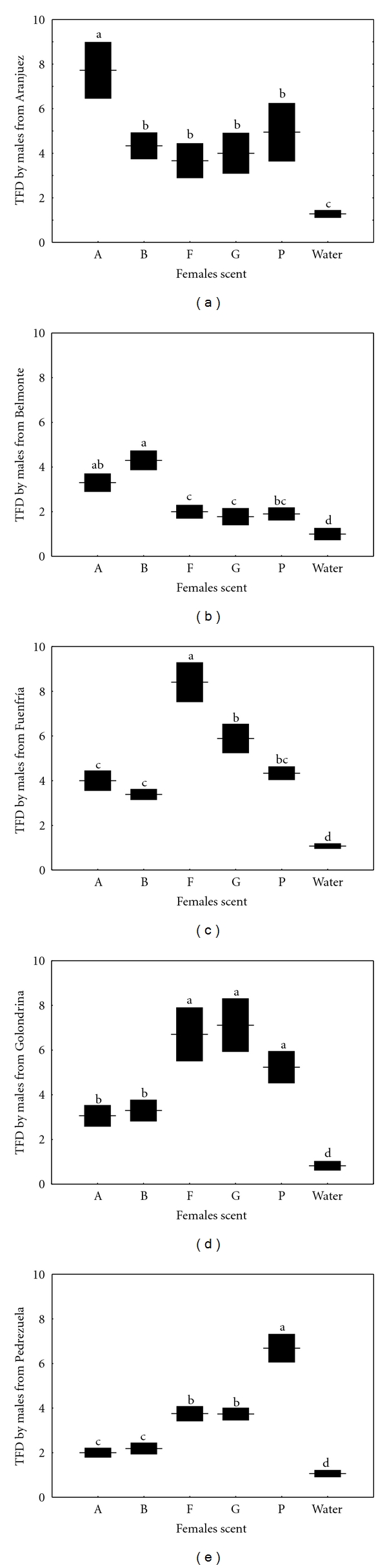
Interpopulational variation in sexual signals may lead to premating reproductive isolation and speciation. Genetic and morphological studies suggest that the Iberian wall lizard, Podarcis hispanica, forms part of a "species complex" with several cryptic species. We explored the role of chemical sexual signals in interpopulational recognition between five distinct populations of Iberian wall lizards in Central Spain. Results showed that these populations differed in morphology and in composition and proportion of chemical compounds in femoral gland secretions of males. Tongue-flick experiments indicated that male and female lizards discriminated and were more interested in scents of lizards from their own area (i.e., Northern versus Southern populations), but did not discriminate between all populations. Moreover, only males from the populations that are geographically located more far away preferred scent of females from their own population. These data suggest that, at least between some populations, there may be reproductive isolation mediated by chemical signals and cryptic speciation.
性信号的种群间差异可能导致交配前的生殖隔离和物种形成。遗传学和形态学研究表明,伊比利亚壁蜥(Podarcis hispanica)是一个包含多个隐存种的“物种复合体”的一部分。我们探究了化学性信号在西班牙中部五个不同种群的伊比利亚壁蜥种群间识别中的作用。结果表明,这些种群在形态以及雄性股腺分泌物中化合物的组成和比例上存在差异。舔舌实验表明,雄性和雌性蜥蜴能够区分并对来自其自身区域(即北部种群与南部种群)的蜥蜴气味更感兴趣,但并非对所有种群都能区分。此外,只有地理位置相距较远的种群中的雄性更喜欢来自其自身种群的雌性的气味。这些数据表明,至少在某些种群之间,可能存在由化学信号介导的生殖隔离和隐存物种形成。