Department of Ophthalmology, Margaret M. Dyson Vision Research Institute, Weill Medical College of Cornell University, New York, NY 10065, USA.
Biol Cell. 2012 Jun;104(6):326-41. doi: 10.1111/boc.201100076. Epub 2012 Mar 5.
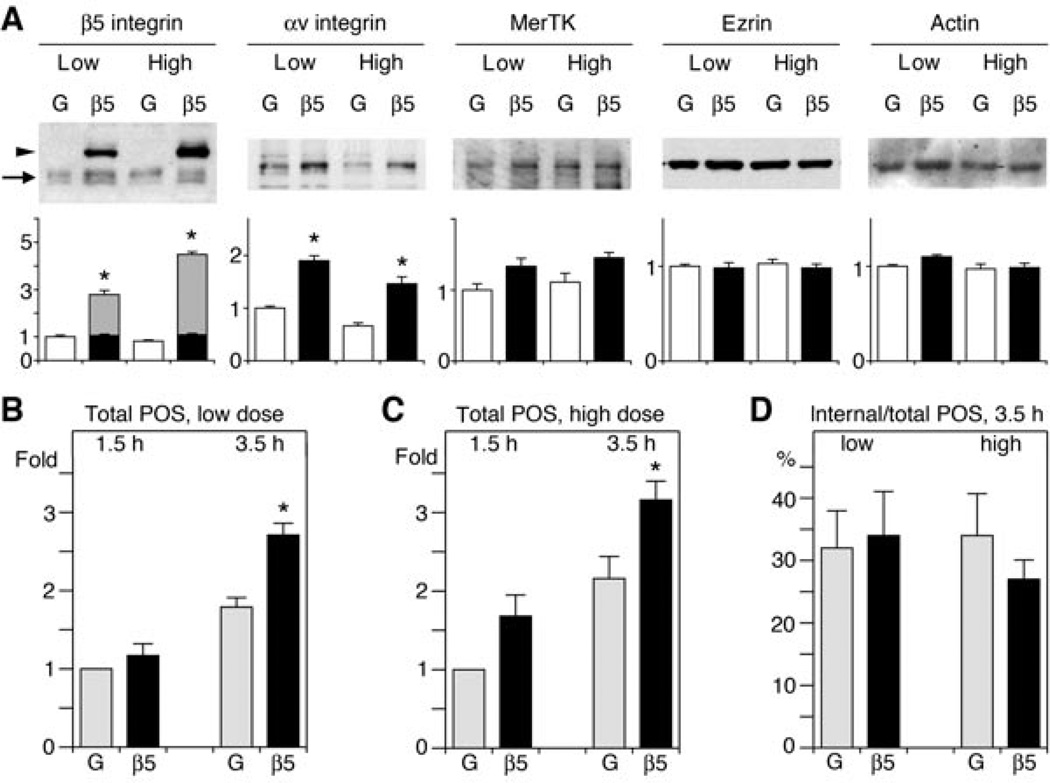
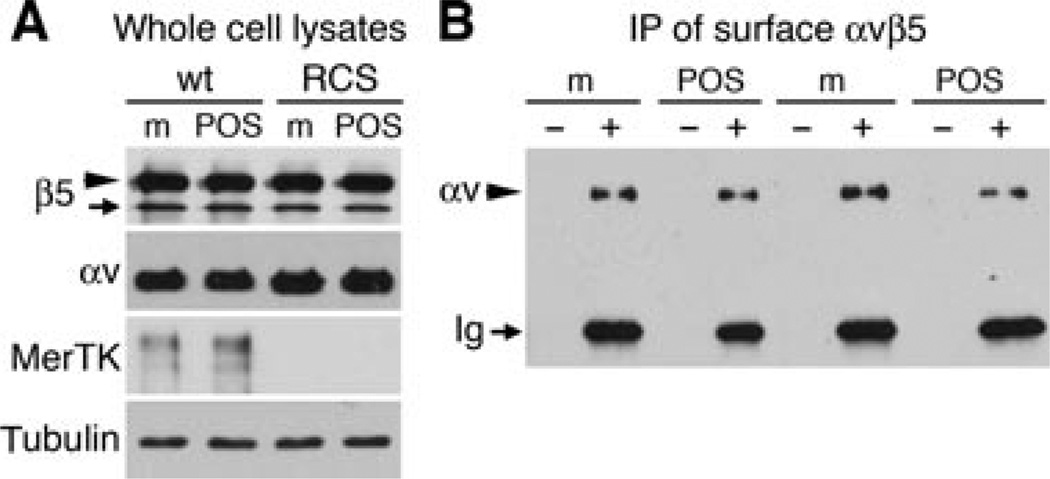
αvβ5 integrin and Mer tyrosine kinase (MerTK) receptors reside at the apical surface of the retinal pigment epithelium (RPE) in the eye to promote the diurnal, synchronised phagocytosis of shed photoreceptor outer segment fragments (POS) that is critical for vision. Phagocytosis assays studying RPE cells in culture have defined roles for αvβ5 in POS surface binding and for MerTK in engulfment of bound POS. Both receptors have thus far only been studied separately. It is therefore unknown if αvβ5 integrin activity in POS binding is independent of the engulfment function of RPE cells. This study investigates how increasing αvβ5 receptor levels affect POS binding and internalisation by wild-type (wt), αvβ5- or MerTK-deficient RPE.
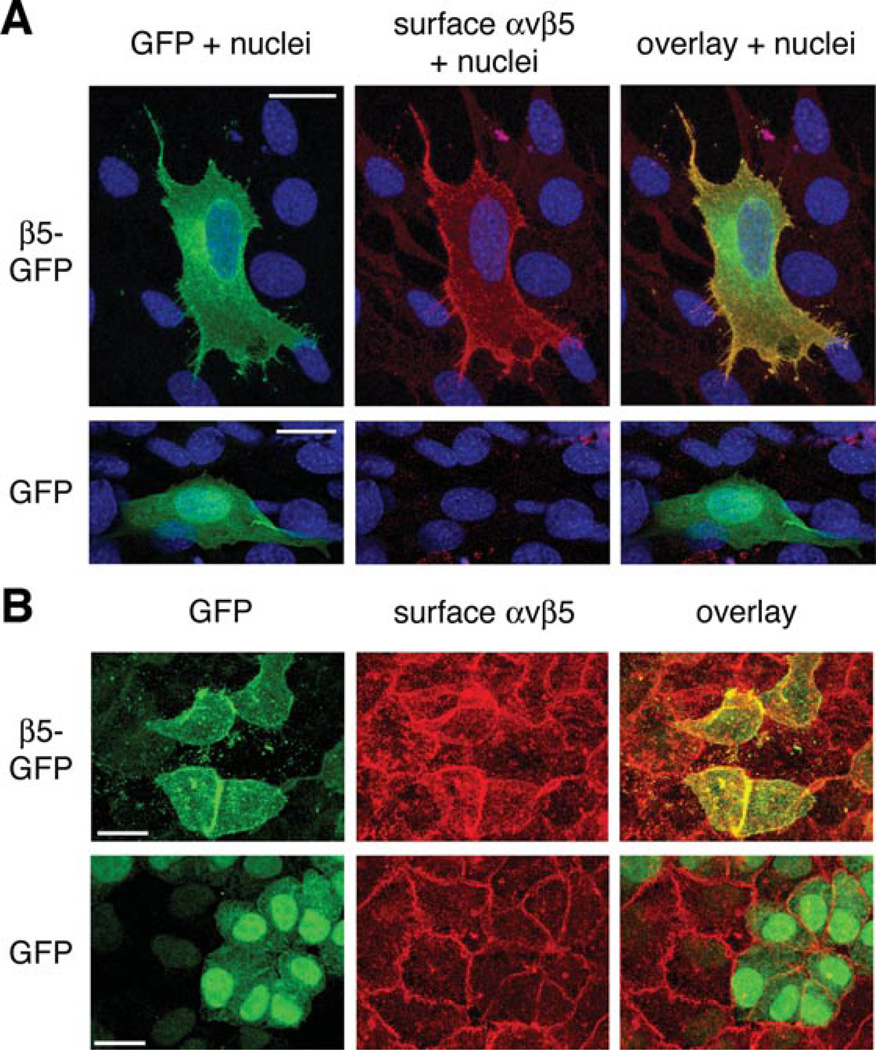
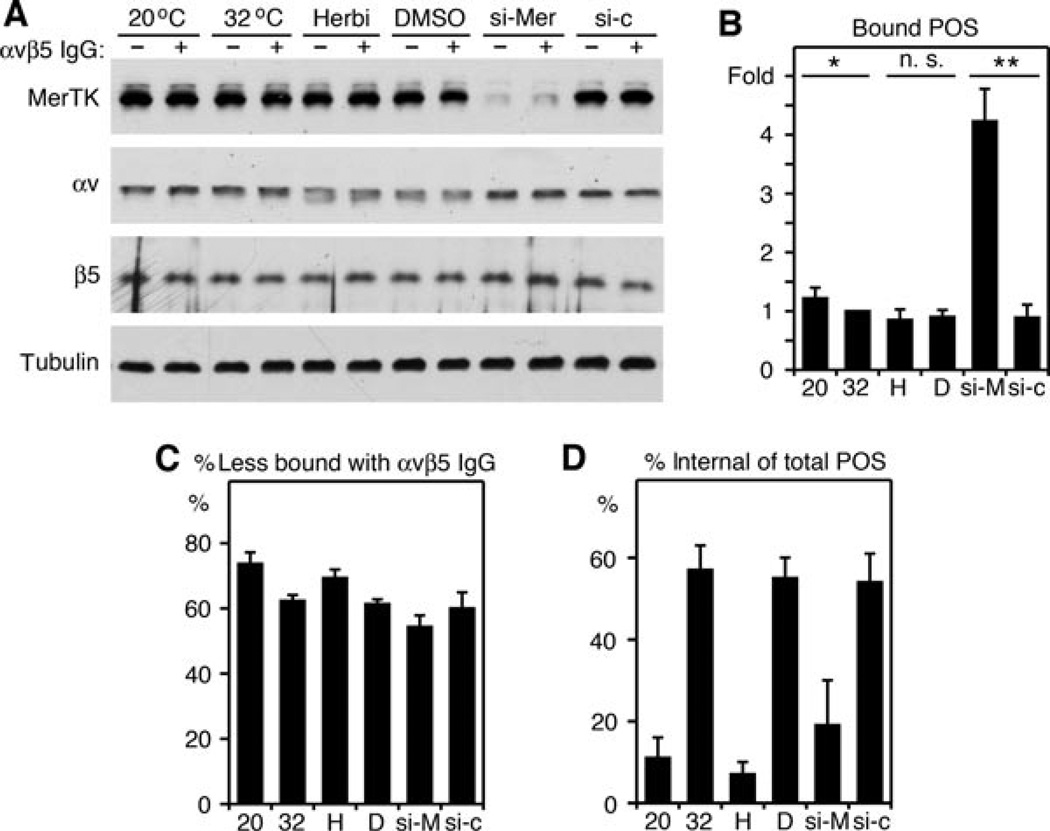
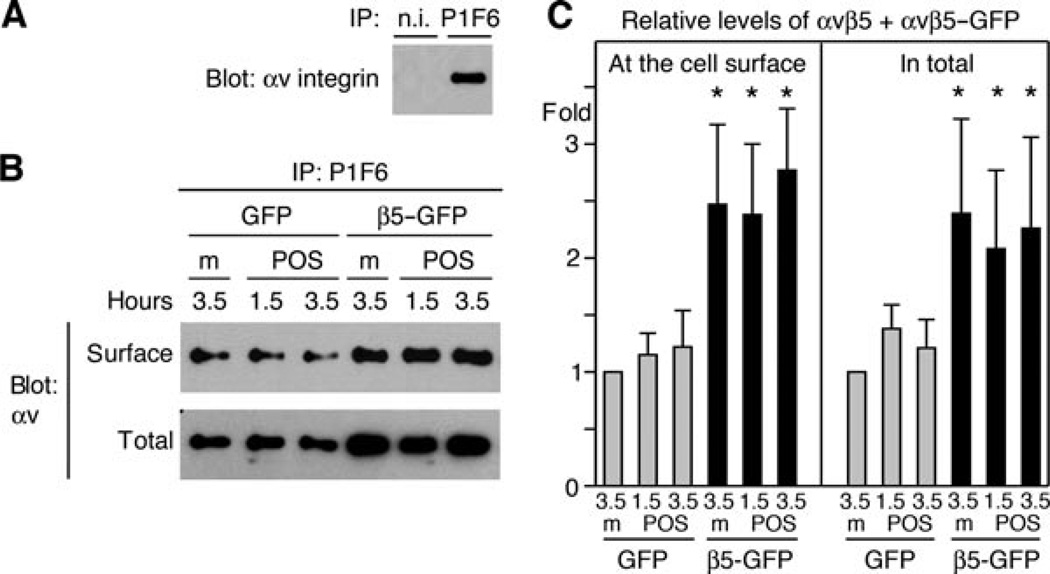
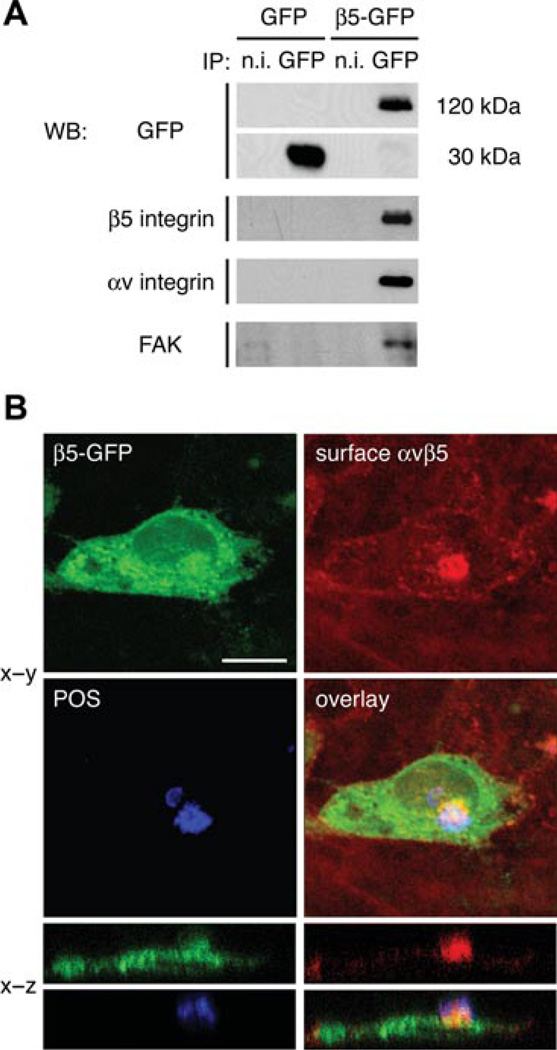
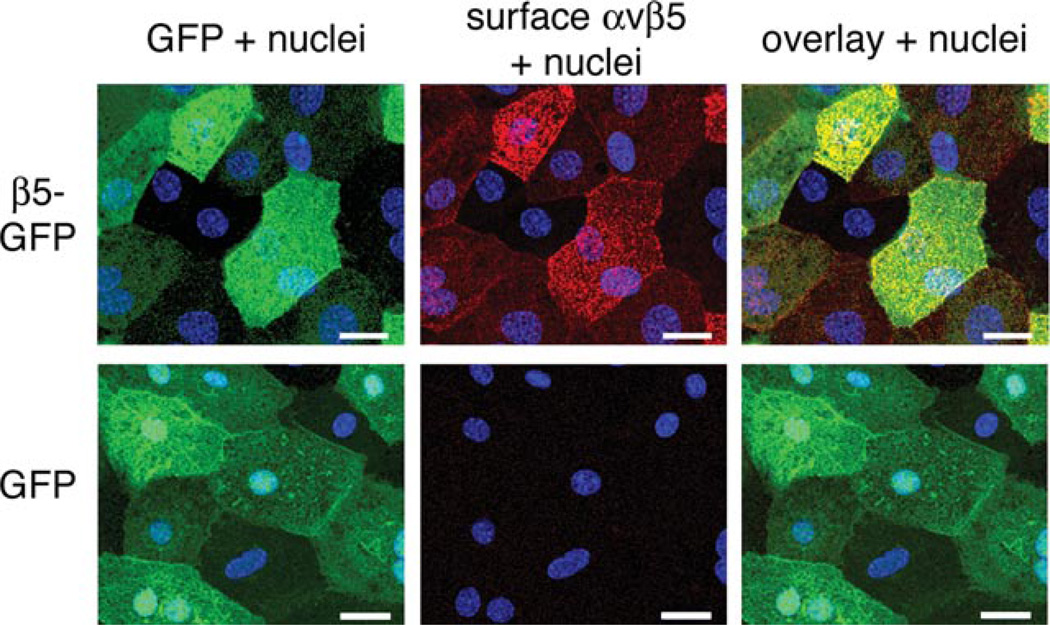
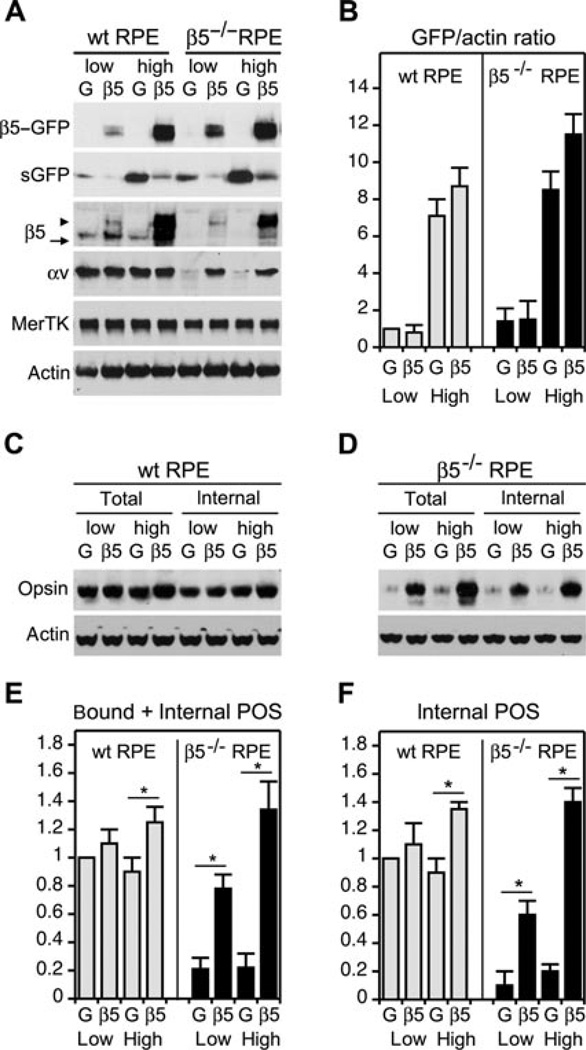
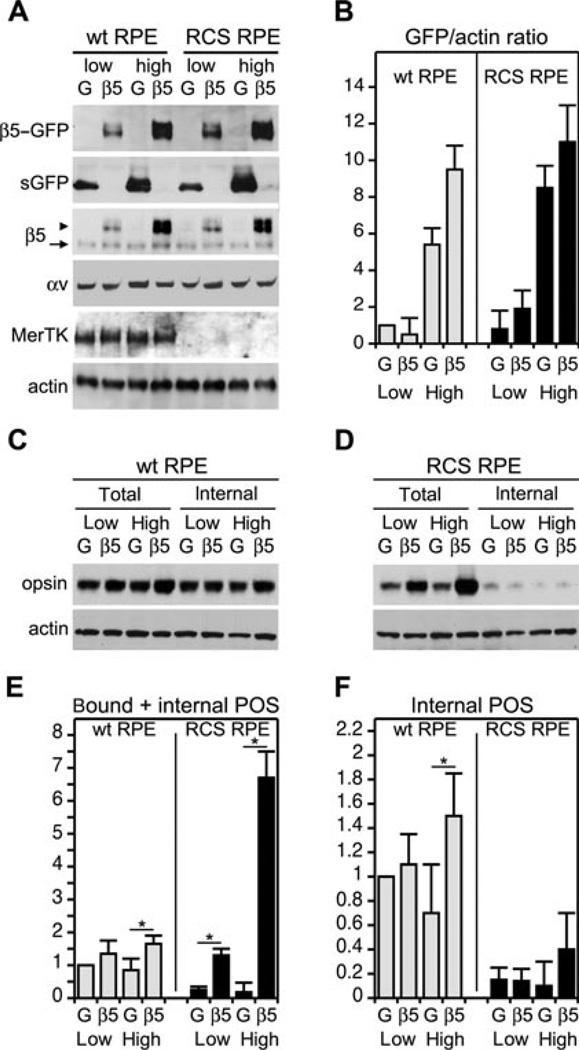
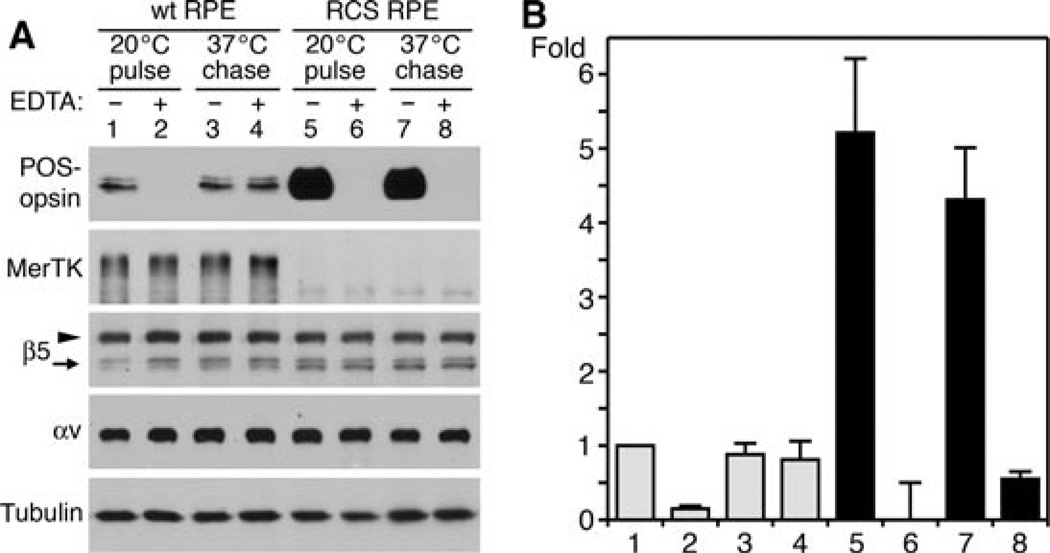
β5 integrin-green fluorescent protein (β5-GFP) fusion proteins formed heterodimeric receptors with endogenous αv integrin subunits at the apical surface of mouse or rat RPE cells that co-immunoprecipitated focal adhesion kinase and redistributed with bound POS such as endogenous αvβ5 receptors. In β5(-/-) RPE cells, de novo formation of αvβ5-GFP receptors restored POS binding and internalisation up to, but not, above wt POS uptake levels. In wt RPE cells, increasing levels of αvβ5 surface receptors by over-expressing β5-GFP only moderately stimulated POS binding, even if POS internalisation was inhibited pharmacologically or by lowering incubation temperatures. In contrast, the same increase in αvβ5 receptor levels dramatically enhanced POS binding of RPE cells lacking MerTK. Furthermore, decreasing MerTK expression by RNA interference increased POS binding to endogenous αvβ5 receptors of wt RPE cells.
Expressing β5-GFP is sufficient to reverse phagocytic deficiencies of RPE cells derived from β5(-/-) mice, indicating that these cells do not irreversibly lose other components of the phagocytic machinery. RPE cells expressing the engulfment receptor MerTK control POS binding by limiting activity of endogenous αvβ5 and αvβ5-GFP integrins, although they reside at the apical, phagocytic surface. In contrast, RPE cells permanently or transiently losing MerTK expression lack this regulatory mechanism and bind excess POS via surface αvβ5 receptors. Taken together, these data reveal a novel feedback mechanism that restricts binding of POS to surface αvβ5 integrin receptors in RPE cells.
αvβ5 整联蛋白和 Mer 酪氨酸激酶(MerTK)受体位于眼部视网膜色素上皮(RPE)的顶表面,以促进 shed 光感受器外节片段(POS)的昼夜同步吞噬,这对于视力至关重要。在培养的 RPE 细胞中进行的吞噬作用研究确定了 αvβ5 在 POS 表面结合中的作用以及 MerTK 在结合的 POS 吞噬中的作用。迄今为止,这两个受体仅分别进行了研究。因此,尚不清楚 αvβ5 整联蛋白在 POS 结合中的活性是否独立于 RPE 细胞的吞噬功能。本研究调查了增加 αvβ5 受体水平如何影响野生型(wt)、αvβ5-或 MerTK 缺陷型 RPE 对 POS 的结合和内化。
β5 整联蛋白-绿色荧光蛋白(β5-GFP)融合蛋白在小鼠或大鼠 RPE 细胞的顶表面与内源性 αv 整联蛋白亚基形成异二聚体受体,与焦点黏附激酶共免疫沉淀,并与结合的 POS 如内源性 αvβ5 受体一起重分布。在β5(-/-)RPE 细胞中,从头形成 αvβ5-GFP 受体可将 POS 结合和内化恢复到但不超过 wt POS 摄取水平。在 wt RPE 细胞中,通过过表达β5-GFP 增加 αvβ5 表面受体的水平仅适度刺激 POS 结合,即使通过药理学或降低孵育温度抑制 POS 内化也是如此。相比之下,相同的 αvβ5 受体水平增加可显著增强缺乏 MerTK 的 RPE 细胞的 POS 结合。此外,通过 RNA 干扰降低 MerTK 表达可增加 wt RPE 细胞中内源性 αvβ5 受体的 POS 结合。
表达β5-GFP 足以逆转源自β5(-/-)小鼠的 RPE 细胞的吞噬缺陷,表明这些细胞不会不可逆地失去吞噬机制的其他成分。表达吞噬受体 MerTK 的 RPE 细胞通过限制内源性αvβ5 和αvβ5-GFP 整联蛋白的活性来控制 POS 的结合,尽管它们位于顶表面的吞噬表面。相比之下,永久性或暂时性失去 MerTK 表达的 RPE 细胞缺乏这种调节机制,并且通过表面αvβ5 受体结合过量的 POS。总之,这些数据揭示了一种新的反馈机制,该机制限制了 RPE 细胞中 POS 与表面αvβ5 整联蛋白受体的结合。