Putkinen Anuliina, Larmola Tuula, Tuomivirta Tero, Siljanen Henri M P, Bodrossy Levente, Tuittila Eeva-Stiina, Fritze Hannu
Finnish Forest Research Institute, Southern Finland Regional Unit Vantaa, Finland.
Front Microbiol. 2012 Jan 23;3:15. doi: 10.3389/fmicb.2012.00015. eCollection 2012.
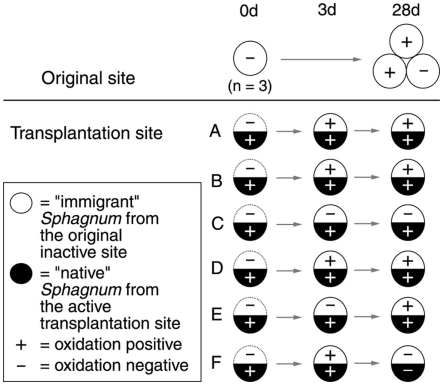
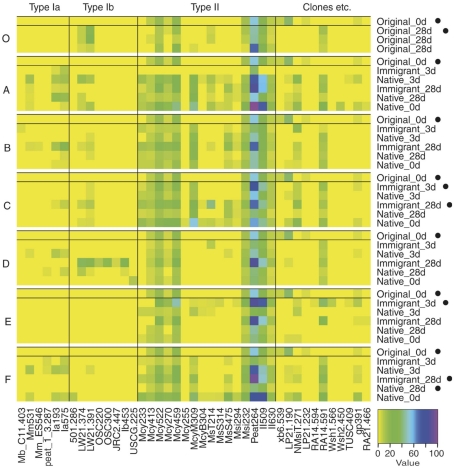
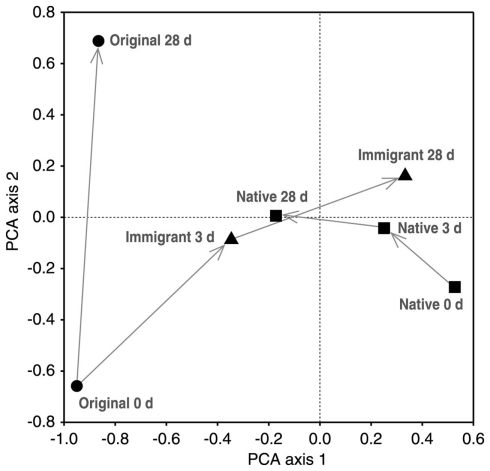
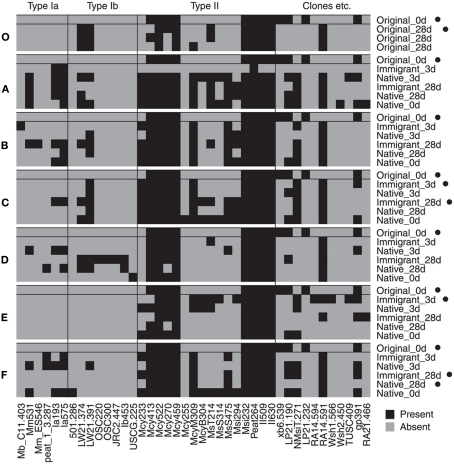
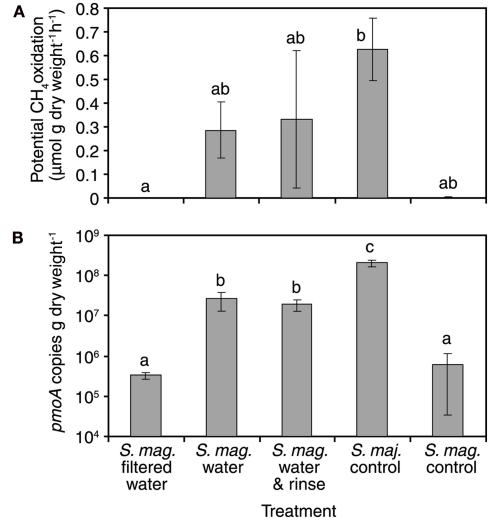
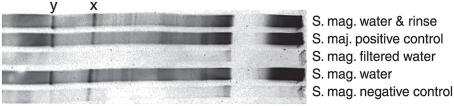
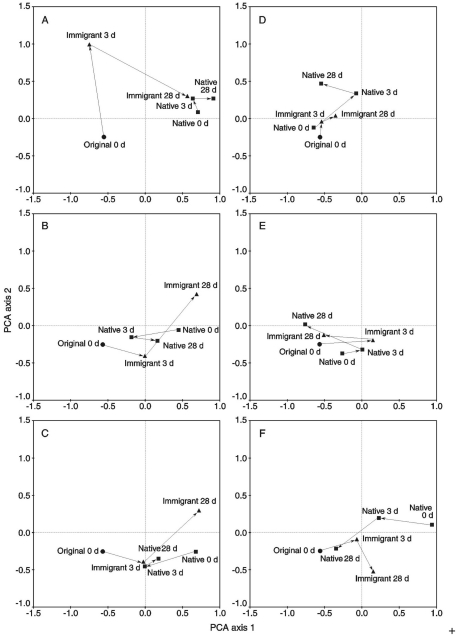
It is known that Sphagnum associated methanotrophy (SAM) changes in relation to the peatland water table (WT) level. After drought, rising WT is able to reactivate SAM. We aimed to reveal whether this reactivation is due to activation of indigenous methane (CH(4)) oxidizing bacteria (MOB) already present in the mosses or to MOB present in water. This was tested through two approaches: in a transplantation experiment, Sphagna lacking SAM activity were transplanted into flark water next to Sphagna oxidizing CH(4). Already after 3 days, most of the transplants showed CH(4) oxidation activity. Microarray showed that the MOB community compositions of the transplants and the original active mosses had become more similar within 28 days thus indicating MOB movement through water between mosses. Methylocystis-related type II MOB dominated the community. In a following experiment, SAM inactive mosses were bathed overnight in non-sterile and sterile-filtered SAM active site flark water. Only mosses bathed with non-sterile flark water became SAM active, which was also shown by the pmoA copy number increase of over 60 times. Thus, it was evident that MOB present in the water can colonize Sphagnum mosses. This colonization could act as a resilience mechanism for peatland CH(4) dynamics by allowing the re-emergence of CH(4) oxidation activity in Sphagnum.
已知泥炭藓相关的甲烷氧化作用(SAM)会随着泥炭地地下水位(WT)的变化而改变。干旱过后,地下水位上升能够重新激活SAM。我们旨在揭示这种重新激活是由于激活了苔藓中原本就存在的产甲烷(CH₄)氧化细菌(MOB),还是由于水中存在的MOB。这通过两种方法进行了测试:在一项移植实验中,将缺乏SAM活性的泥炭藓移植到氧化CH₄的泥炭藓旁边的浅水池水中。仅3天后,大多数移植的泥炭藓就显示出CH₄氧化活性。微阵列分析表明,移植的泥炭藓和原来具有活性的苔藓的MOB群落组成在28天内变得更加相似,这表明MOB通过水在苔藓之间移动。与甲基孢囊菌相关的II型MOB在群落中占主导地位。在接下来的实验中,将无SAM活性的苔藓在未灭菌和经过无菌过滤的具有SAM活性位点的浅水池水中浸泡过夜。只有用未灭菌的浅水池水浸泡的苔藓变得具有SAM活性,pmoA拷贝数增加超过60倍也证明了这一点。因此,很明显水中存在的MOB可以在泥炭藓中定殖。这种定殖可以通过使泥炭藓中重新出现CH₄氧化活性,作为泥炭地CH₄动态变化的一种恢复机制。