Department of Otorhinolaryngology, Head and Neck Surgery, University of Rostock Hospital, Rostock, Germany.
PLoS One. 2012;7(1):e30150. doi: 10.1371/journal.pone.0030150. Epub 2012 Jan 23.
High hydrostatic pressure (HHP) treatment can eliminate cholesteatoma cells from explanted human ossicles prior to re-insertion. We analyzed the effects of HHP treatment on the microbial flora on ossicles and on the planktonic and biofilm states of selected isolates.
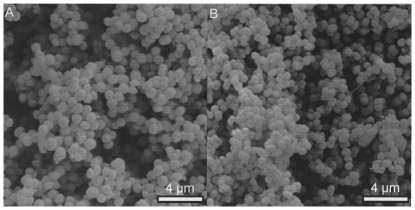
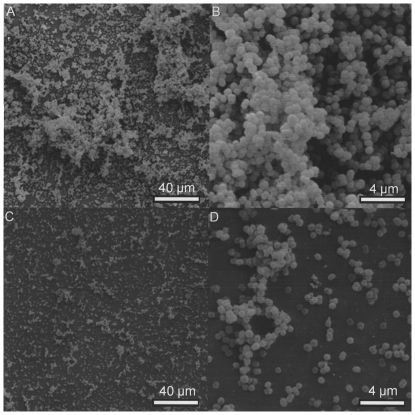
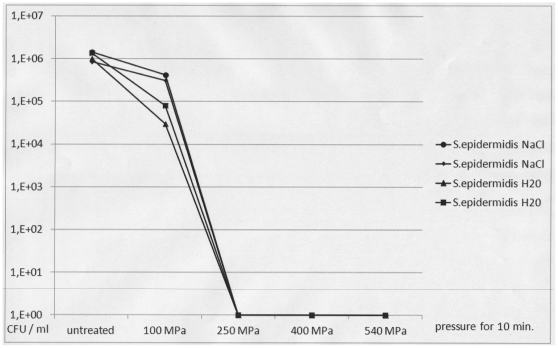
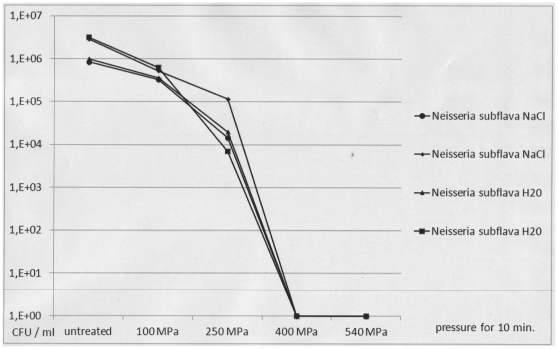
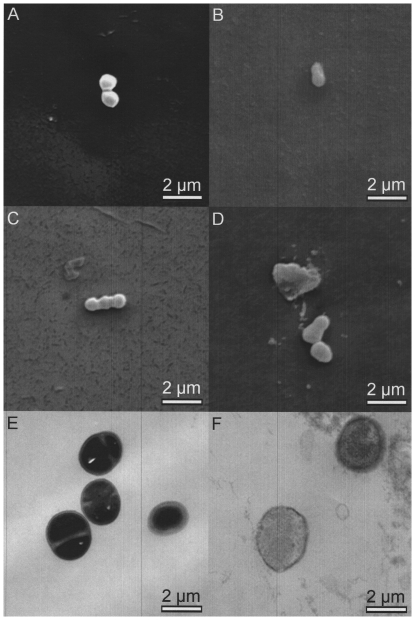
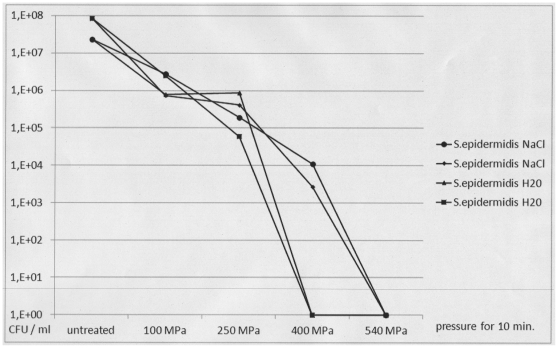
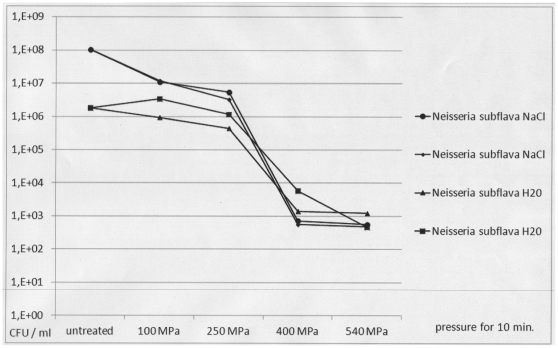
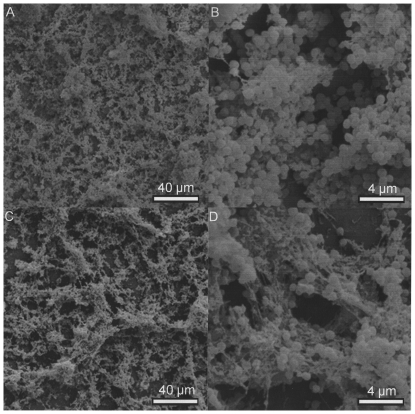
Twenty-six ossicles were explanted from cholesteatoma patients. Five ossicles were directly analyzed for microbial growth without further treatment. Fifteen ossicles were cut into two pieces. One piece was exposed to HHP of 350 MPa for 10 minutes. Both the treated and untreated (control) pieces were then assessed semi-quantitatively. Three ossicles were cut into two pieces and exposed to identical pressure conditions with or without the addition of one of two different combinations of antibiotics to the medium. Differential effects of 10-minute in vitro exposure of planktonic and biofilm bacteria to pressures of 100 MPa, 250 MPa, 400 MPa and 540 MPa in isotonic and hypotonic media were analyzed using two patient isolates of Staphylococcus epidermidis and Neisseria subflava. Bacterial cell inactivation and biofilm destruction were assessed by colony counting and electron microscopy.
A variety of microorganisms were isolated from the ossicles. Irrespective of the medium, HHP treatment at 350 MPa for 10 minutes led to satisfying but incomplete inactivation especially of gram-negative bacteria. The addition of antibiotics increased the efficacy of elimination. A comparison of HHP treatment of planktonic and biofilm cells showed that the effects of HPP were reduced by about one decadic logarithmic unit when HPP was applied to biofilms. High hydrostatic pressure conditions that are suitable to inactivate cholesteatoma cells fail to completely sterilize ossicles even if antibiotics are added. As a result of the reduced microbial load and the viability loss of surviving bacteria, however, there is a lower risk of re-infection after re-insertion.
高压处理(HHP)可以在重新植入之前消除植入人体听小骨的胆脂瘤细胞。我们分析了 HHP 处理对听小骨上微生物菌群的影响,以及对选定分离株浮游和生物膜状态的影响。
从胆脂瘤患者中取出 26 块听小骨。5 块听小骨未经进一步处理直接进行微生物生长分析。15 块听小骨切成两块。一块暴露于 350 MPa 的 HHP 中 10 分钟。然后对处理过的和未处理的(对照)块进行半定量评估。三块听小骨切成两块,在相同的压力条件下,或在培养基中加入两种不同抗生素组合之一的情况下,分别进行处理和未处理。使用两种表皮葡萄球菌和副流感奈瑟菌的患者分离株,分析了浮游和生物膜细菌在等渗和低渗介质中分别暴露于 100 MPa、250 MPa、400 MPa 和 540 MPa 压力 10 分钟的体外效果。通过菌落计数和电子显微镜评估细菌细胞失活和生物膜破坏。
从听小骨中分离出多种微生物。无论培养基如何,350 MPa 的 HHP 处理 10 分钟都能令人满意地但不完全地灭活革兰氏阴性菌,特别是革兰氏阴性菌。添加抗生素可提高消除效果。浮游和生物膜细胞的 HHP 处理比较表明,当 HPP 应用于生物膜时,HPP 的效果降低了一个对数单位左右。即使添加抗生素,适用于灭活胆脂瘤细胞的高压条件也不能完全使听小骨无菌。然而,由于微生物负荷减少和存活细菌的活力丧失,重新植入后再次感染的风险较低。