Department of Obstetrics and Gynecology, Peking University Third Hospital, Beijing, China.
PLoS One. 2012;7(1):e30649. doi: 10.1371/journal.pone.0030649. Epub 2012 Jan 24.
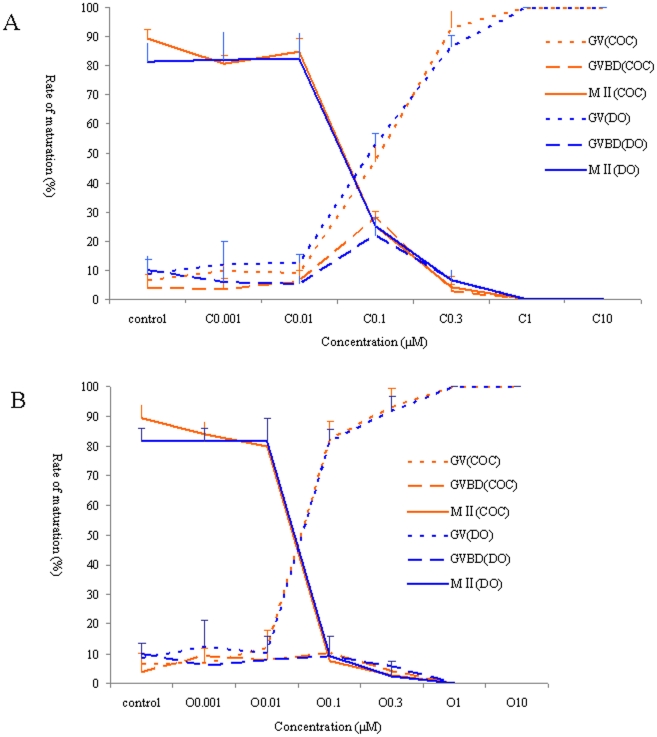
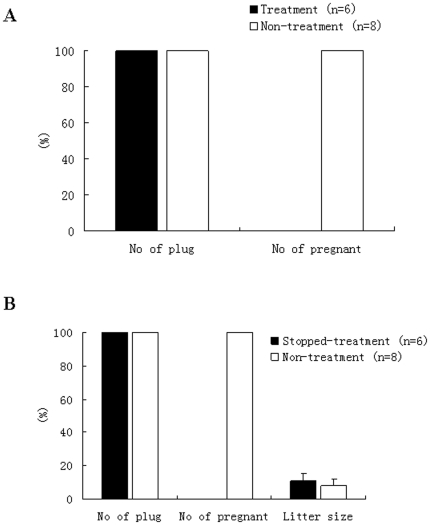
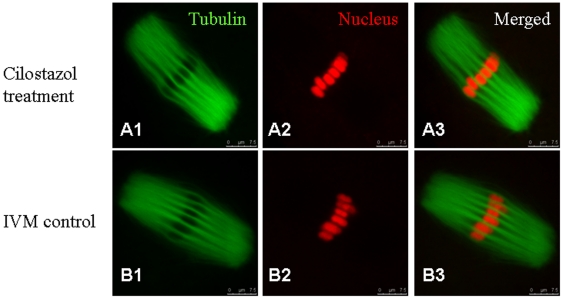
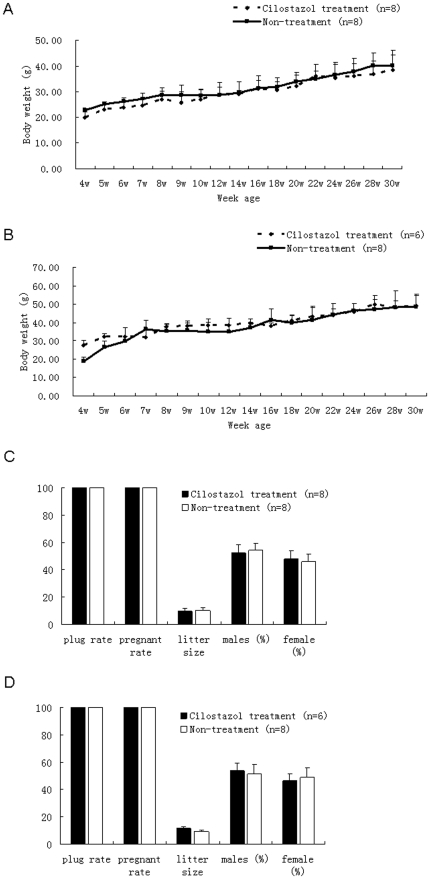
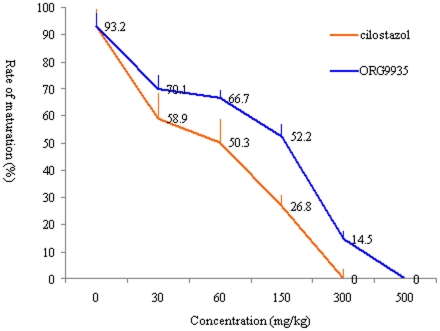
It is important to identify effective contraceptive drugs that cause minimal disruption to physiological processes. Phosphodiesterase 3 (PDE3) inhibitors suppress meiosis in oocytes by decreasing the level of cAMP and blocking the extrusion of the first polar body. In this study, we tested the PDE3 inhibitor, cilostazol, as a potential contraceptive agent. The effects of cilostazol treatment in vitro and in vivo on the suppression of oocyte maturation in a mouse model were investigated. The results indicated that treatment with increasing concentrations of cilostazol led to a dose-dependent arrest in meiosis progression. The effective in vitro concentration was 1 µM and was 300 mg/kg in vivo. The effect of cilostazol was reversible. After removal of the drug, meiosis resumed and mouse oocytes matured in vitro, and showed normal chromosome alignment and spindle organization. After fertilization using an ICSI method, the oocytes showed normal morphology, fertilization rate, embryo cleavage, blastocyst formation, and number of viable pups when compared with controls. The offspring showed similar body weight and fertility. In vivo, the mice became infertile if the drug was injected sequentially, and became pregnant following discontinuation of cilostazol. More importantly, no side effects of cilostazol were observed in treated female mice as demonstrated by blood pressure and heart rate monitoring. It is concluded that cilostazol, a drug routinely used for intermittent claudication, can effectively inhibit oocyte maturation in vitro and in vivo, does not affect the developmental potential of oocytes following drug removal and has few side effects in female mice treated with this drug. These findings suggest that cilostazol may be a potential new contraceptive agent that may facilitate an efficacy and safety study of this drug.
确定对生理过程干扰最小的有效避孕药物非常重要。磷酸二酯酶 3(PDE3)抑制剂通过降低 cAMP 水平和阻止第一极体排出来抑制卵母细胞减数分裂。在这项研究中,我们测试了 PDE3 抑制剂西洛他唑作为潜在的避孕药物。研究了西洛他唑在体外和体内对抑制小鼠模型中卵母细胞成熟的作用。结果表明,用递增浓度的西洛他唑处理导致减数分裂进程的剂量依赖性阻滞。有效的体外浓度为 1μM,体内为 300mg/kg。西洛他唑的作用是可逆的。去除药物后,减数分裂恢复,小鼠卵母细胞在体外成熟,并显示出正常的染色体排列和纺锤体组织。使用 ICSI 方法受精后,与对照组相比,卵母细胞显示出正常的形态、受精率、胚胎分裂、囊胚形成和活产幼仔数量。后代的体重和生育力相似。在体内,如果连续注射药物,老鼠会不育,如果停止注射西洛他唑,老鼠会怀孕。更重要的是,在接受西洛他唑治疗的雌性小鼠中,通过血压和心率监测未观察到西洛他唑的副作用。结论是,西洛他唑,一种用于间歇性跛行的常规药物,可有效抑制体外和体内卵母细胞的成熟,在药物去除后不影响卵母细胞的发育潜力,并且在接受这种药物治疗的雌性小鼠中副作用很少。这些发现表明,西洛他唑可能是一种有潜力的新型避孕药物,可能有助于该药物的疗效和安全性研究。