Key Laboratory of Experimental Marine Biology, Institute of Oceanology, Chinese Academy of Sciences, Qingdao, China.
PLoS One. 2012;7(1):e30828. doi: 10.1371/journal.pone.0030828. Epub 2012 Jan 23.
Acetycholinesterase (AChE; EC 3.1.1.7) is an essential hydrolytic enzyme in the cholinergic nervous system, which plays an important role during immunomodulation in vertebrates. Though AChEs have been identified in most invertebrates, the knowledge about immunomodulation function of AChE is still quite meagre in invertebrates.
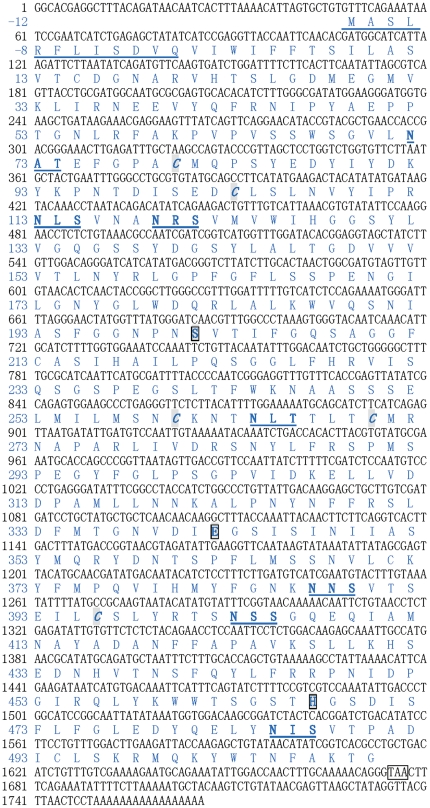
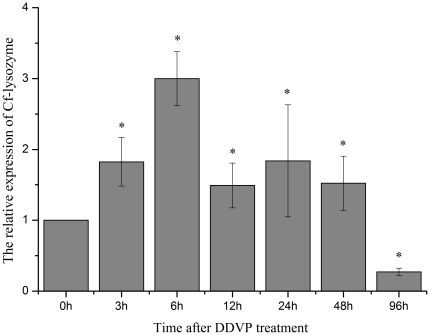
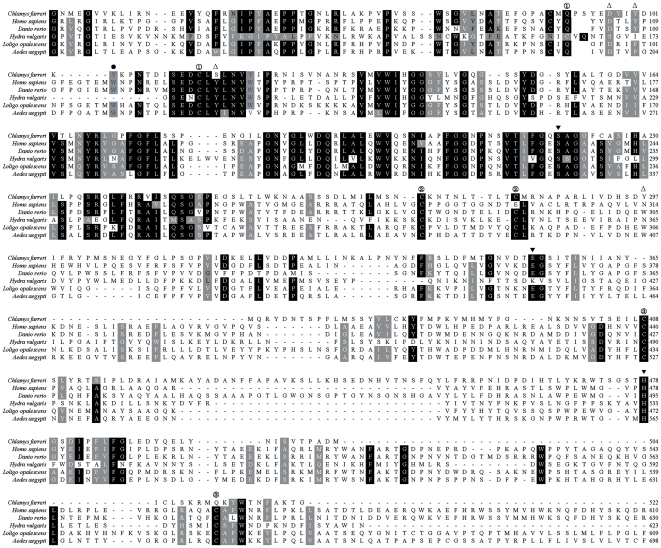
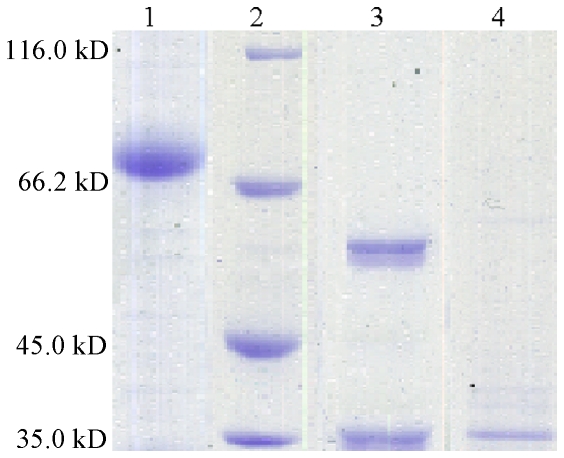
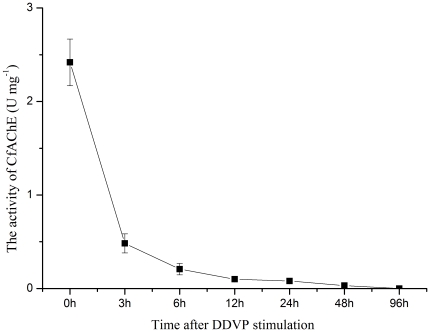
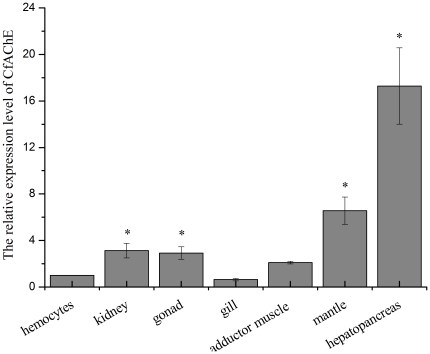
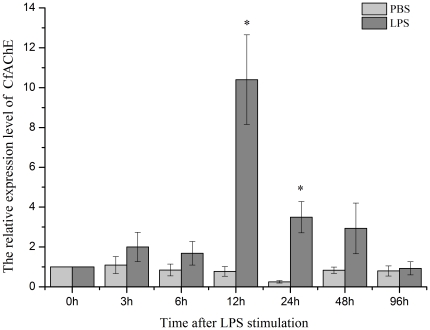
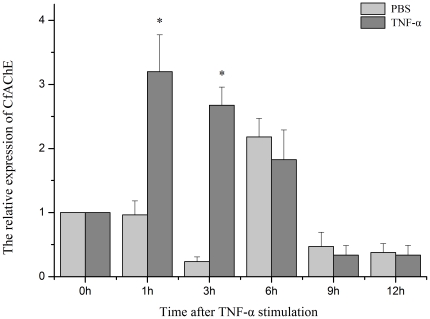
A scallop AChE gene was identified from Chlamys farreri (designed as CfAChE), and its open reading frame encoded a polypeptide of 522 amino acids. A signal peptide, an active site triad, the choline binding site and the peripheral anionic sites (PAS) were identified in CfAChE. The recombinant mature polypeptide of CfAChE (rCfAChE) was expressed in Pichia pastoris GS115, and its activity was 71.3±1.3 U mg(-1) to catalyze the hydrolysis of acetylthiocholine iodide. The mRNA transcripts of CfAChE were detected in haemocytes, hepatopancreas, adductor muscle, mantle, gill, kidney and gonad, with the highest expression level in hepatopancreas. The relative expression level of CfAChE mRNA in haemocytes was both up-regulated after LPS (0.5 mg mL(-1)) and human TNF-α (50 ng mL(-1)) stimulations, and it reached the highest level at 12 h (10.4-fold, P<0.05) and 1 h (3.2-fold, P<0.05), respectively. After Dichlorvos (DDVP) (50 mg L(-1)) stimulation, the CfAChE activity in the supernatant of haemolymph decreased significantly from 0.16 U mg(-1) at 0 h to 0.03 U mg(-1) at 3 h, while the expression level of lysozyme in the haemocytes was up-regulated and reached the highest level at 6 h, which was 3.0-fold (P<0.05) of that in the blank group.
The results collectively indicated that CfAChE had the acetylcholine-hydrolyzing activity, which was in line with the potential roles of AChE in the neuroimmune system of vertebrates which may help to re-balance the immune system after immune response.
乙酰胆碱酯酶(AChE;EC 3.1.1.7)是脊椎动物胆碱能神经系统中一种重要的水解酶,在免疫调节中发挥着重要作用。虽然在大多数无脊椎动物中都发现了 AChE,但关于无脊椎动物 AChE 的免疫调节功能的知识仍然相当匮乏。
从栉孔扇贝(Chlamys farreri)中鉴定出一种扇贝 AChE 基因(命名为 CfAChE),其开放阅读框编码一个 522 个氨基酸的多肽。在 CfAChE 中鉴定出一个信号肽、一个活性三联体、一个胆碱结合位点和一个外周阴离子位点(PAS)。CfAChE 的重组成熟多肽(rCfAChE)在毕赤酵母 GS115 中表达,其活性为 71.3±1.3 U mg(-1),可催化碘化乙酰硫代胆碱的水解。在血细胞、肝胰腺、闭壳肌、套膜、鳃、肾和性腺中检测到 CfAChE 的 mRNA 转录本,其中在肝胰腺中的表达水平最高。在 LPS(0.5 mg mL(-1))和人 TNF-α(50 ng mL(-1))刺激后,血细胞中 CfAChE mRNA 的相对表达水平均上调,分别在 12 h(10.4 倍,P<0.05)和 1 h(3.2 倍,P<0.05)达到最高水平。在敌敌畏(DDVP)(50 mg L(-1))刺激后,血细胞中血淋巴上清液中的 CfAChE 活性从 0 h 的 0.16 U mg(-1)显著下降到 3 h 的 0.03 U mg(-1),而血细胞中的溶菌酶表达水平上调,并在 6 h 达到最高水平,是空白组的 3.0 倍(P<0.05)。
这些结果共同表明 CfAChE 具有乙酰胆碱水解活性,这与 AChE 在脊椎动物神经免疫系统中的潜在作用一致,这可能有助于在免疫反应后重新平衡免疫系统。