Neuroscience, Farber Institute for Neurosciences, Thomas Jefferson University, Philadelphia, PA 19107, USA.
Prog Neuropsychopharmacol Biol Psychiatry. 2012 Jul 2;38(1):59-67. doi: 10.1016/j.pnpbp.2012.01.008. Epub 2012 Jan 24.
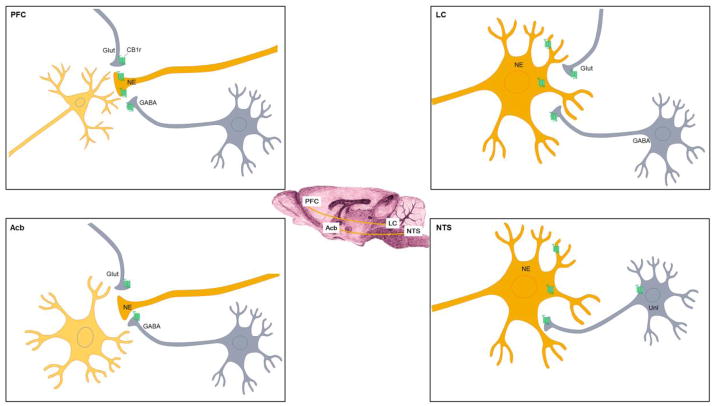
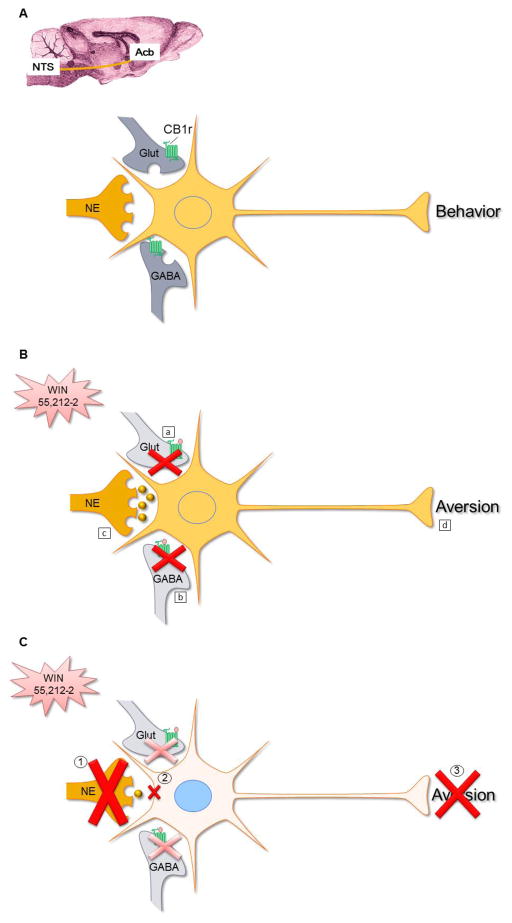
The interaction between the endocannabinoid system and catecholaminergic circuits has gained increasing attention as it is recognized that the development of synthetic cannabinoid receptor agonists/antagonists or compounds targeting endocannabinoid synthesis/metabolism may hold some therapeutic potential for the treatment of psychiatric disorders. The noradrenergic system plays a critical role in the modulation of emotional state, primarily related to anxiety, arousal, and stress. Recent evidence suggests that the endocannabinoid system mediates stress responses and emotional homeostasis, in part, by targeting noradrenergic circuits. This review summarizes our current knowledge regarding the anatomical substrates underlying regulation of noradrenergic circuitry by the endocannabinoid system. It then presents biochemical evidence showing an important effect of cannabinoid modulation on adrenergic receptor signaling. Finally, new evidence from behavioral pharmacology studies is provided demonstrating that norepinephrine is a critical determinant of cannabinoid-induced aversion, adding another dimension to how central noradrenergic circuitry is regulated by the cannabinoid system.
内源性大麻素系统与儿茶酚胺能回路之间的相互作用受到越来越多的关注,因为人们认识到,合成大麻素受体激动剂/拮抗剂或针对内源性大麻素合成/代谢的化合物的发展可能对治疗精神疾病具有一定的治疗潜力。去甲肾上腺素能系统在调节情绪状态方面起着关键作用,主要与焦虑、觉醒和应激有关。最近的证据表明,内源性大麻素系统通过靶向去甲肾上腺素能回路来介导应激反应和情绪稳态。这篇综述总结了我们目前对内源性大麻素系统调节去甲肾上腺素能回路的解剖学基础的了解。然后,它提供了生化证据,表明大麻素调节对肾上腺素能受体信号有重要影响。最后,提供了行为药理学研究的新证据,表明去甲肾上腺素是大麻素引起厌恶的关键决定因素,这为内源性大麻素系统如何调节中枢去甲肾上腺素能回路增加了另一个维度。