Biology Department, University of North Carolina, Chapel Hill, NC 27599, USA.
Mol Biol Cell. 2012 Mar;23(6):1035-46. doi: 10.1091/mbc.E11-09-0767. Epub 2012 Feb 1.
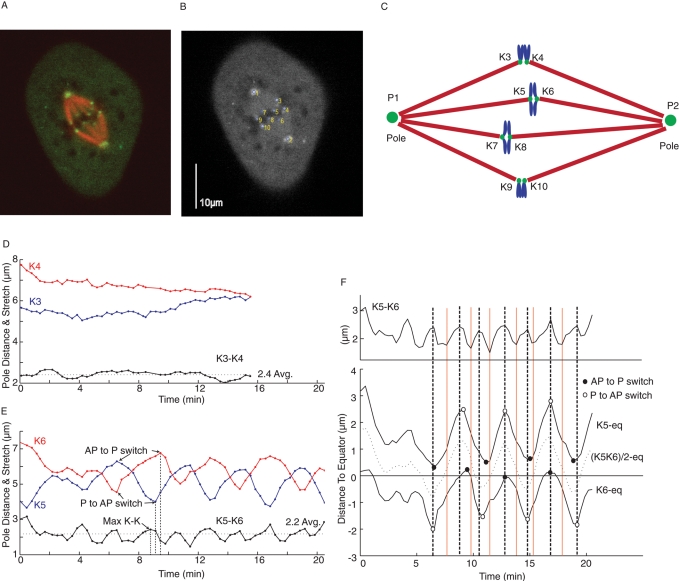
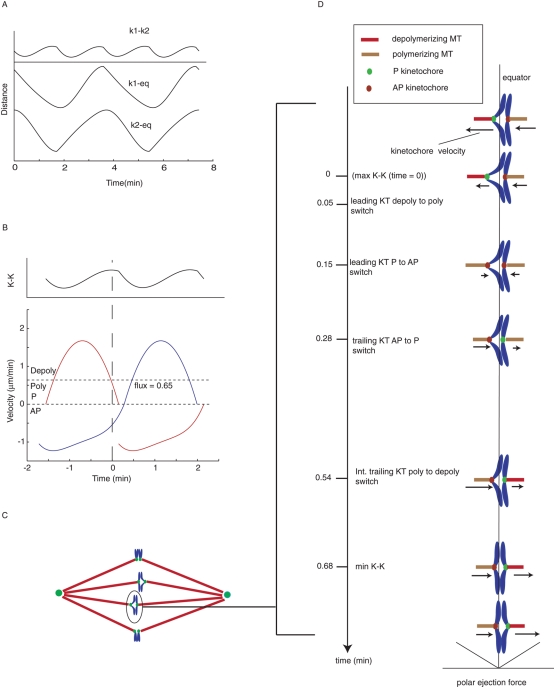
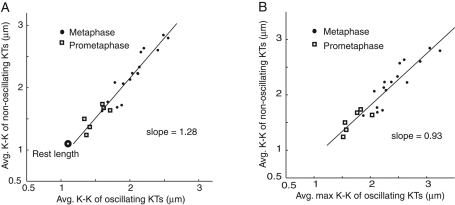
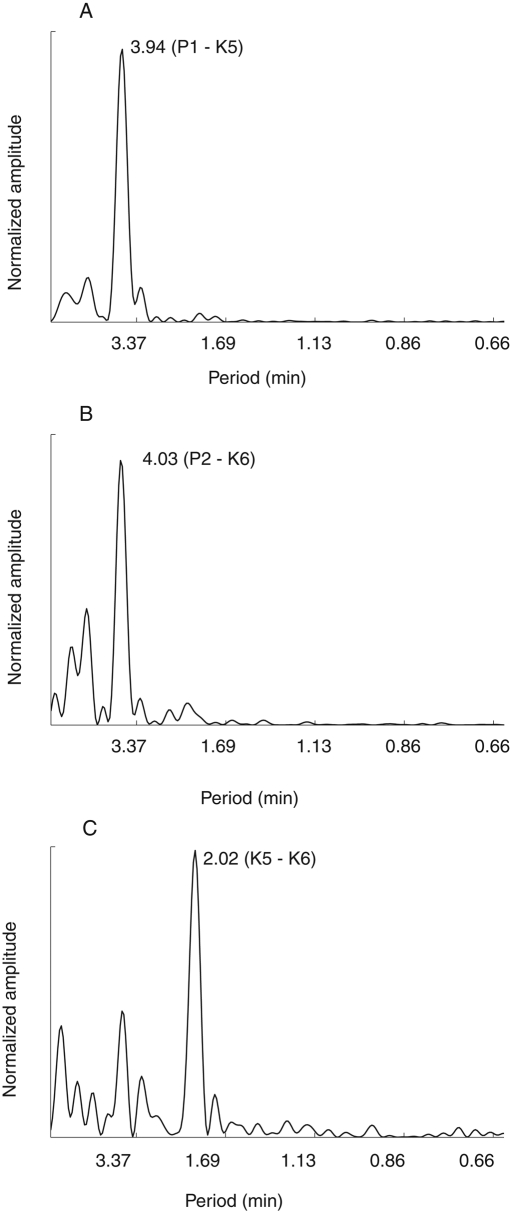
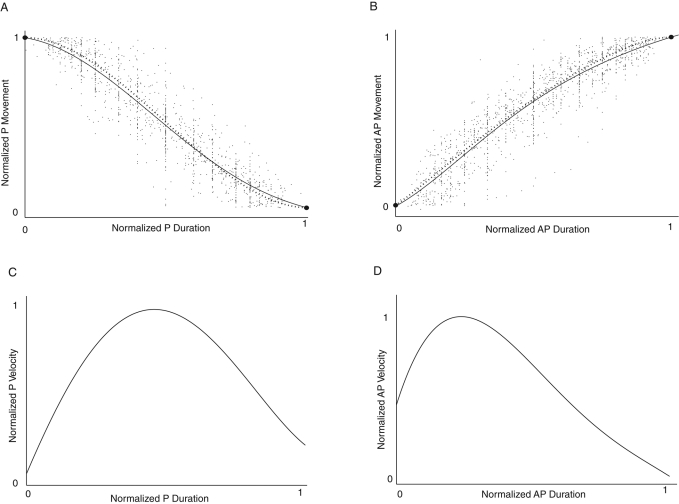
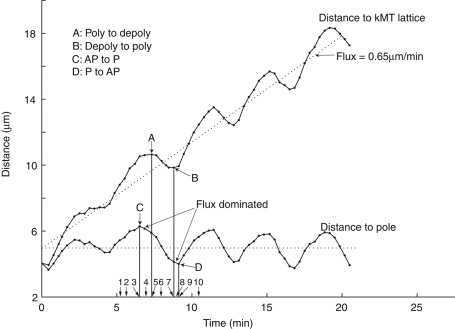
Kinetochores bound to kinetochore microtubules (kMTs) exhibit directional instability in mammalian and other mitotic vertebrate cells, oscillating between poleward (P) and away-from-the-pole (AP) movements. These oscillations are coupled to changes in length of kMTs in a way that maintains a net stretch of the centromere. To understand how sister kinetochore directional instability and kMT plus-end dynamic instability are coupled to oscillations in centromere stretch, we tracked at high resolution the positions of fluorescent kinetochores and their poles for oscillating chromosomes within spindles of metaphase PtK1 cells. We found that the kinetics of P and AP movement are nonlinear and different. By subtracting contributions from the poleward flux of kMTs, we found that maximum centromere stretch occurred when the leading kinetochore switched from depolymerization to polymerization, whereas minimum centromere stretch occurred on average 7 s after the initially trailing kinetochore switched from polymerization to depolymerization. These differences produce oscillations in centromere stretch at about twice the frequency of kinetochore directional instability and at about twice the frequency of centromere oscillations back and forth across the spindle equator.
着丝粒与着丝点微管(kMTs)结合在哺乳动物和其他有丝分裂脊椎动物细胞中表现出定向不稳定性,在向极(P)和离极(AP)运动之间振荡。这些振荡与 kMT 长度的变化耦合,以保持着丝粒的净拉伸。为了了解姐妹着丝粒定向不稳定性和 kMT 末端动态不稳定性如何与着丝粒拉伸的振荡耦合,我们以高分辨率跟踪了中期 PtK1 细胞纺锤体中振荡染色体上荧光着丝粒及其极的位置。我们发现,P 和 AP 运动的动力学是非线性的和不同的。通过减去 kMT 向极通量的贡献,我们发现当领先的着丝粒从解聚转变为聚合时,着丝粒达到最大拉伸,而当最初的滞后着丝粒从聚合转变为解聚时,平均滞后 7 秒后,着丝粒达到最小拉伸。这些差异导致着丝粒拉伸在两倍于着丝粒定向不稳定性的频率和两倍于着丝粒在纺锤体赤道来回振荡的频率处产生振荡。