Institute of Biomedical Sciences, Academic Sinica, Nankang, Taipei 115, Taiwan, Republic of China.
Carcinogenesis. 2012 Apr;33(4):760-9. doi: 10.1093/carcin/bgs023. Epub 2012 Jan 31.
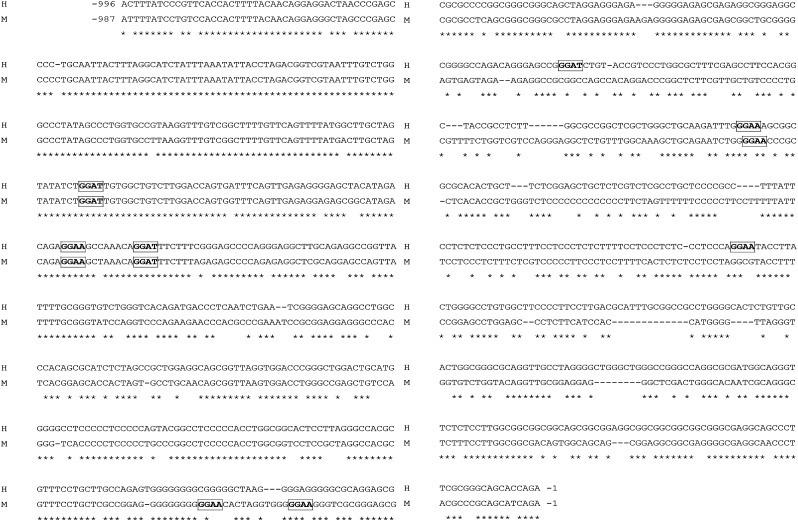
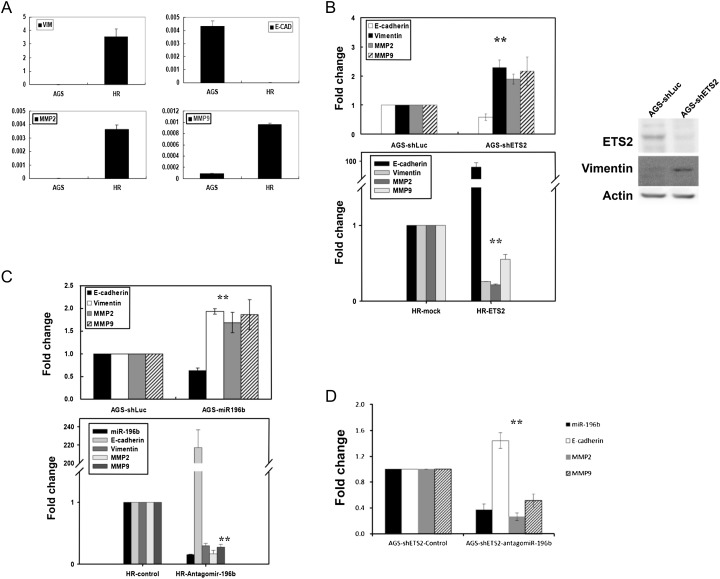
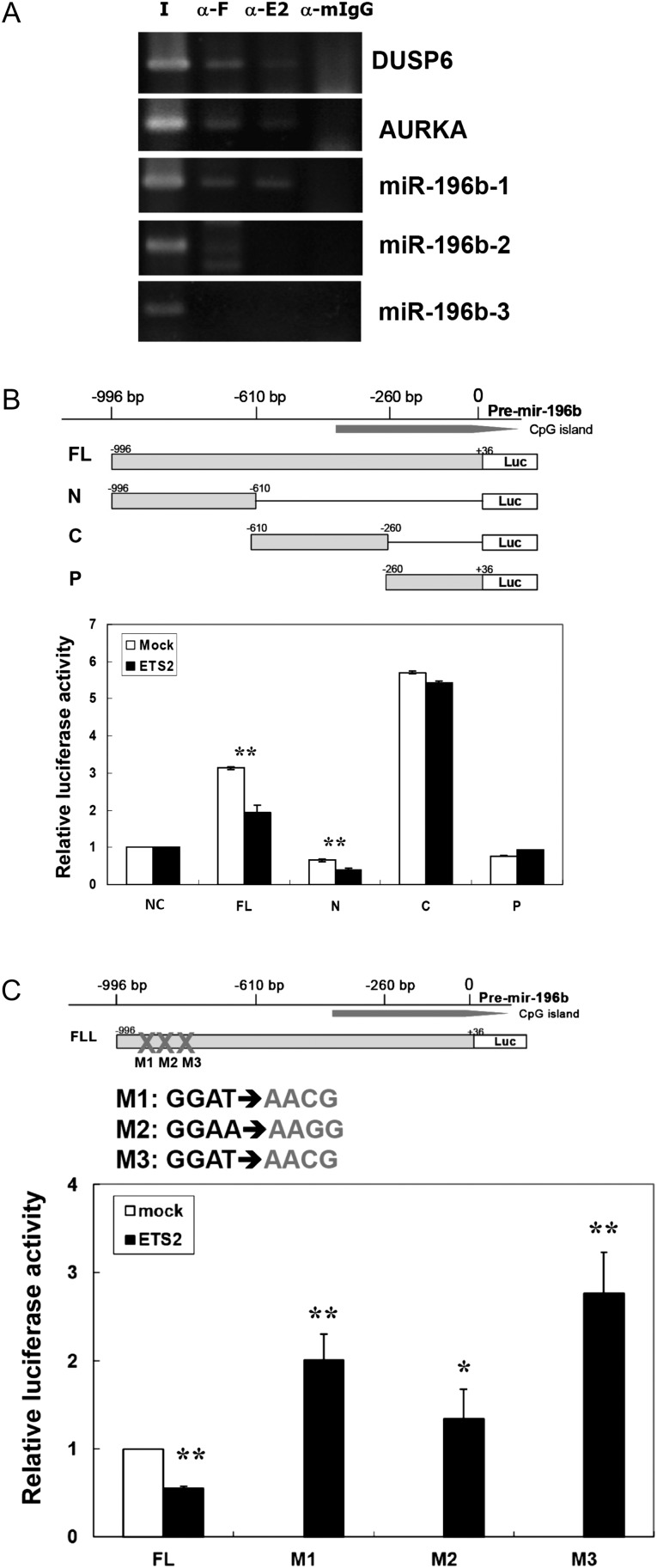
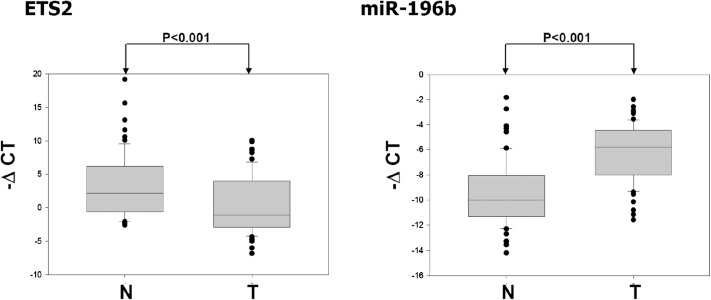
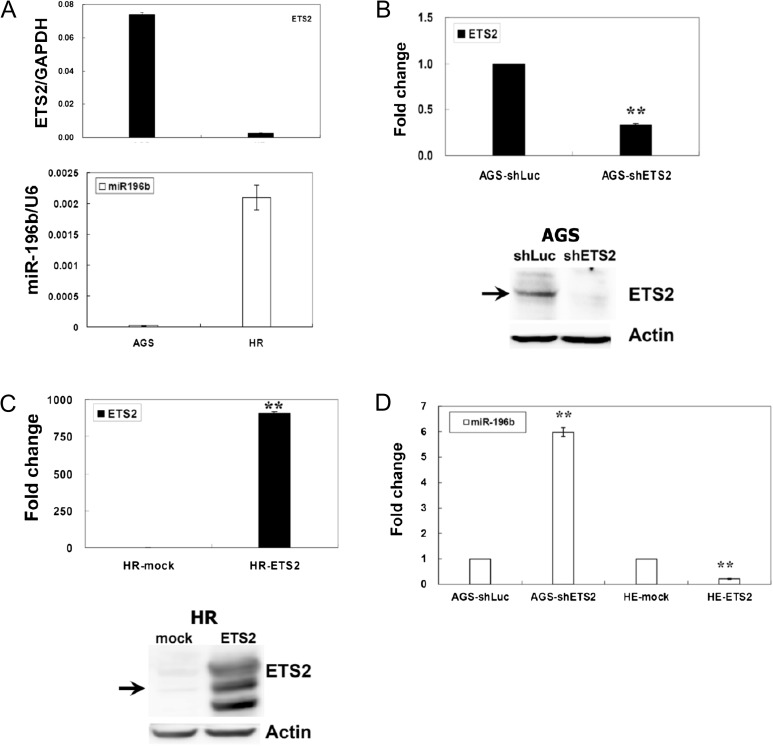
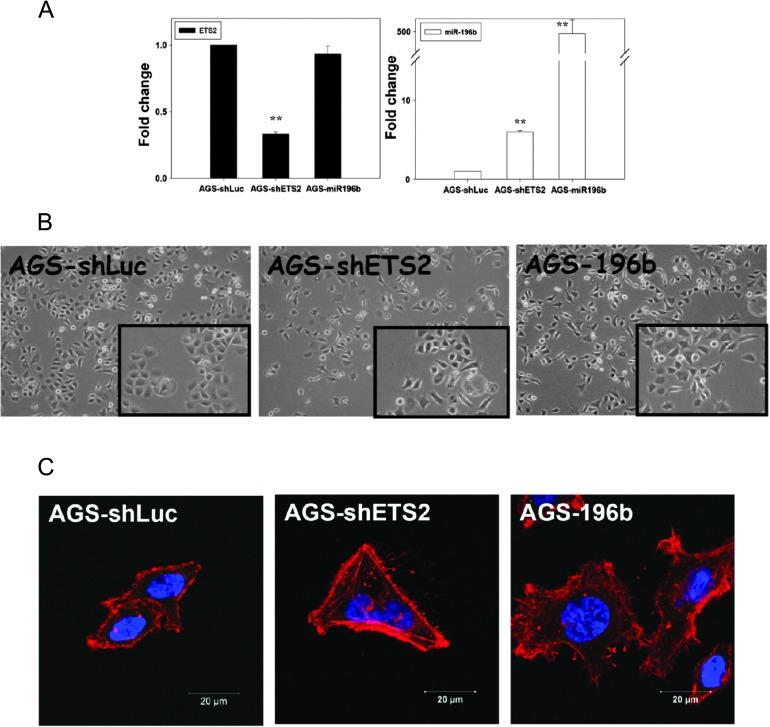
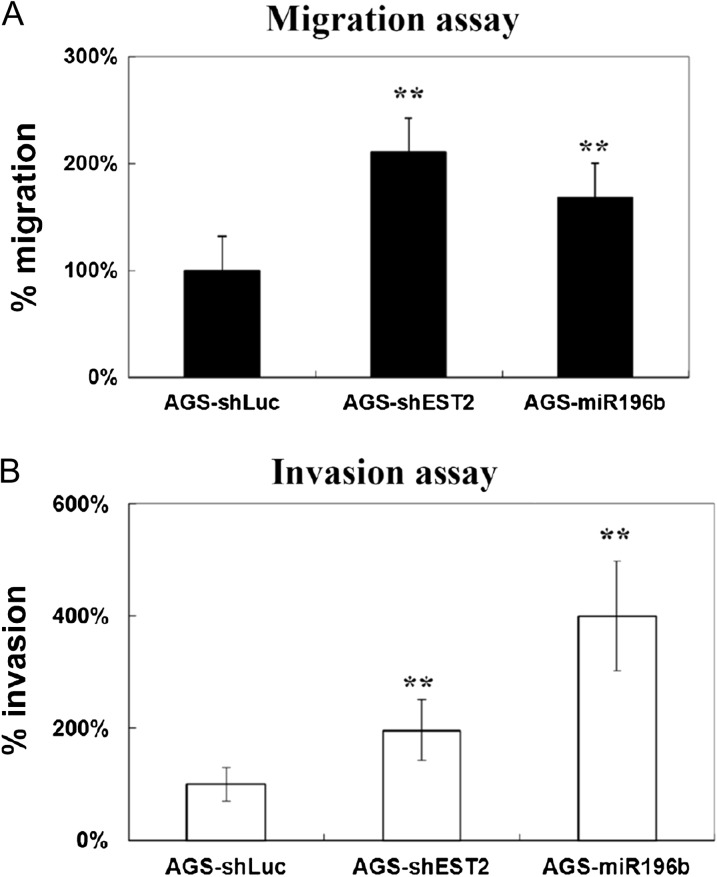
E26 transformation-specific sequence (ETS)-2 is a transcriptional modulator located on chromosome 21, alterations in its expression have been implicated with a reduced incidence of solid tumors in Down syndrome patients. MicroRNAs (miRNAs) are thought to participate in diverse biological functions; however, the regulation of miRNAs is not well characterized. Recently, we reported that miR-196b is highly expressed in gastric cancers. Herein, we demonstrate that miR-196b expression was significantly repressed by ETS2 during gastric cancer oncogenesis. We demonstrate that knockdown of endogenous ETS2 expression increases miR-196b expression. A genomic region between -751 and -824 bp upstream of the miR-196b transcriptional start site was found to be critical for the repression activity. This putative regulatory promoter region contains three potential ETS2-binding motifs. Mutations within the ETS2 binding sites blocked the repression activity of ETS2. Furthermore, knockdown of ETS2 or overexpression of miR-196b significantly induced migration and invasion in gastric cancer cells. In addition, alterations in ETS2 and miR-196b expression in gastric cancer cell lines affected the expression of epithelial-mesenchymal transition-related genes. The levels of vimentin, matrix metalloproteinase (MMP)-2 and MMP9 were drastically induced, but levels of E-cadherin were decreased in shETS2- or miR-196b-transfected cells. Our data indicate that ETS2 plays a key role in controlling the expression of miR-196b, and miR-196b may mediate the tumor suppressor effects of ETS2. We demonstrated that miR-196b was transcriptionally regulated by ETS2 and there was an inverse expression profile between miR-196b and ETS2 in clinical samples. This finding could be beneficial for the development of effective cancer diagnostic and alternative therapeutic strategies.
E26 转化特异性序列 (ETS)-2 是位于 21 号染色体上的转录调节剂,其表达的改变与唐氏综合征患者实体瘤发生率降低有关。微 RNA(miRNA)被认为参与多种生物学功能;然而,miRNA 的调节并不清楚。最近,我们报道 miR-196b 在胃癌中高表达。在此,我们证明在胃癌发生过程中 ETS2 显著抑制 miR-196b 的表达。我们证明内源性 ETS2 表达的敲低会增加 miR-196b 的表达。miR-196b 转录起始位点上游-751 到-824bp 之间的基因组区域对于抑制活性至关重要。这个假定的调控启动子区域包含三个潜在的 ETS2 结合基序。ETS2 结合位点的突变阻断了 ETS2 的抑制活性。此外,ETS2 的敲低或 miR-196b 的过表达显著诱导胃癌细胞的迁移和侵袭。此外,胃癌细胞系中 ETS2 和 miR-196b 表达的改变影响上皮-间充质转化相关基因的表达。波形蛋白、基质金属蛋白酶(MMP)-2 和 MMP9 的水平急剧升高,而 shETS2 或 miR-196b 转染细胞中 E-钙黏蛋白的水平降低。我们的数据表明 ETS2 在控制 miR-196b 的表达中起关键作用,miR-196b 可能介导 ETS2 的肿瘤抑制作用。我们证明 miR-196b 受 ETS2 的转录调控,在临床样本中 miR-196b 和 ETS2 的表达呈负相关。这一发现可能有助于开发有效的癌症诊断和替代治疗策略。