Department of Biological Sciences, Texas Tech University, Lubbock, Texas, United States of America.
PLoS One. 2012;7(1):e31059. doi: 10.1371/journal.pone.0031059. Epub 2012 Jan 27.
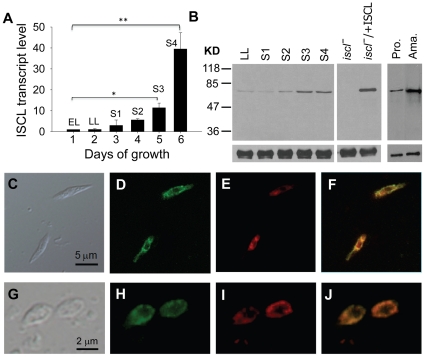
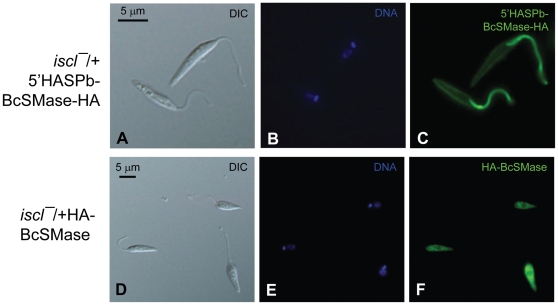
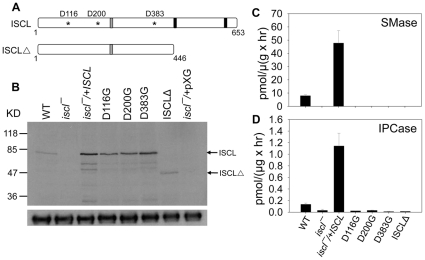
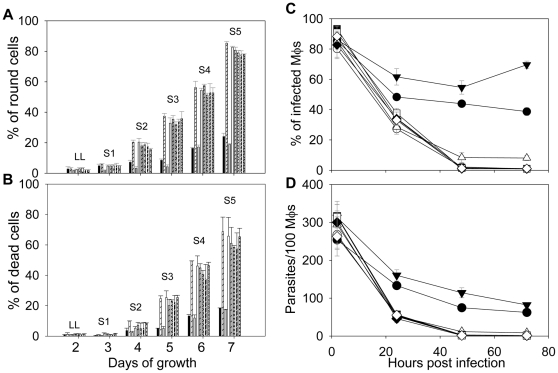
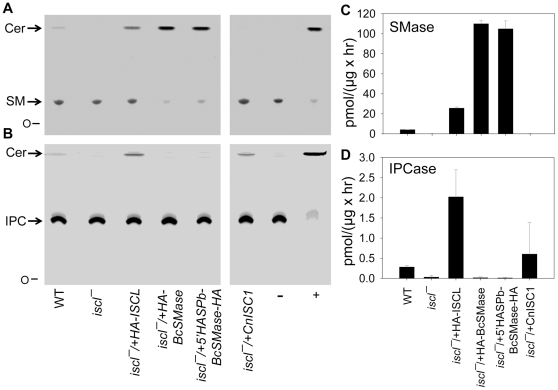
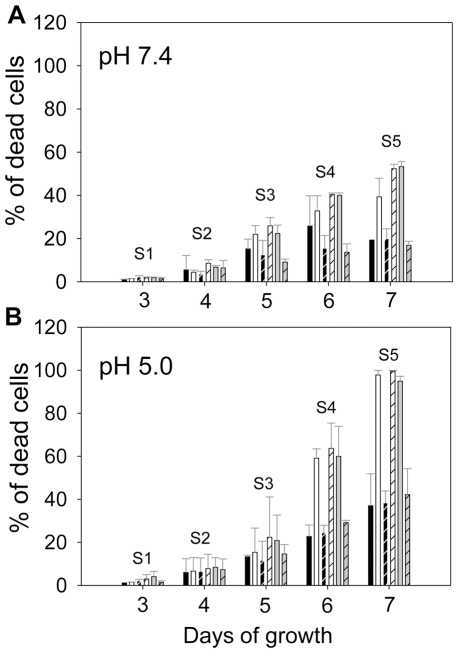
Leishmania parasites alternate between extracellular promastigotes in sandflies and intracellular amastigotes in mammals. These protozoans acquire sphingolipids (SLs) through de novo synthesis (to produce inositol phosphorylceramide) and salvage (to obtain sphingomyelin from the host). A single ISCL (Inositol phosphoSphingolipid phospholipase C-Like) enzyme is responsible for the degradation of both inositol phosphorylceramide (the IPC hydrolase or IPCase activity) and sphingomyelin (the SMase activity). Recent studies of a L. major ISCL-null mutant (iscl(-)) indicate that SL degradation is required for promastigote survival in stationary phase, especially under acidic pH. ISCL is also essential for L. major proliferation in mammals. To further understand the role of ISCL in Leishmania growth and virulence, we introduced a sole IPCase or a sole SMase into the iscl(-) mutant. Results showed that restoration of IPCase only complemented the acid resistance defect in iscl(-) promastigotes and improved their survival in macrophages, but failed to recover virulence in mice. In contrast, a sole SMase fully restored parasite infectivity in mice but was unable to reverse the promastigote defects in iscl(-). These findings suggest that SL degradation in Leishmania possesses separate roles in different stages: while the IPCase activity is important for promastigote survival and acid tolerance, the SMase activity is required for amastigote proliferation in mammals. Consistent with these findings, ISCL was preferentially expressed in stationary phase promastigotes and amastigotes. Together, our results indicate that SL degradation by Leishmania is critical for parasites to establish and sustain infection in the mammalian host.
利什曼原虫寄生虫在沙蝇中以细胞外前鞭毛体和哺乳动物中的细胞内无鞭毛体之间交替。这些原生动物通过从头合成(产生肌醇磷酸神经酰胺)和回收(从宿主中获得神经鞘磷脂)获得鞘脂。单一的 ISCL(肌醇磷酸神经鞘脂酶 C 样)酶负责降解肌醇磷酸神经酰胺(IPC 水解酶或 IPCase 活性)和神经鞘磷脂(SMase 活性)。对 L. major ISCL 缺失突变体(iscl(-))的最近研究表明,SL 降解是静止期前鞭毛体生存所必需的,特别是在酸性 pH 下。ISCL 对于 L. major 在哺乳动物中的增殖也是必不可少的。为了进一步了解 ISCL 在利什曼原虫生长和毒力中的作用,我们将单一的 IPCase 或单一的 SMase 引入到 iscl(-)突变体中。结果表明,仅恢复 IPCase 仅能弥补 iscl(-)前鞭毛体的耐酸性缺陷并改善其在巨噬细胞中的存活,但不能恢复在小鼠中的毒力。相比之下,单一的 SMase 完全恢复了寄生虫在小鼠中的感染性,但无法逆转 iscl(-)中的前鞭毛体缺陷。这些发现表明,SL 降解在利什曼原虫中在不同阶段具有不同的作用:虽然 IPCase 活性对于前鞭毛体的生存和耐酸性很重要,但 SMase 活性对于无鞭毛体在哺乳动物中的增殖是必需的。与这些发现一致,ISCL 在静止期前鞭毛体和无鞭毛体中优先表达。总之,我们的结果表明,利什曼原虫的 SL 降解对于寄生虫在哺乳动物宿主中建立和维持感染至关重要。