Christensen Brock C, Marsit Carmen J
Section on Biostatistics and Epidemiology, Department of Community and Family Medicine, Dartmouth Medical School Hanover, NH, USA.
Front Genet. 2011 Nov 22;2:84. doi: 10.3389/fgene.2011.00084. eCollection 2011.
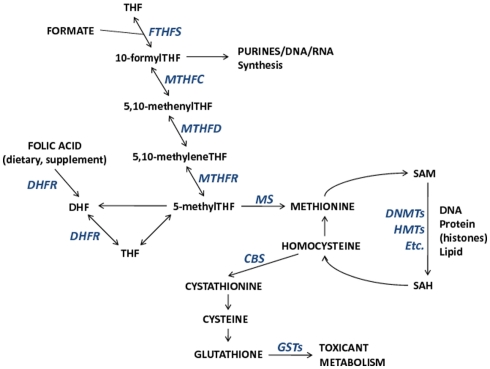
This review considers the emerging relationships between environmental factors and epigenetic alterations and the application of genome-wide assessments to better define these relationships. First we will briefly cover epigenetic programming in development, one-carbon metabolism, and exposures that may disrupt normal developmental programming of epigenetic states. In addition, because a large portion of epigenetic research has focused on cancer, we discuss exposures associated with carcinogenesis including asbestos, alcohol, radiation, arsenic, and air pollution. Research on other exposures that may affect epigenetic states such as endocrine disruptors is also described, and we also review the evidence for epigenetic alterations associated with aging that may reflect cumulative effects of exposures. From this evidence, we posit potential mechanisms by which exposures modify epigenetic states, noting that understanding the true effect of environmental exposures on the human epigenome will require additional research with appropriate epidemiologic studies and application of novel technologies. With a more comprehensive understanding of the affects of exposures on the epigenome, including consideration of genetic background, the prediction of the toxic potential of new compounds may be more readily achieved, and may lead to the development of more personalized disease prevention and treatment strategies.
本综述探讨了环境因素与表观遗传改变之间新出现的关系,以及全基因组评估在更好地界定这些关系方面的应用。首先,我们将简要介绍发育过程中的表观遗传编程、一碳代谢以及可能扰乱表观遗传状态正常发育编程的暴露因素。此外,由于大部分表观遗传学研究都集中在癌症方面,我们将讨论与致癌作用相关的暴露因素,包括石棉、酒精、辐射、砷和空气污染。还将描述对其他可能影响表观遗传状态的暴露因素(如内分泌干扰物)的研究,并且我们也将综述与衰老相关的表观遗传改变的证据,这些改变可能反映了暴露的累积效应。基于这些证据,我们提出暴露因素改变表观遗传状态的潜在机制,同时指出,要了解环境暴露对人类表观基因组的真正影响,还需要通过适当的流行病学研究和新技术的应用开展更多研究。随着对暴露因素对表观基因组影响的更全面理解,包括考虑遗传背景,或许能更容易地预测新化合物的毒性潜力,并可能促成更具个性化的疾病预防和治疗策略的发展。