Department of Pathology, University of Maryland, Baltimore, MD 21201, USA.
J Immunother. 2012 Feb-Mar;35(2):179-88. doi: 10.1097/CJI.0b013e318247a5e9.
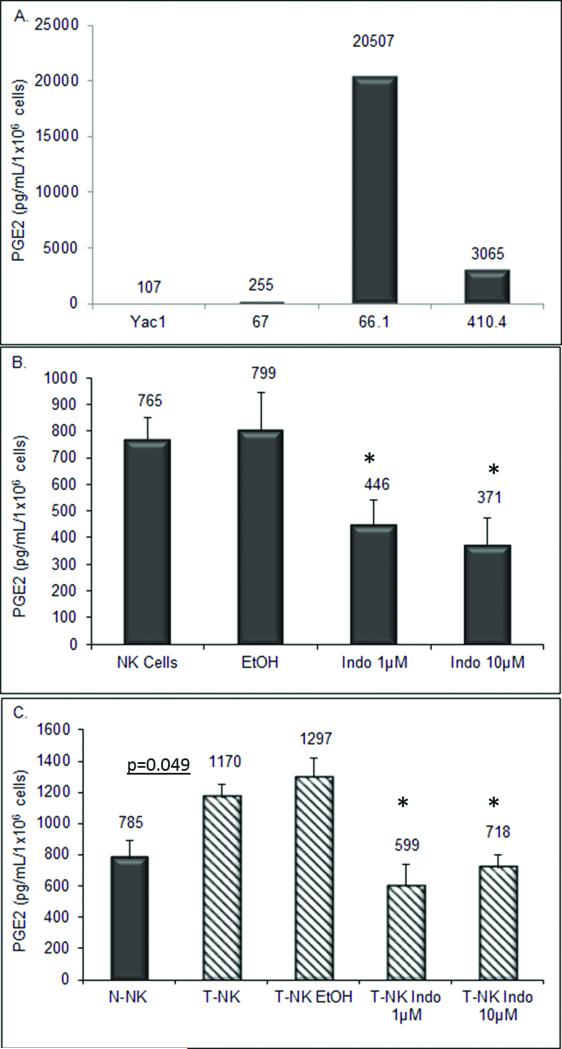
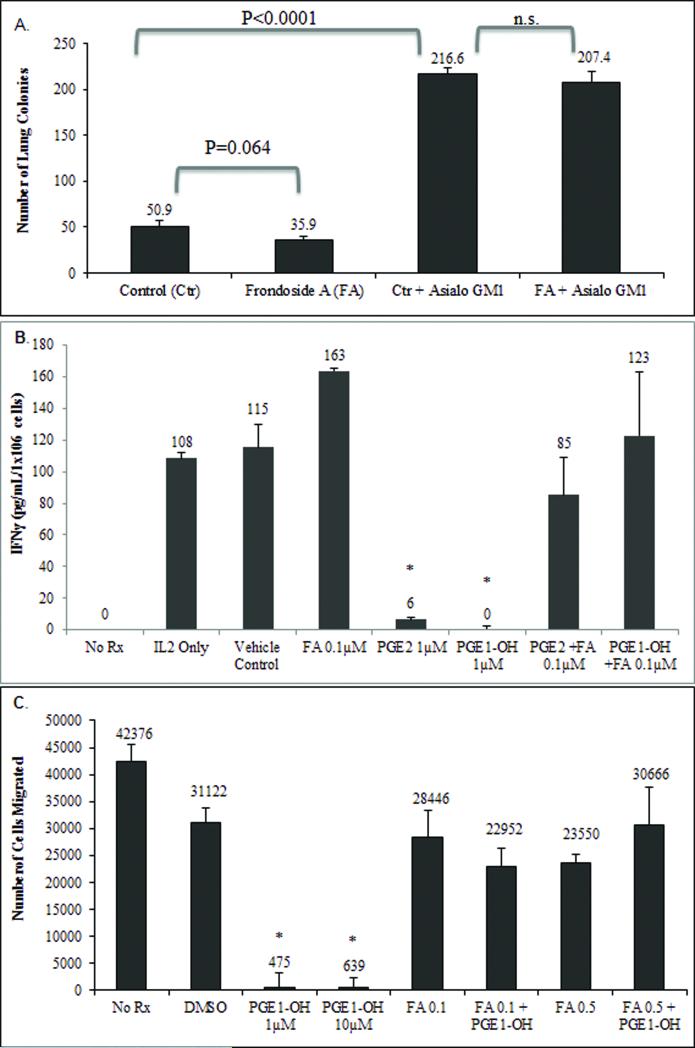
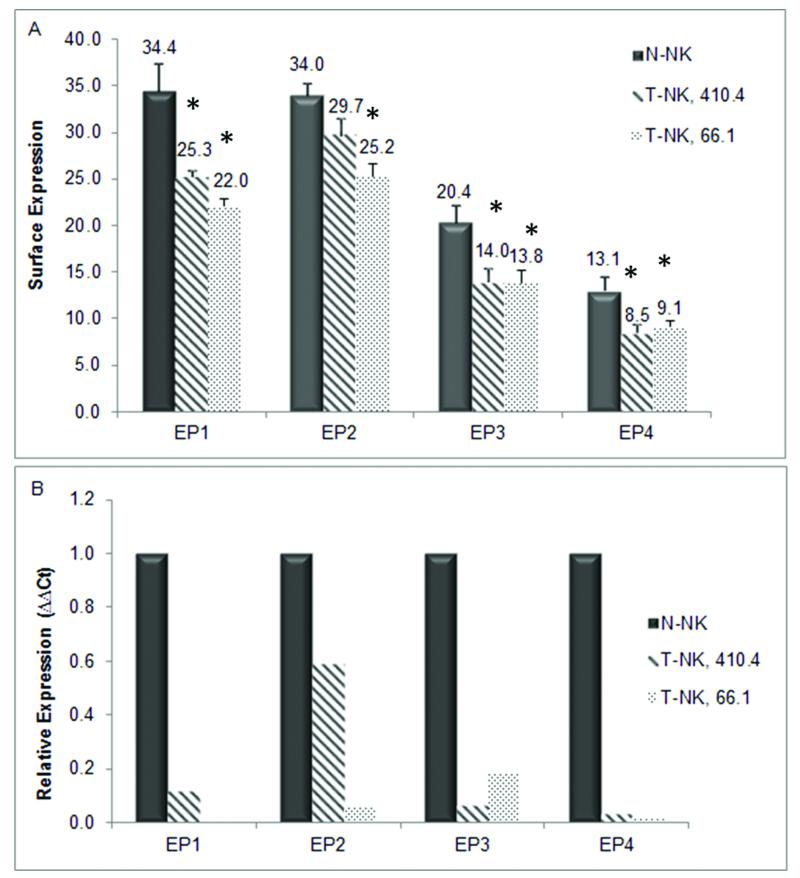
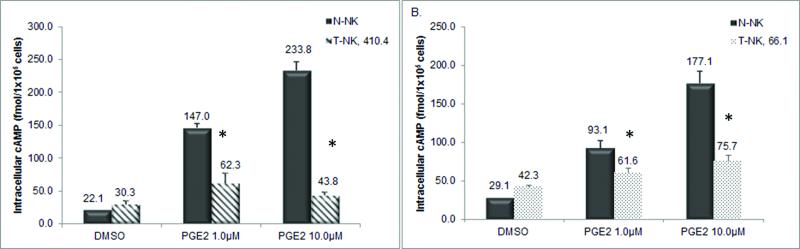
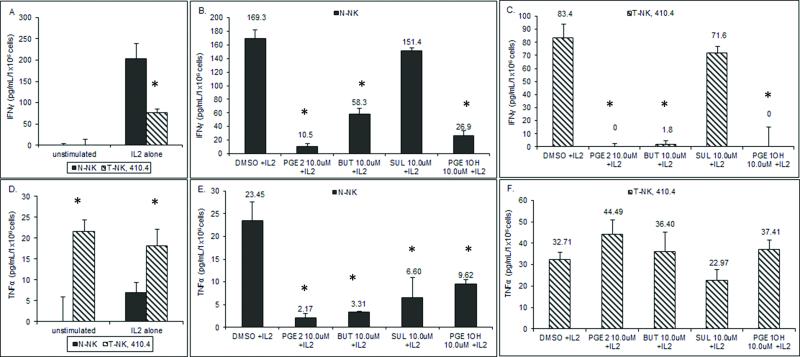
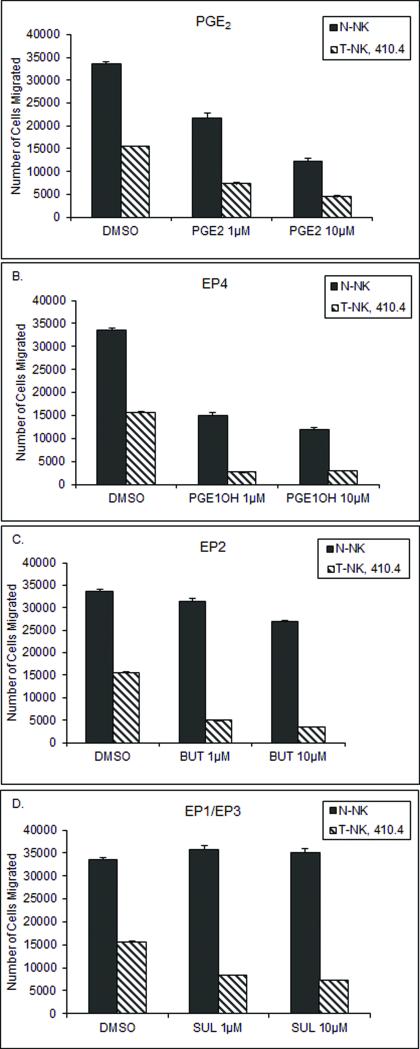
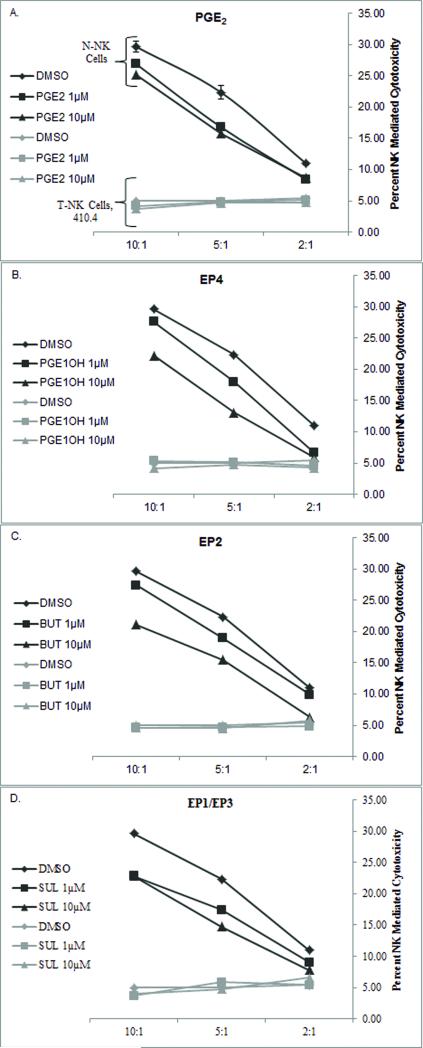
Breast malignancies often have high levels of COX-2. The COX-2 product prostaglandin E2 (PGE2) contributes to the high metastatic capacity of breast tumors. Our published data indicate that inhibiting either PGE2 production or PGE2-mediated signaling through the PGE2 receptor EP4 (1 of 4 EP expressed on the malignant cell) reduces metastasis by a mechanism that requires natural killer (NK) cells. Tumor-derived PGE2 and exogenous PGE2 are known to have direct inhibitory effects on NK cell functions, but less is known regarding which EP receptors mediate these effects. We now show that several NK functions (lysis, migration, cytokine production) are compromised in tumor-bearing mice and that tumor-produced PGE2 interferes with NK cell functions. PGE2 inhibits the potential of NK cells to migrate, exert cytotoxic effects, and secrete interferon γ. The ability of PGE2 to inhibit NK cells from tumor-bearing mice is by acting on EP2 and EP4 receptors. NK cells from tumor-bearing mice were more sensitive to inhibition by EP4 and EP2 agonists compared with endogenous NK cells from healthy mice. PGE2 was inhibitory to most NK functions of either normal or tumor-bearing mice. In contrast, there was a trend for enhanced tumor necrosis factor α production in response to PGE2 by NK cells from tumor-bearing mice. We also report that a recently described EP4 antagonist, frondoside A, inhibits breast tumor metastasis in an NK-dependent manner and protects interferon γ production by NK cells from PGE2-mediated suppression. Taken together these data show that NK functions are depressed in tumor-bearing hosts relative to normal NK cells and that PGE2 suppresses NK functions by acting on EP2 and EP4 receptors.
乳腺恶性肿瘤通常 COX-2 水平较高。COX-2 产物前列腺素 E2(PGE2)有助于乳腺肿瘤的高转移能力。我们发表的数据表明,通过一种需要自然杀伤(NK)细胞的机制,抑制 PGE2 的产生或 PGE2 介导的通过 PGE2 受体 EP4(恶性细胞上表达的 4 个 EP 之一)的信号传导,可减少转移。已知肿瘤来源的 PGE2 和外源性 PGE2 对 NK 细胞功能具有直接抑制作用,但对于哪些 EP 受体介导这些作用知之甚少。我们现在表明,几种 NK 功能(溶解、迁移、细胞因子产生)在荷瘤小鼠中受到损害,并且肿瘤产生的 PGE2 干扰 NK 细胞功能。PGE2 抑制 NK 细胞迁移、发挥细胞毒性作用和分泌干扰素 γ 的潜力。PGE2 通过作用于 EP2 和 EP4 受体来抑制来自荷瘤小鼠的 NK 细胞。与来自健康小鼠的内源性 NK 细胞相比,来自荷瘤小鼠的 NK 细胞对 EP4 和 EP2 激动剂的抑制作用更为敏感。PGE2 对来自正常或荷瘤小鼠的大多数 NK 功能均具有抑制作用。相比之下,来自荷瘤小鼠的 NK 细胞对 PGE2 的反应存在增强肿瘤坏死因子 α 产生的趋势。我们还报告说,最近描述的 EP4 拮抗剂,frondoside A,以依赖 NK 细胞的方式抑制乳腺肿瘤转移,并保护 NK 细胞免受 PGE2 介导的抑制作用产生干扰素 γ。这些数据表明,与正常 NK 细胞相比,NK 功能在荷瘤宿主中受到抑制,并且 PGE2 通过作用于 EP2 和 EP4 受体抑制 NK 功能。