Carbonell Pablo, Fichera Davide, Pandit Shashi B, Faulon Jean-Loup
iSSB, Institute of Systems and Synthetic Biology, University of Evry, Genopole Campus 1, Genavenir 6, 5 rue Henri Desbruères, 91030 EVRY Cedex, France.
BMC Syst Biol. 2012 Feb 6;6:10. doi: 10.1186/1752-0509-6-10.
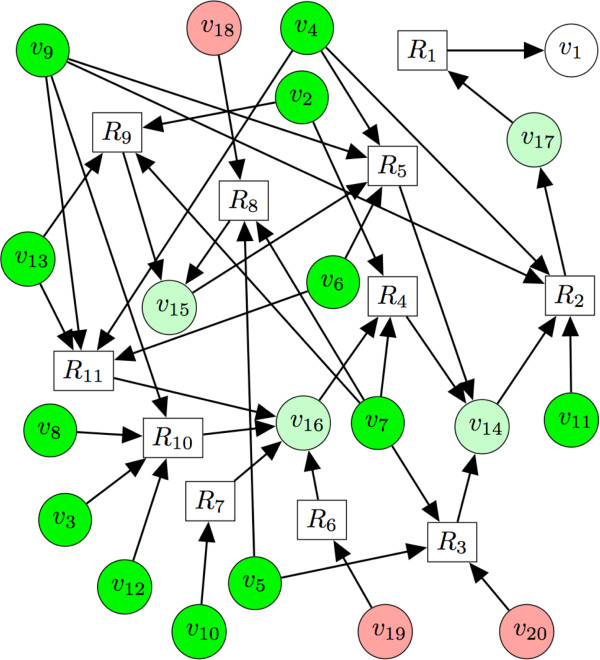
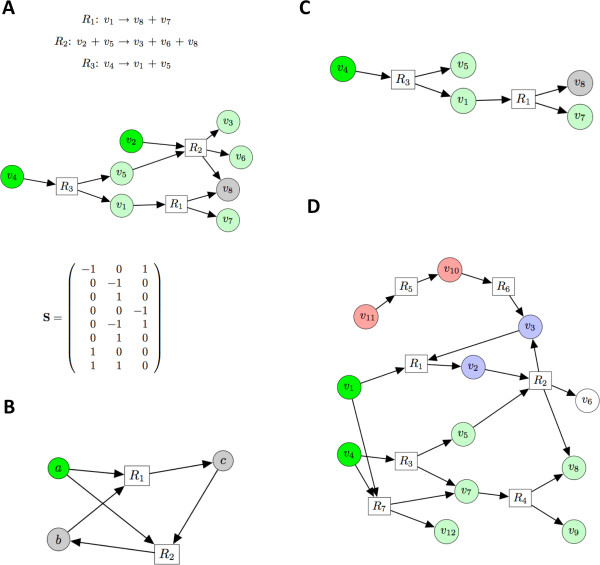
We consider the possibility of engineering metabolic pathways in a chassis organism in order to synthesize novel target compounds that are heterologous to the chassis. For this purpose, we model metabolic networks through hypergraphs where reactions are represented by hyperarcs. Each hyperarc represents an enzyme-catalyzed reaction that transforms set of substrates compounds into product compounds. We follow a retrosynthetic approach in order to search in the metabolic space (hypergraphs) for pathways (hyperpaths) linking the target compounds to a source set of compounds.
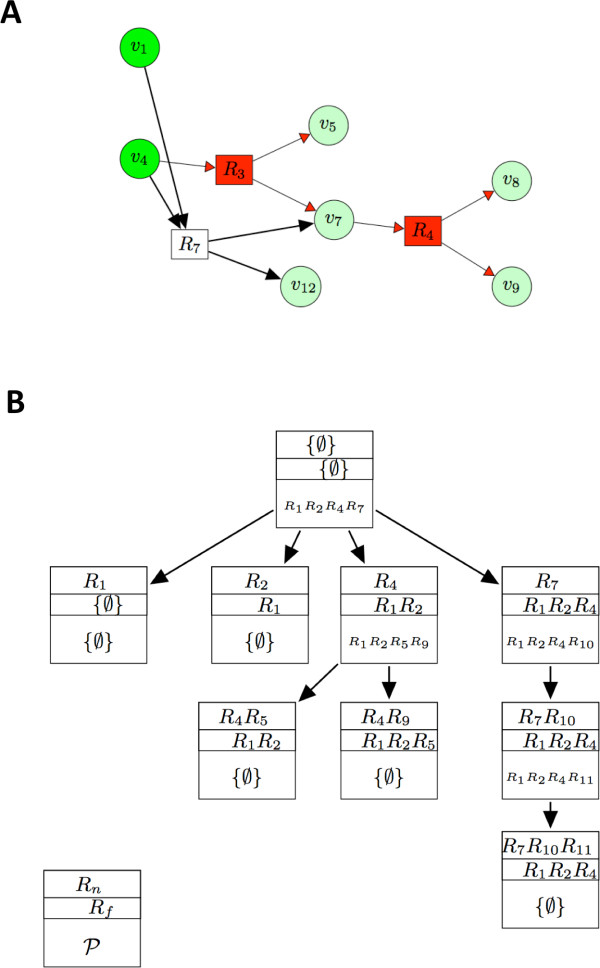
To select the best pathways to engineer, we have developed an objective function that computes the cost of inserting a heterologous pathway in a given chassis organism. In order to find minimum-cost pathways, we propose in this paper two methods based on steady state analysis and network topology that are to the best of our knowledge, the first to enumerate all possible heterologous pathways linking a target compounds to a source set of compounds. In the context of metabolic engineering, the source set is composed of all naturally produced chassis compounds (endogenuous chassis metabolites) and the target set can be any compound of the chemical space. We also provide an algorithm for identifying precursors which can be supplied to the growth media in order to increase the number of ways to synthesize specific target compounds.
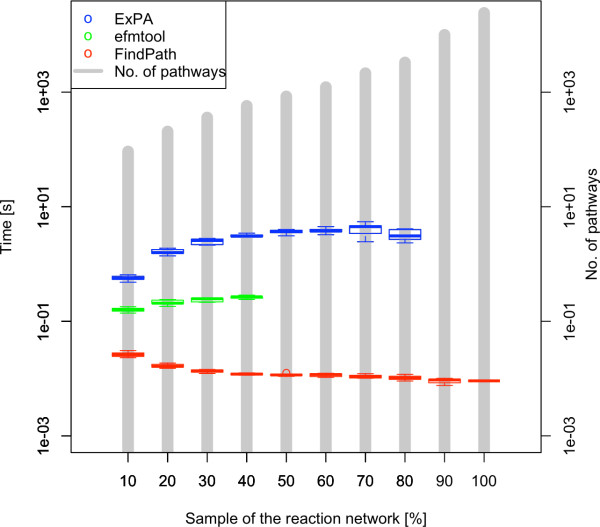
We find the topological approach to be faster by several orders of magnitude than the steady state approach. Yet both methods are generally scalable in time with the number of pathways in the metabolic network. Therefore this work provides a powerful tool for pathway enumeration with direct application to biosynthetic pathway design.
我们考虑在底盘生物体中构建代谢途径的可能性,以便合成与底盘生物体异源的新型目标化合物。为此,我们通过超图对代谢网络进行建模,其中反应由超弧表示。每个超弧代表一个酶催化反应,该反应将一组底物化合物转化为产物化合物。我们采用逆合成方法,以便在代谢空间(超图)中搜索将目标化合物与一组源化合物连接起来的途径(超路径)。
为了选择最佳的途径进行构建,我们开发了一个目标函数,用于计算在给定底盘生物体中插入异源途径的成本。为了找到成本最低的途径,我们在本文中提出了两种基于稳态分析和网络拓扑的方法,据我们所知,这是首次枚举所有将目标化合物与一组源化合物连接起来的可能异源途径。在代谢工程的背景下,源集由所有天然产生的底盘化合物(内源性底盘代谢物)组成,目标集可以是化学空间中的任何化合物。我们还提供了一种算法,用于识别可以供应到生长培养基中的前体,以增加合成特定目标化合物的途径数量。
我们发现拓扑方法比稳态方法快几个数量级。然而,这两种方法通常都可以随着代谢网络中途径的数量在时间上进行扩展。因此,这项工作为途径枚举提供了一个强大的工具,可直接应用于生物合成途径设计。