Carbonell Pablo, Planson Anne-Gaëlle, Fichera Davide, Faulon Jean-Loup
Institute of Systems and Synthetic Biology, University of Evry, Genopole Campus 1, Genavenir 6, 5 rue Henri Desbruères, Evry Cedex, France.
BMC Syst Biol. 2011 Aug 5;5:122. doi: 10.1186/1752-0509-5-122.
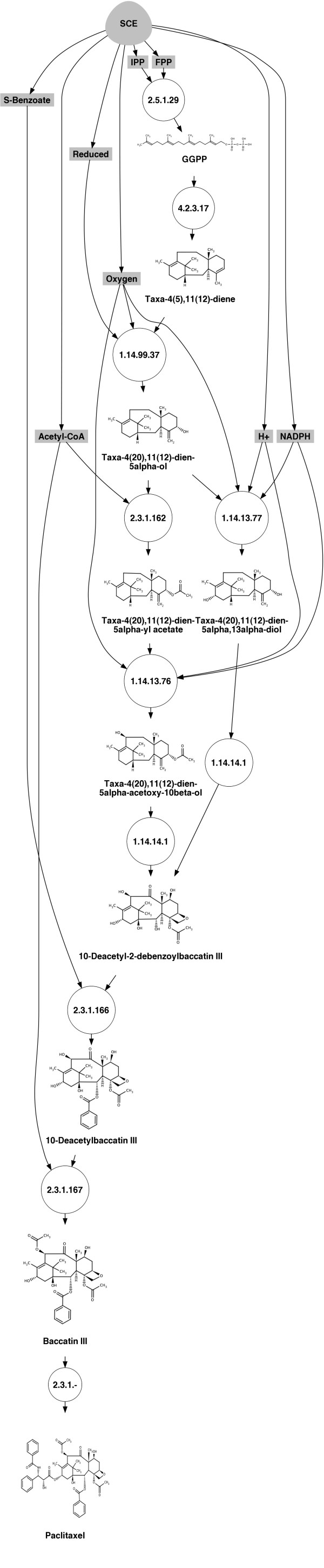
Synthetic biology is used to develop cell factories for production of chemicals by constructively importing heterologous pathways into industrial microorganisms. In this work we present a retrosynthetic approach to the production of therapeutics with the goal of developing an in situ drug delivery device in host cells. Retrosynthesis, a concept originally proposed for synthetic chemistry, iteratively applies reversed chemical transformations (reversed enzyme-catalyzed reactions in the metabolic space) starting from a target product to reach precursors that are endogenous to the chassis. So far, a wider adoption of retrosynthesis into the manufacturing pipeline has been hindered by the complexity of enumerating all feasible biosynthetic pathways for a given compound.
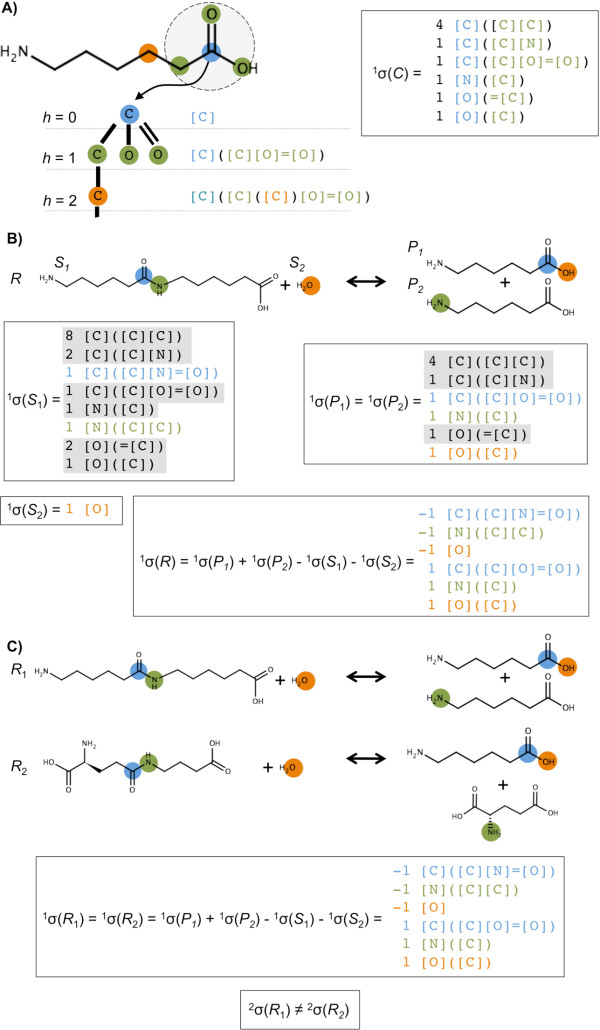
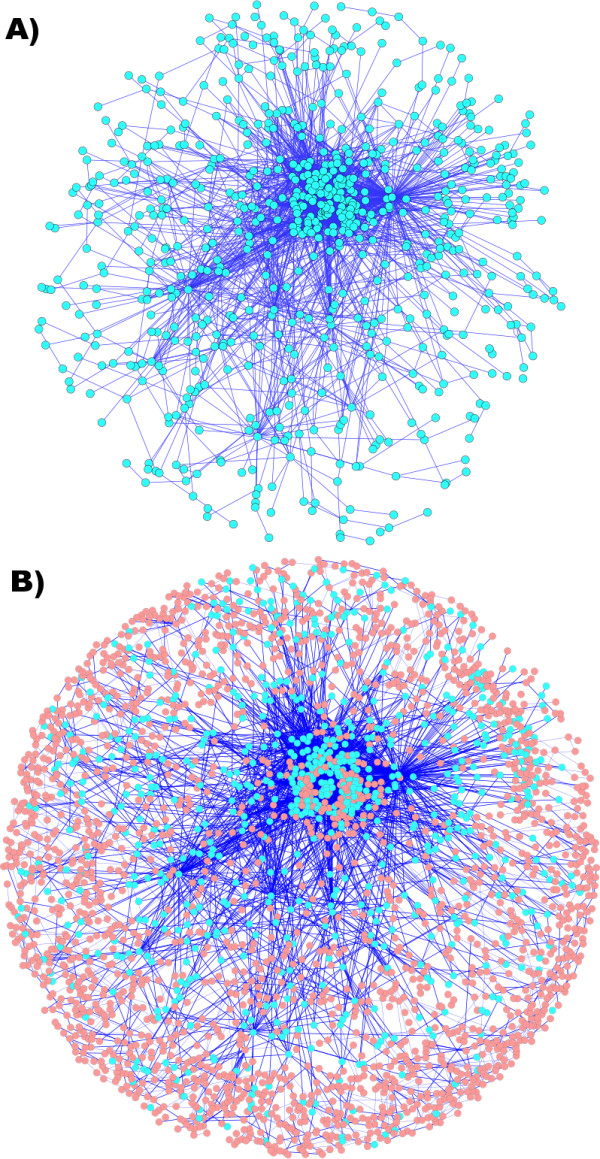
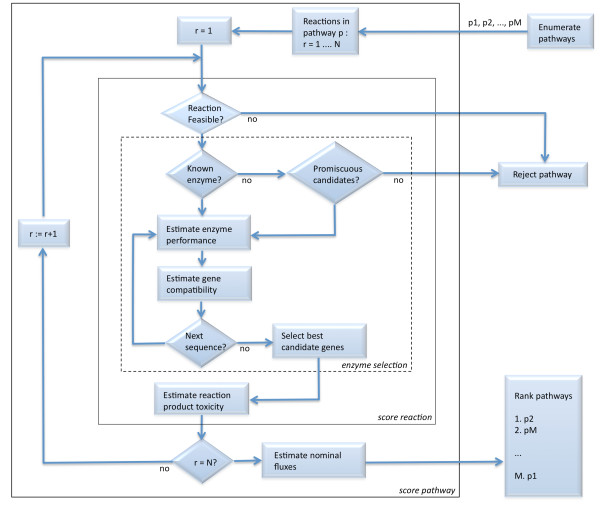
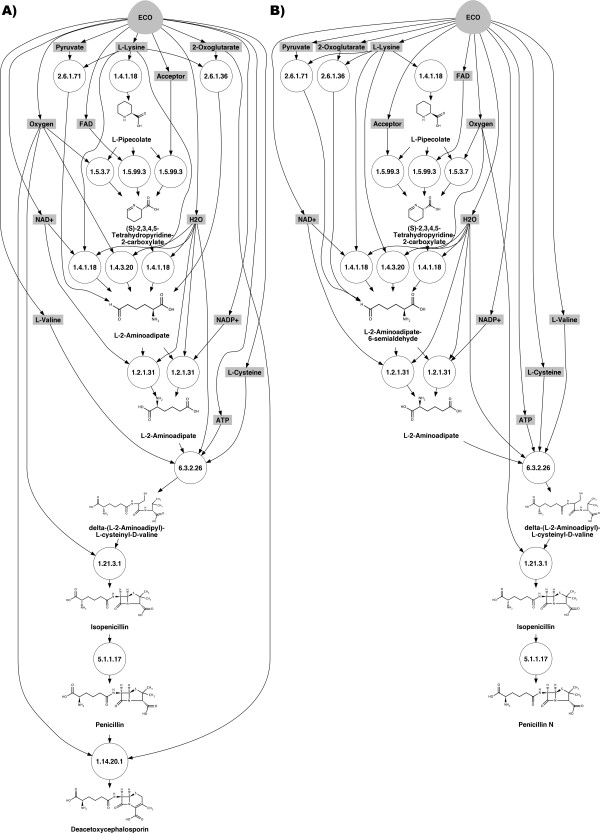
In our method, we efficiently address the complexity problem by coding substrates, products and reactions into molecular signatures. Metabolic maps are represented using hypergraphs and the complexity is controlled by varying the specificity of the molecular signature. Furthermore, our method enables candidate pathways to be ranked to determine which ones are best to engineer. The proposed ranking function can integrate data from different sources such as host compatibility for inserted genes, the estimation of steady-state fluxes from the genome-wide reconstruction of the organism's metabolism, or the estimation of metabolite toxicity from experimental assays. We use several machine-learning tools in order to estimate enzyme activity and reaction efficiency at each step of the identified pathways. Examples of production in bacteria and yeast for two antibiotics and for one antitumor agent, as well as for several essential metabolites are outlined.
We present here a unified framework that integrates diverse techniques involved in the design of heterologous biosynthetic pathways through a retrosynthetic approach in the reaction signature space. Our engineering methodology enables the flexible design of industrial microorganisms for the efficient on-demand production of chemical compounds with therapeutic applications.
合成生物学通过将异源途径有建设性地导入工业微生物来开发用于化学品生产的细胞工厂。在这项工作中,我们提出了一种用于生产治疗药物的逆合成方法,目标是在宿主细胞中开发一种原位药物递送装置。逆合成这一概念最初是为合成化学提出的,它从目标产物开始迭代地应用逆向化学转化(代谢空间中的逆向酶催化反应),以得到底盘细胞内源性的前体。到目前为止,由于枚举给定化合物的所有可行生物合成途径的复杂性,逆合成在制造流程中的更广泛应用受到了阻碍。
在我们的方法中,我们通过将底物、产物和反应编码为分子特征来有效解决复杂性问题。代谢图谱用超图表示,并且通过改变分子特征的特异性来控制复杂性。此外,我们的方法能够对候选途径进行排序,以确定哪些途径最适合进行工程改造。所提出的排序函数可以整合来自不同来源的数据,例如插入基因的宿主兼容性、从生物体代谢的全基因组重建估计稳态通量,或从实验测定估计代谢物毒性。我们使用多种机器学习工具来估计所确定途径每个步骤的酶活性和反应效率。概述了在细菌和酵母中生产两种抗生素、一种抗肿瘤剂以及几种必需代谢物的实例。
我们在此提出一个统一框架,该框架通过反应特征空间中的逆合成方法整合了涉及异源生物合成途径设计的多种技术。我们的工程方法能够灵活设计工业微生物,以高效按需生产具有治疗应用的化合物。