Durant Stephen T
AstraZeneca - DNA Damage Response, Bioscience, Oncology iMed, Alderley Park, Cheshire, SK10 4TG, England, UK.
J Cancer. 2012;3:67-82. doi: 10.7150/jca.3965. Epub 2012 Jan 31.
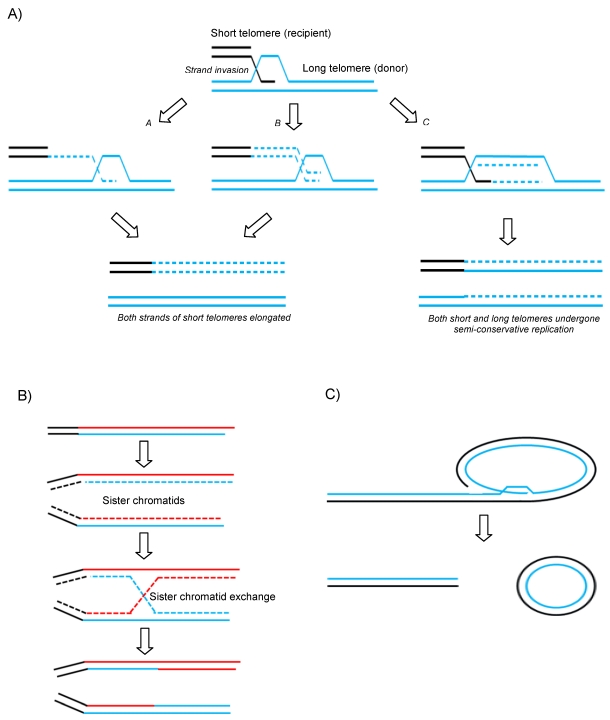
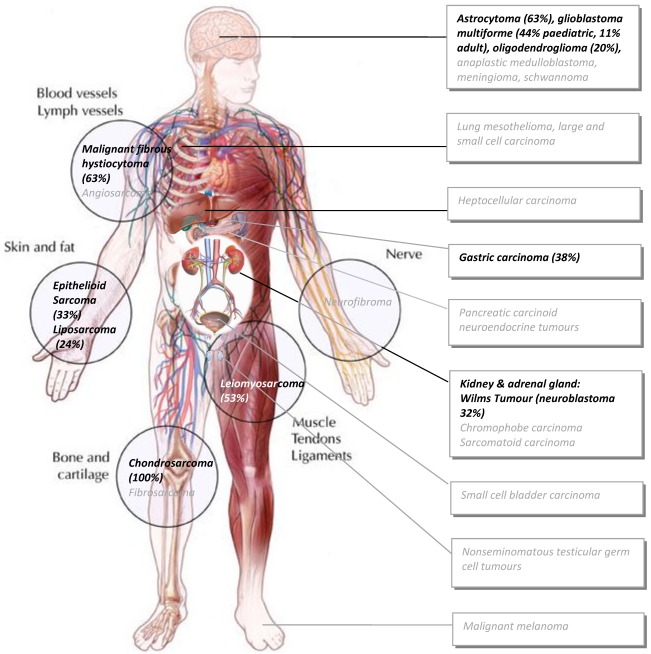
The vast majority of cancers commandeer the activity of telomerase - the remarkable enzyme responsible for prolonging cellular lifespan by maintaining the length of telomeres at the ends of chromosomes. Telomerase is only normally active in embryonic and highly proliferative somatic cells. Thus, targeting telomerase is an attractive anti-cancer therapeutic rationale currently under investigation in various phases of clinical development. However, previous reports suggest that an average of 10-15% of all cancers lose the functional activity of telomerase and most of these turn to an Alternative Lengthening of Telomeres pathway (ALT). ALT-positive tumours will therefore not respond to anti-telomerase therapies and there is a real possibility that such drugs would be toxic to normal telomerase-utilising cells and ultimately select for resistant cells that activate an ALT mechanism. ALT exploits certain DNA damage response (DDR) components to counteract telomere shortening and rapid trimming. ALT has been reported in many cancer subtypes including sarcoma, gastric carcinoma, central nervous system malignancies, subtypes of kidney (Wilm's Tumour) and bladder carcinoma, mesothelioma, malignant melanoma and germ cell testicular cancers to name but a few. A recent heroic study that analysed ALT in over six thousand tumour samples supports this historical spread, although only reporting an approximate 4% prevalence. This review highlights the various methods of ALT detection, unravels several molecular ALT models thought to promote telomere maintenance and elongation, spotlights the DDR components known to facilitate these and explores why certain tissues are more likely to subvert DDR away from its usually protective functions, resulting in a predictive pattern of prevalence in specific cancer subsets.
绝大多数癌症会操控端粒酶的活性——这种非凡的酶通过维持染色体末端端粒的长度来延长细胞寿命。端粒酶通常仅在胚胎细胞和高度增殖的体细胞中具有活性。因此,靶向端粒酶是一种颇具吸引力的抗癌治疗原理,目前正处于临床开发的各个阶段进行研究。然而,先前的报告表明,所有癌症中平均有10% - 15%会丧失端粒酶的功能活性,其中大多数转向了端粒替代延长途径(ALT)。因此,ALT阳性肿瘤对抗端粒酶疗法无反应,而且这类药物很可能对正常利用端粒酶的细胞有毒性,并最终筛选出激活ALT机制的耐药细胞。ALT利用某些DNA损伤反应(DDR)成分来抵消端粒缩短和快速修剪。ALT已在许多癌症亚型中被报道,包括肉瘤、胃癌、中枢神经系统恶性肿瘤、肾(威尔姆斯瘤)和膀胱癌的亚型、间皮瘤、恶性黑色素瘤以及生殖细胞睾丸癌等等。最近一项对六千多个肿瘤样本进行ALT分析的艰巨研究支持了这种广泛存在的情况,尽管仅报告了约4%的患病率。本综述重点介绍了ALT检测的各种方法,揭示了几种被认为促进端粒维持和延长的分子ALT模型,突出了已知促进这些过程的DDR成分,并探讨了为什么某些组织更有可能使DDR偏离其通常的保护功能,从而在特定癌症亚群中形成一种可预测的患病率模式。