Department of Biochemistry, Stanford University School of Medicine, Stanford, California, United States of America.
PLoS One. 2012;7(2):e30733. doi: 10.1371/journal.pone.0030733. Epub 2012 Feb 1.
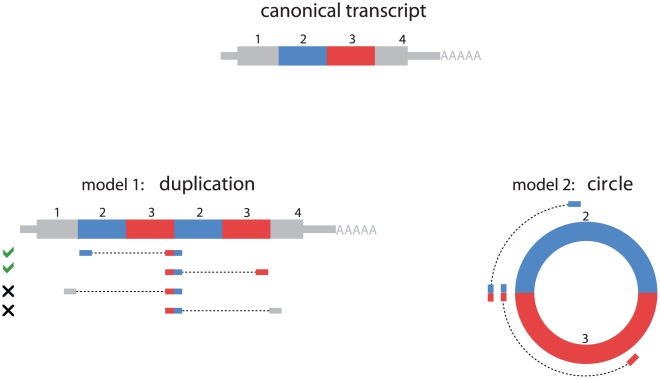
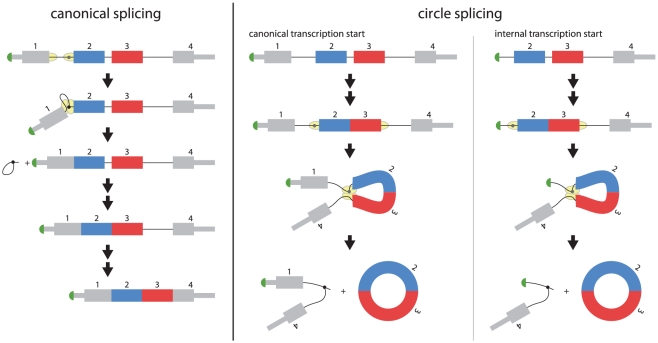
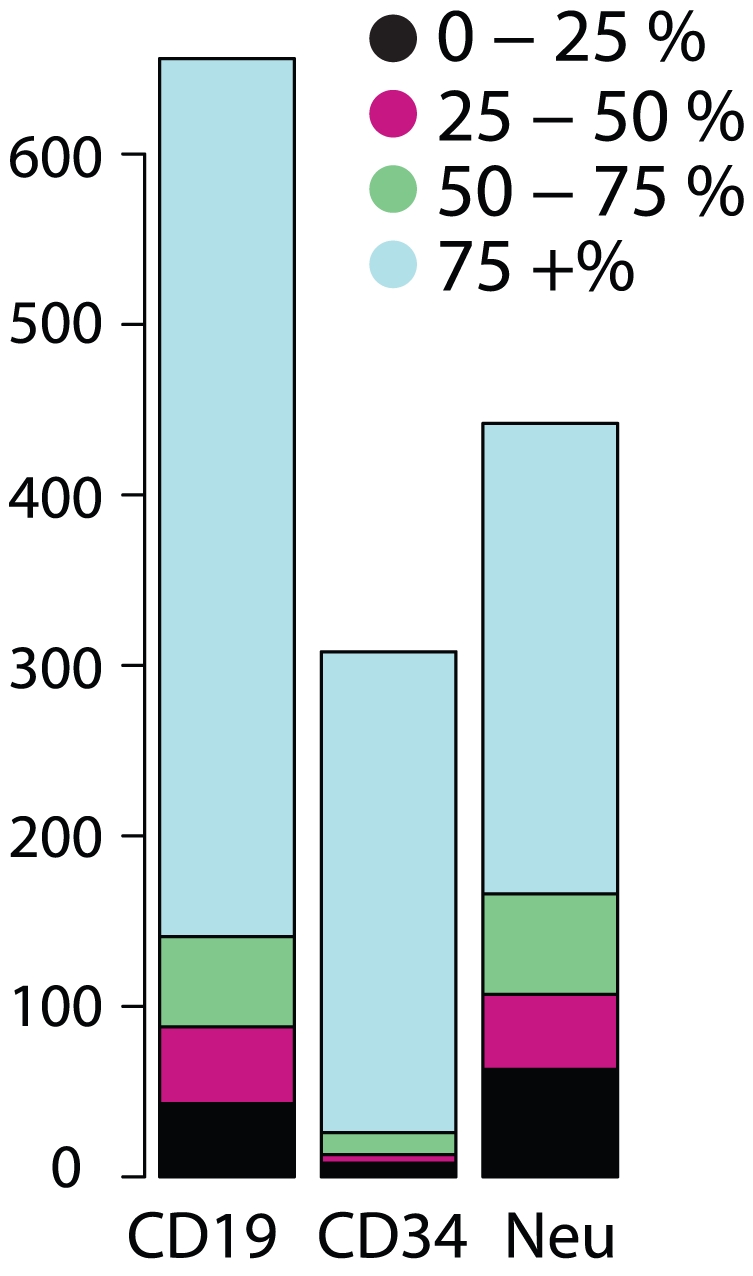
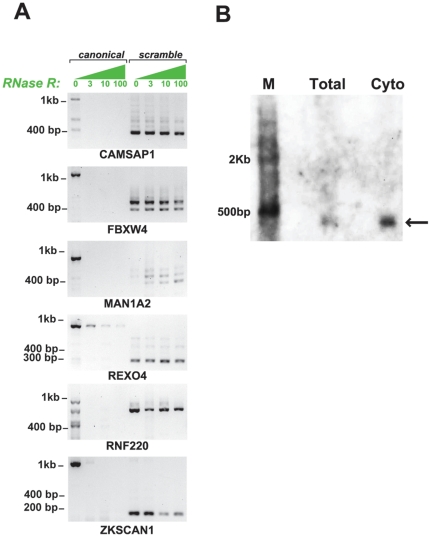
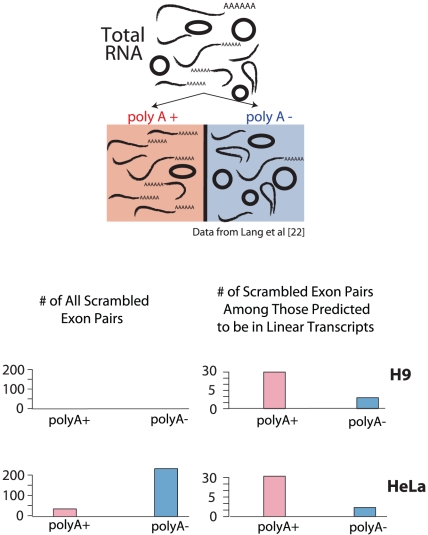
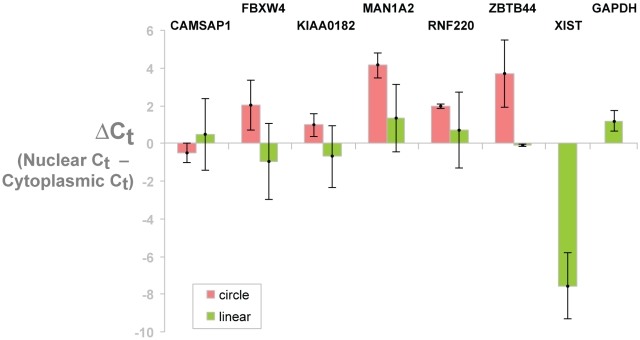
Most human pre-mRNAs are spliced into linear molecules that retain the exon order defined by the genomic sequence. By deep sequencing of RNA from a variety of normal and malignant human cells, we found RNA transcripts from many human genes in which the exons were arranged in a non-canonical order. Statistical estimates and biochemical assays provided strong evidence that a substantial fraction of the spliced transcripts from hundreds of genes are circular RNAs. Our results suggest that a non-canonical mode of RNA splicing, resulting in a circular RNA isoform, is a general feature of the gene expression program in human cells.
大多数人类的前体 mRNA 被剪接成保留基因组序列定义的外显子顺序的线性分子。通过对来自各种正常和恶性人类细胞的 RNA 进行深度测序,我们在许多人类基因的 RNA 转录本中发现了外显子按非规范顺序排列的情况。统计估计和生化分析提供了强有力的证据,表明数百个基因的剪接转录本中有相当一部分是环状 RNA。我们的结果表明,导致环状 RNA 同种型的非规范 RNA 剪接模式是人类细胞基因表达程序的一个普遍特征。