Yang Xi, Wada Taizo, Imadome Ken-Ichi, Nishida Naonori, Mukai Takeo, Fujiwara Mitsuhiro, Kawashima Haruka, Kato Fumiyo, Fujiwara Shigeyoshi, Yachie Akihiro, Zhao Xiaodong, Miyawaki Toshio, Kanegane Hirokazu
Department of Pediatrics, Graduate School of Medicine and Pharmaceutical Science, University of Toyama, Toyama, Japan.
Herpesviridae. 2012 Feb 10;3(1):1. doi: 10.1186/2042-4280-3-1.
X-linked lymphoproliferative syndrome (XLP) is a rare inherited immunodeficiency by an extreme vulnerability to Epstein-Barr virus (EBV) infection, frequently resulting in hemophagocytic lymphohistiocytosis (HLH). XLP are now divided into type 1 (XLP-1) and type 2 (XLP-2), which are caused by mutations of SH2D1A/SLAM-associated protein (SAP) and X-linked inhibitor of apoptosis protein (XIAP) genes, respectively. The diagnosis of XLP in individuals with EBV-associated HLH (EBV-HLH) is generally difficult because they show basically similar symptoms to sporadic EBV-HLH. Although EBV-infected cells in sporadic EBV-HLH are known to be mainly in CD8+ T cells, the cell-type of EBV-infected cells in EBV-HLH seen in XLP patients remains undetermined.
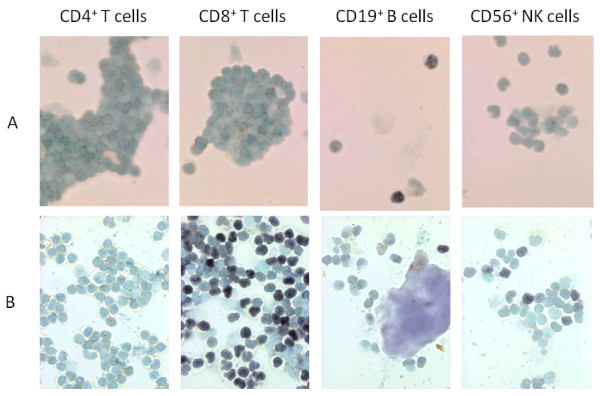
EBV-infected cells in two patients (XLP-1 and XLP-2) presenting EBV-HLH were evaluated by in EBER-1 in situ hybridization or quantitative PCR methods.
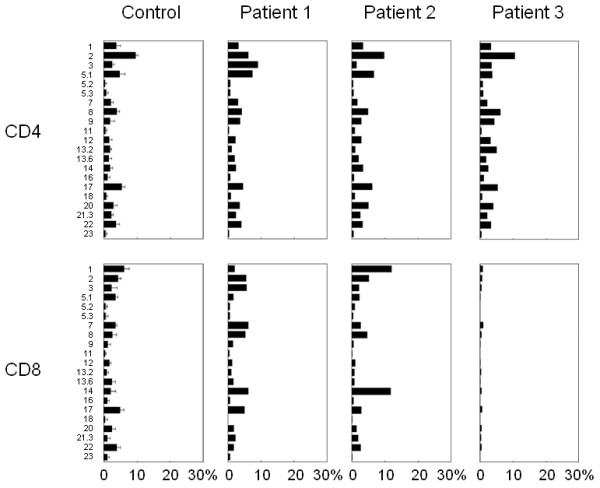
Both XLP patients showed that the dominant population of EBV-infected cells was CD19+ B cells, whereas EBV-infected CD8+ T cells were very few.
In XLP-related EBV-HLH, EBV-infected cells appear to be predominantly B cells. B cell directed therapy such as rituximab may be a valuable option in the treatment of EBV-HLH in XLP patients.
X连锁淋巴增殖性综合征(XLP)是一种罕见的遗传性免疫缺陷病,对爱泼斯坦-巴尔病毒(EBV)感染极度敏感,常导致噬血细胞性淋巴组织细胞增生症(HLH)。XLP现分为1型(XLP-1)和2型(XLP-2),分别由SH2D1A/信号淋巴细胞激活分子相关蛋白(SAP)和X连锁凋亡抑制蛋白(XIAP)基因突变引起。对于患有EBV相关HLH(EBV-HLH)的个体,XLP的诊断通常很困难,因为他们表现出与散发性EBV-HLH基本相似的症状。虽然已知散发性EBV-HLH中EBV感染的细胞主要存在于CD8+T细胞中,但XLP患者中EBV-HLH所见的EBV感染细胞的细胞类型仍未确定。
通过EBER-1原位杂交或定量PCR方法评估两名出现EBV-HLH的患者(XLP-1和XLP-2)中的EBV感染细胞。
两名XLP患者均显示,EBV感染细胞的主要群体是CD19+B细胞,而EBV感染的CD8+T细胞很少。
在XLP相关的EBV-HLH中,EBV感染细胞似乎主要是B细胞。利妥昔单抗等针对B细胞的治疗可能是治疗XLP患者EBV-HLH的一种有价值的选择。