Mitsui Sachiko, Igarashi Kei M, Mori Kensaku, Yoshihara Yoshihiro
Laboratory for Neurobiology of Synapse, RIKEN Brain Science Institute, 2-1 Hirosawa, Wako-shi, Saitama 351-0198, Japan.
Neural Syst Circuits. 2011 Feb 1;1(1):5. doi: 10.1186/2042-1001-1-5.
Mitral and tufted cells are the projection neurons in the olfactory bulb, conveying odour information to various regions of the olfactory cortex. In spite of their functional importance, there are few molecular and genetic tools that can be used for selective labelling or manipulation of mitral and tufted cells. Tbx21 was first identified as a T-box family transcription factor regulating the differentiation and function of T lymphocytes. In the brain, Tbx21 is specifically expressed in mitral and tufted cells of the olfactory bulb.
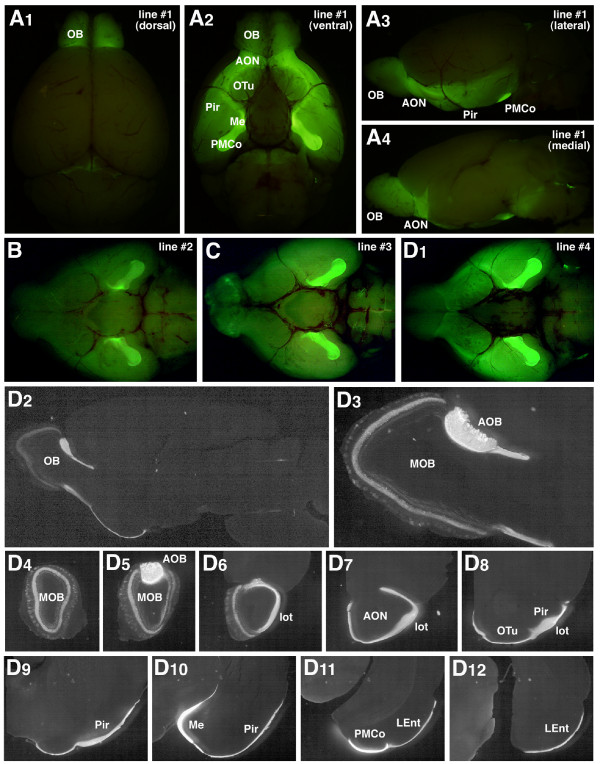
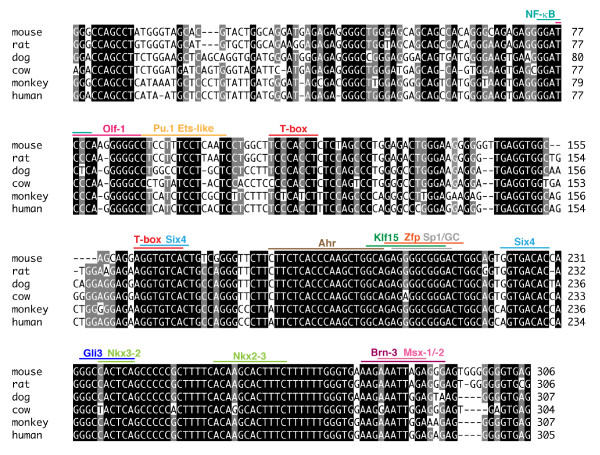
In this study, we performed a promoter/enhancer analysis of mouse Tbx21 gene by comparing nucleotide sequence similarity of Tbx21 genes among several mammalian species and generating transgenic mouse lines with various lengths of 5' upstream region fused to a fluorescent reporter gapVenus. We identified the cis-regulatory enhancer element (~300 nucleotides) at ~ 3.0 kb upstream of the transcription start site of Tbx21 gene, which is both necessary and sufficient for transgene expression in mitral and tufted cells. In contrast, the 2.6-kb 5'-flanking region of mouse Tbx21 gene induced transgene expression with variable patterns in restricted populations of neurons predominantly located along the olfactory pathway. Furthermore, we generated transgenic mice expressing the genetically-encoded fluorescent exocytosis indicator, synaptopHluorin, in mitral and tufted cells for visualization of presynaptic neural activities in the piriform cortex.
The transcriptional enhancer of Tbx21 gene provides a powerful tool for genetic manipulations of mitral and tufted cells in studying the development and function of the secondary olfactory pathways from the bulb to the cortex.
二尖瓣细胞和簇状细胞是嗅球中的投射神经元,将气味信息传递到嗅觉皮层的各个区域。尽管它们在功能上很重要,但可用于选择性标记或操纵二尖瓣细胞和簇状细胞的分子和遗传工具却很少。Tbx21最初被鉴定为一种调节T淋巴细胞分化和功能的T-box家族转录因子。在大脑中,Tbx21在嗅球的二尖瓣细胞和簇状细胞中特异性表达。
在本研究中,我们通过比较几种哺乳动物物种中Tbx21基因的核苷酸序列相似性,并生成具有与荧光报告基因gapVenus融合的不同长度5'上游区域的转基因小鼠品系,对小鼠Tbx21基因进行了启动子/增强子分析。我们在Tbx21基因转录起始位点上游约3.0 kb处鉴定了顺式调节增强子元件(约300个核苷酸),该元件对于二尖瓣细胞和簇状细胞中的转基因表达既必要又充分。相比之下,小鼠Tbx21基因的2.6 kb 5'侧翼区域在主要沿嗅觉通路分布的有限神经元群体中诱导出具有可变模式的转基因表达。此外,我们生成了在二尖瓣细胞和簇状细胞中表达基因编码的荧光胞吐指示剂synaptopHluorin的转基因小鼠,用于可视化梨状皮层中的突触前神经活动。
Tbx21基因的转录增强子为在研究从嗅球到皮层的次级嗅觉通路的发育和功能时对二尖瓣细胞和簇状细胞进行基因操作提供了一个强大的工具。