Department of Biochemistry, JST, ERATO, Suematsu Gas Biology Project, School of Medicine, Keio University, 35 Shinanomachi, Shinjuku-ku, Tokyo 160-8582, Japan.
J Mol Med (Berl). 2012 Mar;90(3):245-54. doi: 10.1007/s00109-012-0875-2. Epub 2012 Feb 14.
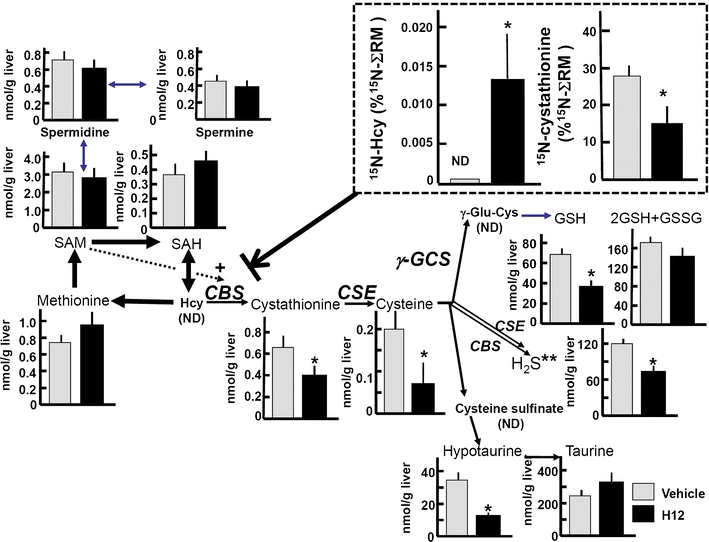
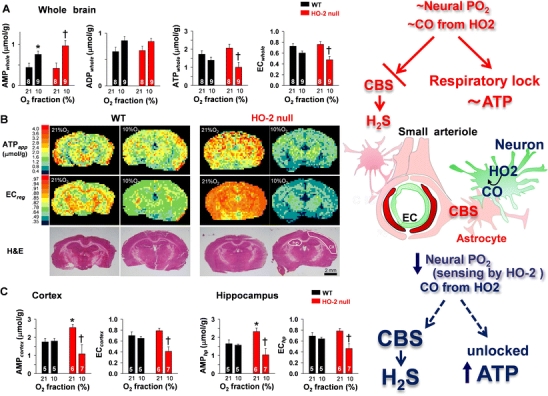
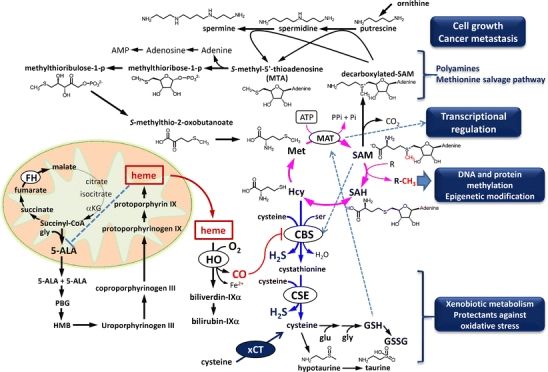
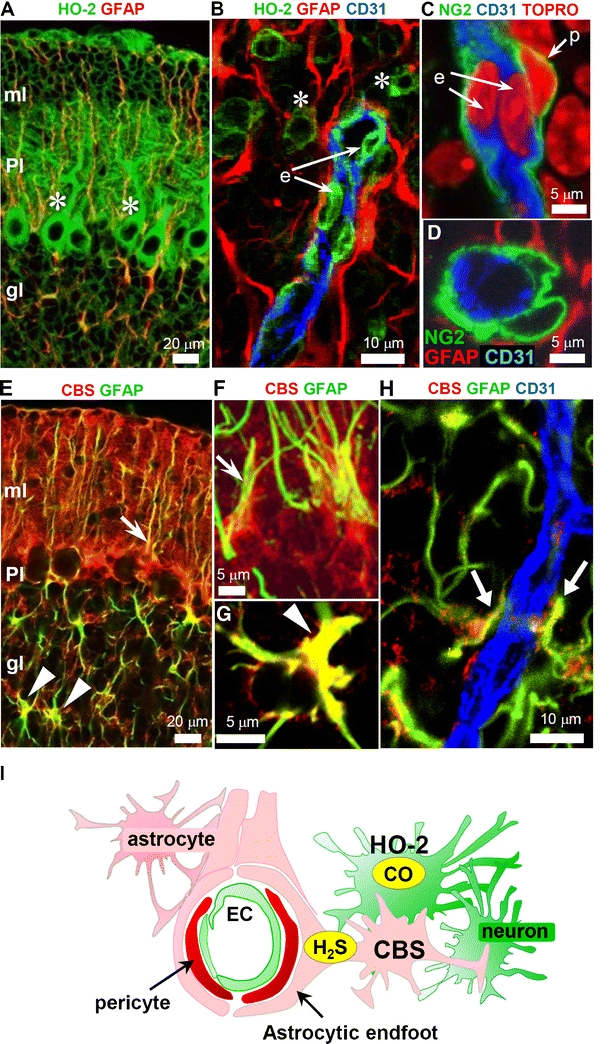
Carbon monoxide (CO) is a gaseous product generated by heme oxygenase (HO), which oxidatively degrades heme. While the stress-inducible HO-1 has well been recognized as an anti-oxidative defense mechanism under stress conditions, recent studies suggest that cancer cells utilize the reaction for their survival. HO-2, the constitutive isozyme, also plays protective roles as a tonic regulator for neurovascular function. Although protective roles of the enzyme reaction and CO have extensively been studied, little information is available on the molecular mechanisms by which the gas exerts its biological actions. Recent studies using metabolomics revealed that CO inhibits cystathionine β-synthase (CBS), which generates H(2)S, another gaseous mediator. The CO-dependent CBS inhibition may impact on the remethylation cycle and related metabolic pathways including the methionine salvage pathway and polyamine synthesis. This review focuses on the gas-responsive regulation of metabolic systems, particularly the remethylation and transsulfuration pathways, and their putative implications for cancer and ischemic diseases.
一氧化碳(CO)是血红素氧合酶(HO)产生的一种气态产物,可氧化降解血红素。虽然应激诱导型 HO-1 已被广泛认为是应激条件下的一种抗氧化防御机制,但最近的研究表明,癌细胞利用该反应进行存活。HO-2 是组成型同工酶,也作为神经血管功能的滋补调节剂发挥保护作用。尽管该酶反应和 CO 的保护作用已得到广泛研究,但关于气体发挥其生物学作用的分子机制的信息很少。最近使用代谢组学的研究表明,CO 抑制半胱氨酸 β-合酶(CBS),CBS 生成另一种气态介质 H2S。CO 依赖性 CBS 抑制可能影响包括蛋氨酸补救途径和多胺合成在内的再甲基化循环和相关代谢途径。这篇综述重点介绍代谢系统对气体的反应性调节,特别是再甲基化和转硫途径,及其对癌症和缺血性疾病的潜在影响。