Faculty of Postgraduate Studies, University of Health Sciences, Vientiane, Lao PDR.
BMC Health Serv Res. 2012 Feb 14;12:37. doi: 10.1186/1472-6963-12-37.
Prompt, correct diagnosis and treatment with health information are essential components of reproductive tract infection (RTI) and sexually transmitted infection (STI) services. This study aims to describe care seeking behaviour and barriers to accessing RTI/STI services among female sex workers (FSWs) in Laos.
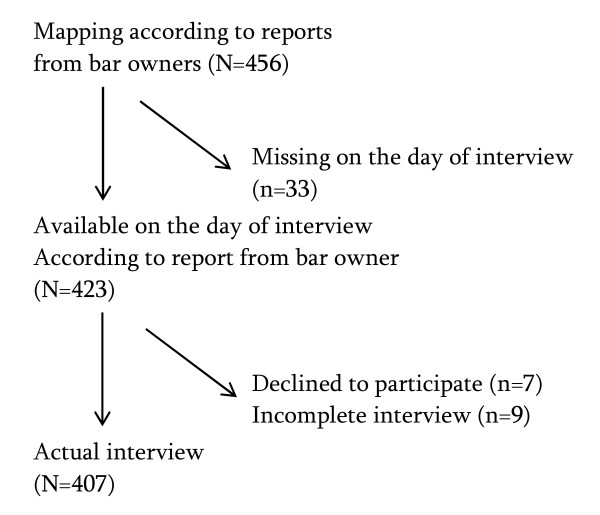
A cross-sectional survey using closed and open-ended questions was performed in six districts along Road 9, traversing Savannakhet province from Thailand to Vietnam. In total, 407 FSWs were interviewed. The data were analyzed and presented descriptively. Multiple logistic regression analysis was applied to assess associations between respondents' background characteristics and care seeking behaviour.
About half of the respondents (49%) were less than or equal to 19 years of age, and 50% had started or completed secondary school. Fifty-eight percent had been engaged in sex work for less than 1 year. Eighty-six percent of the respondents reported RTI/STI signs or symptoms currently or in the last 3 months but only two-thirds of those with symptoms sought treatment. Source of treatment for the last RTI/STI episode was the drop-in centre (53%) followed by a public hospital (23%), private clinic (12%), private pharmacy (9%), and herbalist (2%). The main barriers to service use were long waiting time, inconvenient location of the clinic, not knowing where to get the services needed, and negative attitudes among healthcare providers. Care seeking behaviour was associated with longer duration of sex work (OR = 2.6, 95%CI 1.52-5.36). Forty-four percent received health information from peer educators, 34% from fellow friends, 26% from a pimp, and 26% had received information from a healthcare provider during the visit.
There were several barriers to accessing RTI/STI services and they were related to both structural and individual factors. Innovative STI service strategies to inform FSWs about the importance of early diagnosis and treatment should be established. Continuous training for STI service providers focusing on counseling skills and awareness of the sexual health care needs for FSWs is recommended in order to minimize the barriers experienced by FSWs in this particular setting.
及时、正确的诊断和治疗以及健康信息是生殖道感染(RTI)和性传播感染(STI)服务的重要组成部分。本研究旨在描述老挝性工作者(FSW)在寻求 RTI/STI 服务方面的行为和障碍。
沿 9 号公路的六个地区进行了横断面调查,该公路从泰国穿过老挝的沙拉湾省延伸至越南。总共对 407 名 FSW 进行了访谈。对数据进行了分析和描述性呈现。应用多因素逻辑回归分析评估受访者背景特征与寻求医疗服务行为之间的关联。
约一半的受访者(49%)年龄在 19 岁及以下,50%完成或完成了中学学业。58%的人从事性工作不到 1 年。86%的受访者报告称目前或过去 3 个月内有 RTI/STI 症状,但只有三分之二的有症状者接受了治疗。上次 RTI/STI 发作的治疗来源是(53%),其次是公立医院(23%)、私人诊所(12%)、私人药房(9%)和草药医生(2%)。使用服务的主要障碍是长时间的等待时间、诊所位置不便、不知道在哪里获得所需的服务以及医疗保健提供者的负面态度。寻求医疗服务的行为与性工作时间较长(OR=2.6,95%CI 1.52-5.36)有关。44%的人从同伴教育者那里获得健康信息,34%的人从朋友那里获得信息,26%的人从皮条客那里获得信息,26%的人在就诊期间从医疗保健提供者那里获得信息。
获得 RTI/STI 服务存在多种障碍,这些障碍与结构和个人因素都有关。应制定创新性的 STI 服务策略,使 FSW 了解早期诊断和治疗的重要性。建议对 STI 服务提供者进行持续培训,重点关注咨询技巧和对 FSW 性健康护理需求的认识,以尽量减少 FSW 在这一特定环境中遇到的障碍。