Molecular Virology Laboratory, School of Life Sciences, Jawaharlal Nehru University, New Delhi 110 067, India.
Virol J. 2012 Feb 16;9:43. doi: 10.1186/1743-422X-9-43.
Emerging whitefly transmitted begomoviruses are major pathogens of vegetable and fibre crops throughout the world, particularly in tropical and sub-tropical regions. Mutation, pseudorecombination and recombination are driving forces for the emergence and evolution of new crop-infecting begomoviruses. Leaf curl disease of field grown radish plants was noticed in Varanasi and Pataudi region of northern India. We have identified and characterized two distinct monopartite begomoviruses and associated beta satellite DNA causing leaf curl disease of radish (Raphanus sativus) in India.
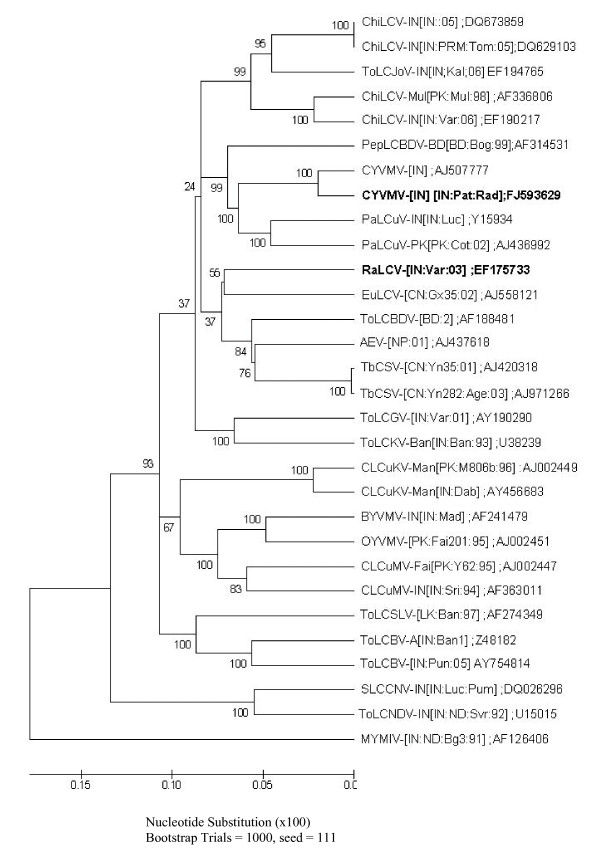
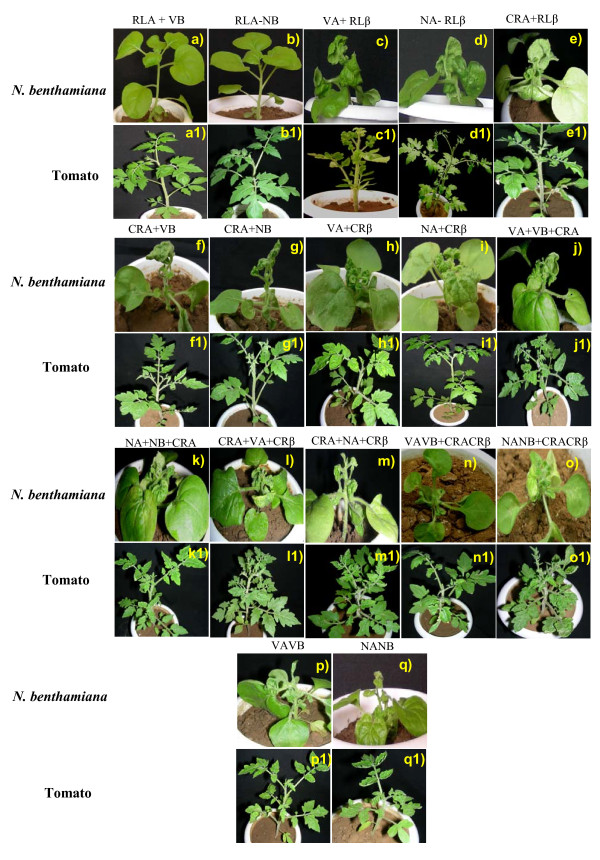
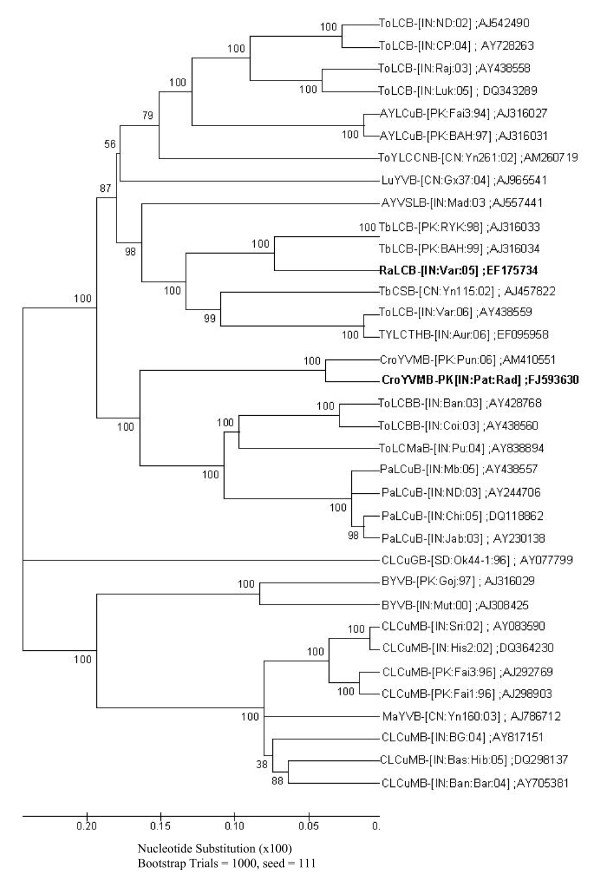
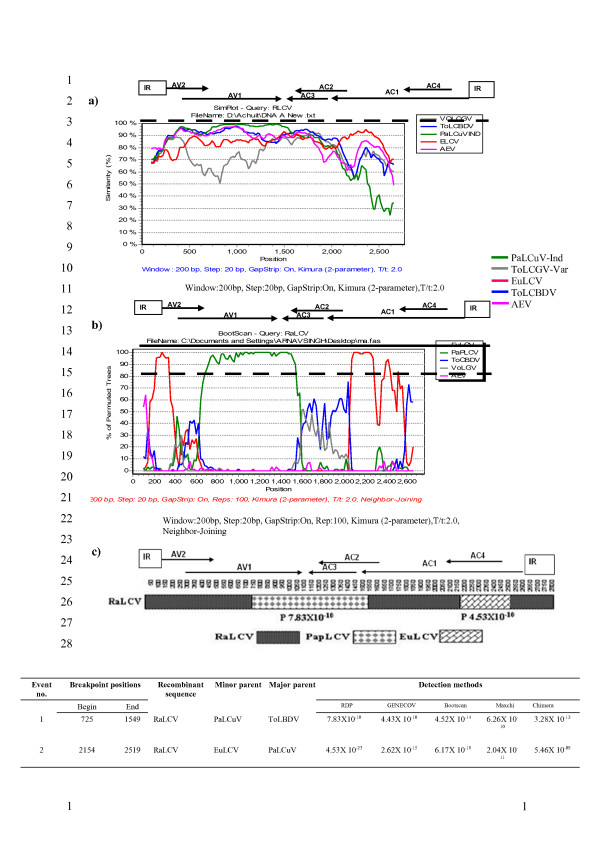
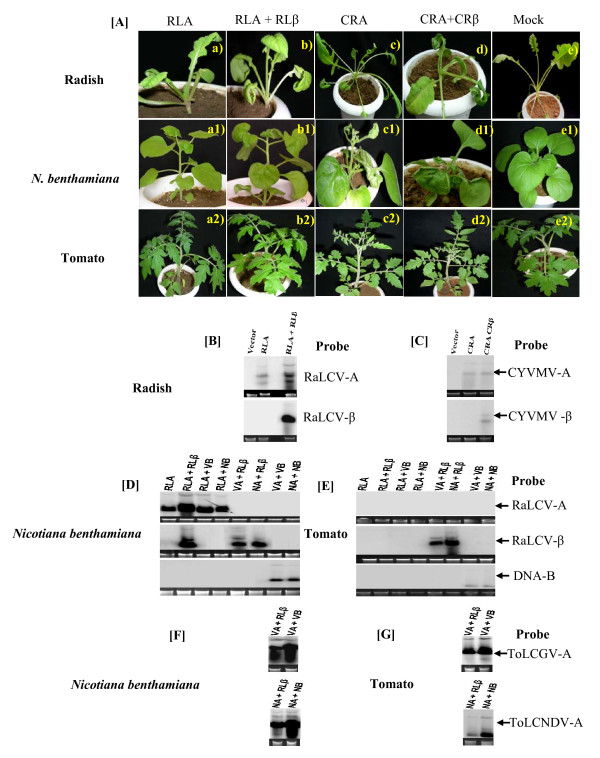
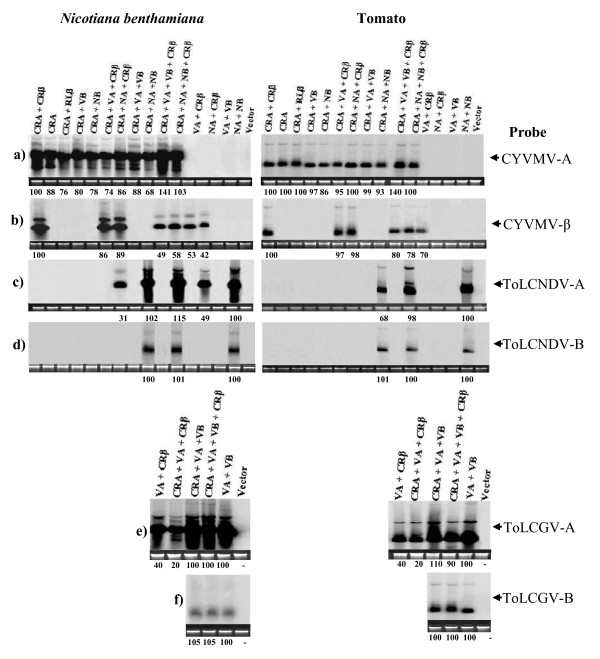
We demonstrate that RaLCD is caused by a complex of two Old World begomoviruses and their associated betasatellites. Radish leaf curl virus-Varanasi is identified as a new recombinant species, Radish leaf curl virus (RaLCV) sharing maximum nucleotide identity of 87.7% with Tomato leaf curl Bangladesh virus-[Bangladesh:2] (Accession number AF188481) while the virus causing radish leaf curl disease-Pataudi is an isolate of Croton yellow vein mosaic virus-[India] (CYVMV-IN) (Accession number AJ507777) sharing 95.8% nucleotide identity. Further, RDP analysis revealed that the RaLCV has a hybrid genome, a putative recombinant between Euphorbia leaf curl virus and Papaya leaf curl virus. Cloned DNA of either RaLCV or CYVMV induced mild leaf curl symptoms in radish plants. However, when these clones (RaLCV or CYVMV) were individually co-inoculated with their associated cloned DNA betasatellite, symptom severity and viral DNA levels were increased in radish plants and induced typical RaLCD symptoms. To further extend these studies, we carried out an investigation of the interaction of these radish-infecting begomoviruses and their associated satellite, with two tomato infecting begomoviruses (Tomato leaf curl Gujarat virus and Tomato leaf curl New Delhi virus). Both of the tomato-infecting begomoviruses showed a contrasting and differential interaction with DNA satellites, not only in the capacity to interact with these molecules but also in the modulation of symptom phenotypes by the satellites.
This is the first report and experimental demonstration of Koch's postulate for begomoviruses associated with radish leaf curl disease. Further observations also provide direct evidence of lateral movement of weed infecting begomovirus in the cultivated crops and the present study also suggests that the exchange of betasatellites with other begomoviruses would create a new disease complex posing a serious threat to crop production.
新兴的粉虱传播的番茄黄曲叶病毒是世界范围内蔬菜和纤维作物的主要病原体,尤其是在热带和亚热带地区。突变、假重组和重组是新的作物侵染番茄黄曲叶病毒出现和进化的驱动力。在印度北部的瓦拉纳西和帕塔奥迪地区,田间种植的萝卜植株出现了卷叶病。我们已经鉴定和表征了两种不同的单分体番茄黄曲叶病毒及其相关的β卫星 DNA,它们是引起印度萝卜(Raphanus sativus)卷叶病的原因。
我们证明,RaLCD 是由两种旧世界番茄黄曲叶病毒及其相关的β卫星共同引起的。萝卜卷叶病毒-瓦拉纳西被鉴定为一种新的重组种,萝卜卷叶病毒(RaLCV)与番茄黄曲叶病毒-孟加拉国[孟加拉国:2](登录号 AF188481)的最大核苷酸同一性为 87.7%,而引起萝卜卷叶病的病毒是印度的巴豆黄脉花叶病毒[印度](CYVMV-IN)(登录号 AJ507777)的分离株,核苷酸同一性为 95.8%。此外,RDP 分析显示,RaLCV 具有混合基因组,是一种推定的麻疯树卷叶病毒和木瓜卷叶病毒之间的重组体。克隆的 RaLCV 或 CYVMV DNA 单独接种萝卜植株时,会引起轻微的卷叶症状。然而,当这些克隆体(RaLCV 或 CYVMV)分别与它们相关的克隆 DNA β卫星共接种时,萝卜植株中的病毒 DNA 水平和症状严重程度会增加,并诱导出典型的 RaLCD 症状。为了进一步扩展这些研究,我们对这些侵染萝卜的黄曲叶病毒及其相关卫星与两种侵染番茄的黄曲叶病毒(番茄黄曲叶病毒古吉拉特邦病毒和番茄黄曲叶病毒新德里病毒)之间的相互作用进行了研究。两种侵染番茄的黄曲叶病毒不仅在与这些分子相互作用的能力上,而且在卫星对症状表型的调节上,都表现出与 DNA 卫星截然不同的相互作用。
这是首次对与萝卜卷叶病相关的黄曲叶病毒提出科赫假设,并进行了实验验证。进一步的观察也为杂草侵染的黄曲叶病毒在栽培作物中的侧向运动提供了直接证据,本研究还表明,β卫星与其他黄曲叶病毒的交换将产生一个新的病害复合种,对作物生产构成严重威胁。