Program in Transplantation Biology, Clinical Research Division, Fred Hutchinson Cancer Research Center, 1100 Fairview Avenue N, Mailstop D1-100, Seattle, WA, 98109-1024, USA.
Skelet Muscle. 2012 Feb 16;2(1):4. doi: 10.1186/2044-5040-2-4.
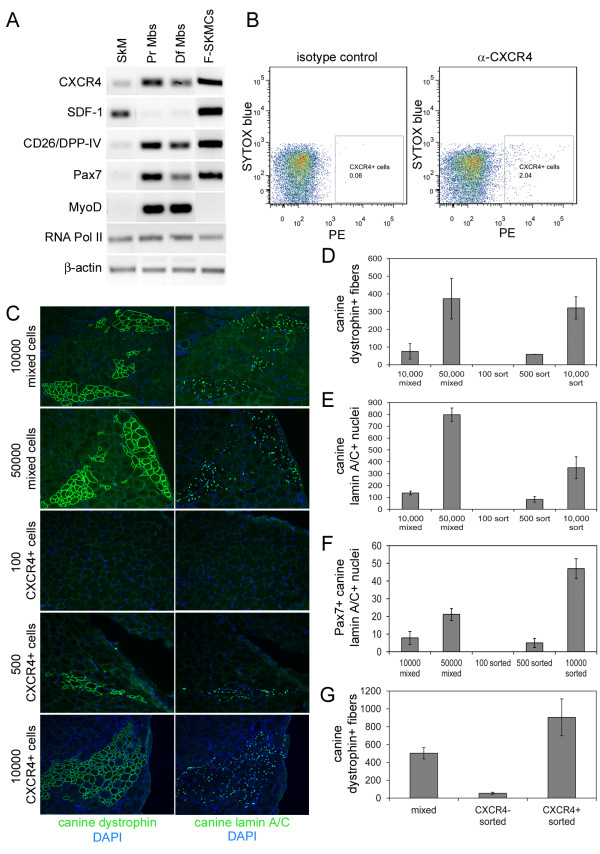
Transplantation of myogenic stem cells possesses great potential for long-term repair of dystrophic muscle. In murine-to-murine transplantation experiments, CXCR4 expression marks a population of adult murine satellite cells with robust engraftment potential in mdx mice, and CXCR4-positive murine muscle-derived SP cells home more effectively to dystrophic muscle after intra-arterial delivery in mdx5cv mice. Together, these data suggest that CXCR4 plays an important role in donor cell engraftment. Therefore, we sought to translate these results to a clinically relevant canine-to-canine allogeneic transplant model for Duchenne muscular dystrophy (DMD) and determine if CXCR4 is important for donor cell engraftment.
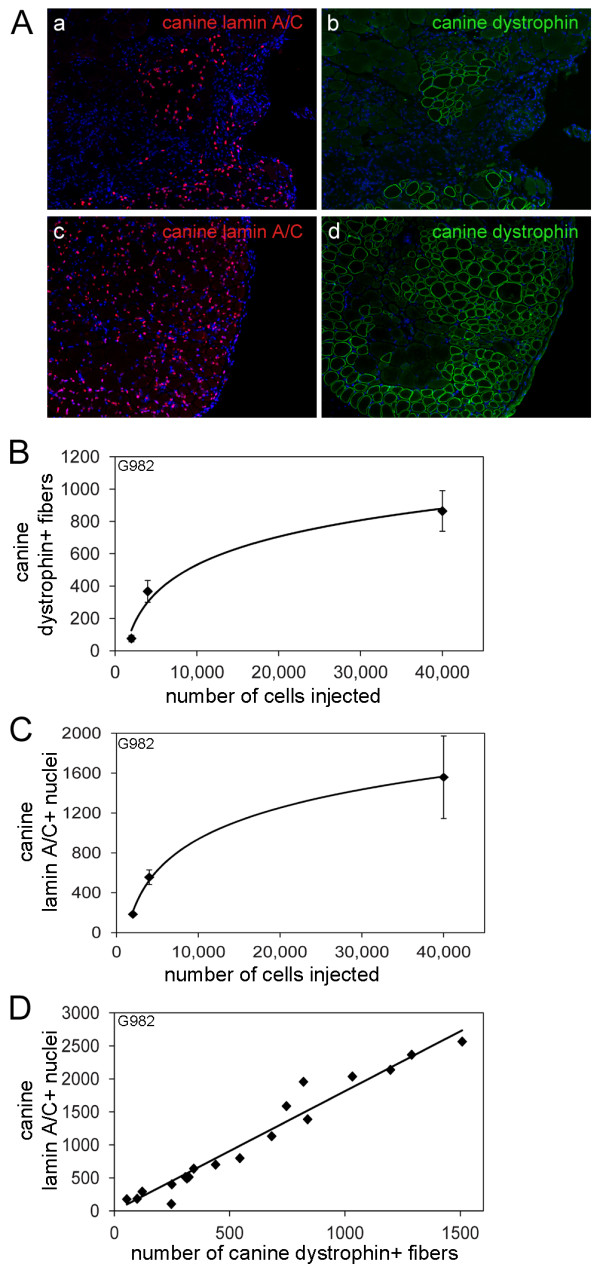
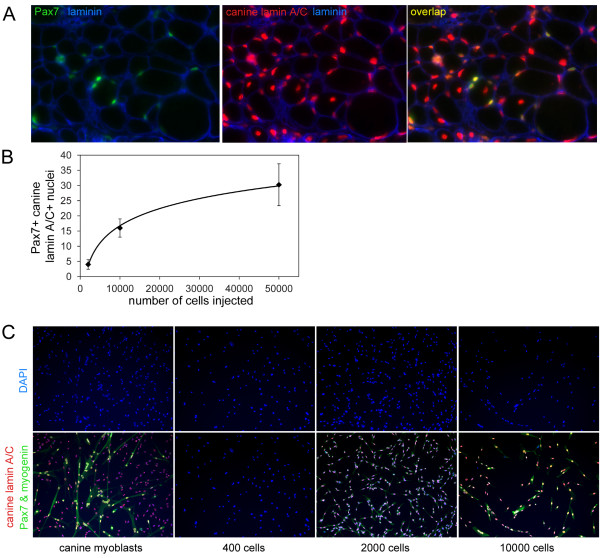
In this study, we used a canine-to-murine xenotransplantation model to quantitatively compare canine muscle cell engraftment, and test the most effective cell population and modulating factor in a canine model of DMD using allogeneic transplantation experiments.
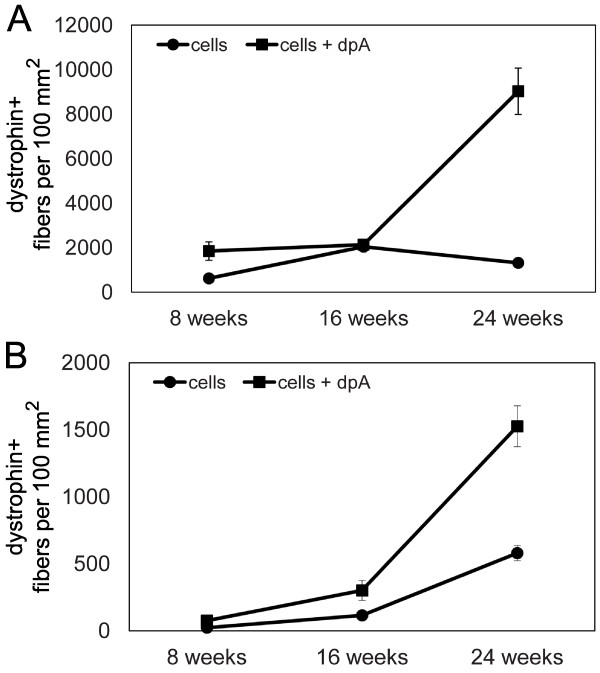
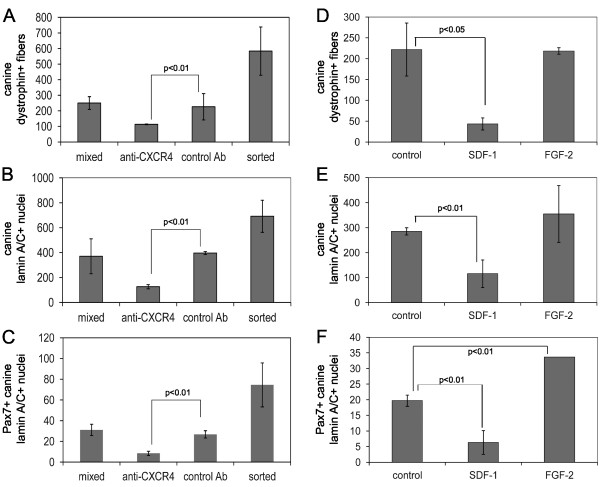
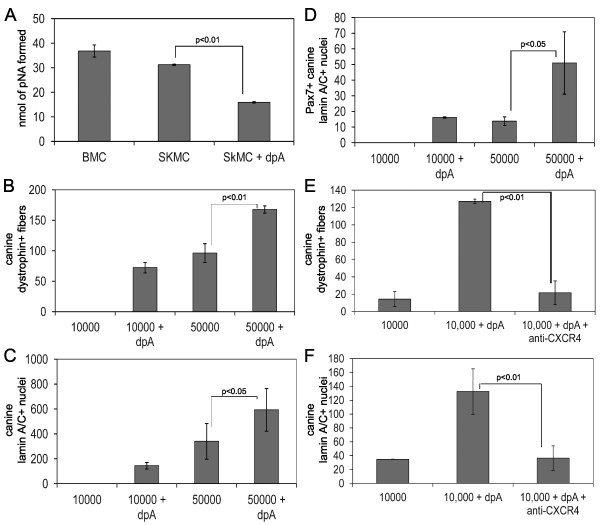
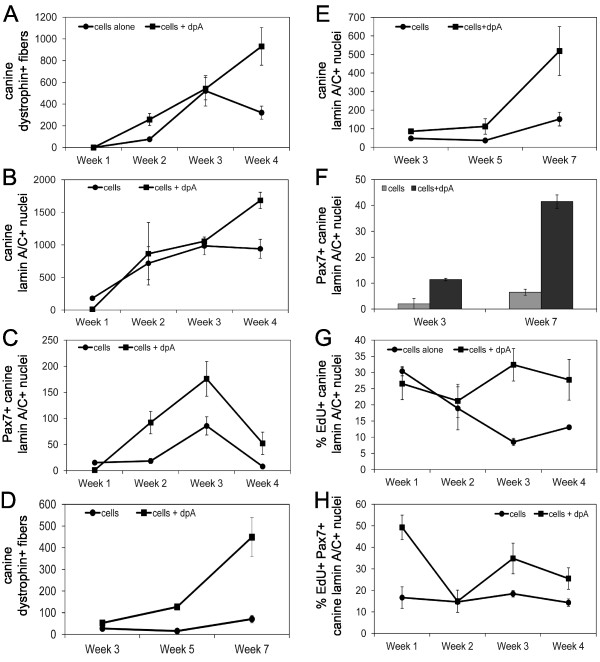
We show that CXCR4 expressing cells are important for donor muscle cell engraftment, yet FACS sorted CXCR4-positive cells display decreased engraftment efficiency. However, diprotin A, a positive modulator of CXCR4-SDF-1 binding, significantly enhanced engraftment and stimulated sustained proliferation of donor cells in vivo. Furthermore, the canine-to-murine xenotransplantation model accurately predicted results in canine-to-canine muscle cell transplantation.
Therefore, these results establish the efficacy of diprotin A in stimulating muscle cell engraftment, and highlight the pre-clinical utility of a xenotransplantation model in assessing the relative efficacy of muscle stem cell populations.
成肌干细胞移植具有长期修复营养不良肌肉的巨大潜力。在鼠到鼠的移植实验中,CXCR4 的表达标志着一群具有强大植入潜力的成年鼠卫星细胞,在 mdx 小鼠中,CXCR4 阳性的鼠肌肉源性 SP 细胞经动脉内递送后更有效地归巢到营养不良的肌肉中。这些数据共同表明,CXCR4 在供体细胞植入中起重要作用。因此,我们试图将这些结果转化为一种具有临床相关性的犬到犬同种异体移植模型,用于杜氏肌营养不良症(DMD),并确定 CXCR4 是否对供体细胞植入很重要。
在这项研究中,我们使用了一种犬到鼠的异种移植模型来定量比较犬肌肉细胞的植入,并使用同种异体移植实验来测试犬 DMD 模型中最有效的细胞群体和调节因子。
我们表明,表达 CXCR4 的细胞对供体肌肉细胞的植入很重要,但 FACS 分选的 CXCR4 阳性细胞显示出较低的植入效率。然而,二肽基肽酶-4 抑制剂(Diprotin A),一种 CXCR4-SDF-1 结合的正调节剂,显著增强了植入,并刺激了供体细胞在体内的持续增殖。此外,犬到鼠的异种移植模型准确地预测了犬到犬肌肉细胞移植的结果。
因此,这些结果确立了二肽基肽酶-4 抑制剂在刺激肌肉细胞植入方面的功效,并强调了异种移植模型在评估肌肉干细胞群体相对功效方面的临床前实用性。