Ebensperger Luis A, Sobrero Raúl, Quirici Verónica, Castro Rodrigo A, Tolhuysen Liliana Ortiz, Vargas Francisco, Burger Joseph Robert, Quispe René, Villavicencio Camila P, Vásquez Rodrigo A, Hayes Loren D
Centro de Estudios Avanzados en Ecología and Biodiversidad, and Departamento de Ecología, Facultad de Ciencias Biológicas, Pontificia Universidad Católica de Chile, Casilla 114-D, Santiago, Chile.
Behav Ecol Sociobiol. 2012 Feb;66(2):261-274. doi: 10.1007/s00265-011-1274-3.
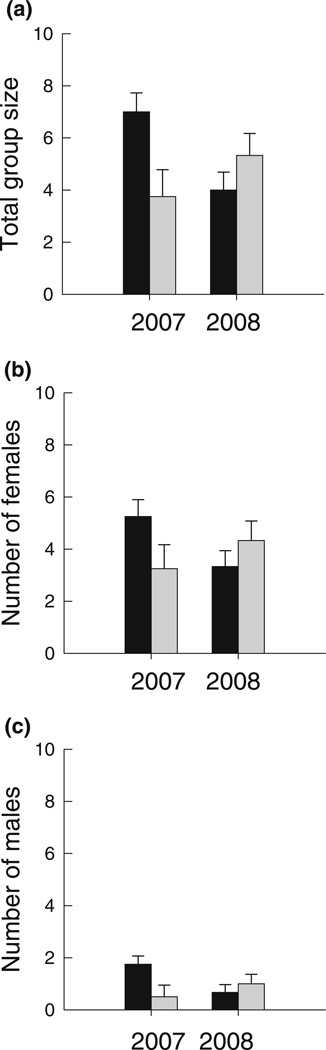
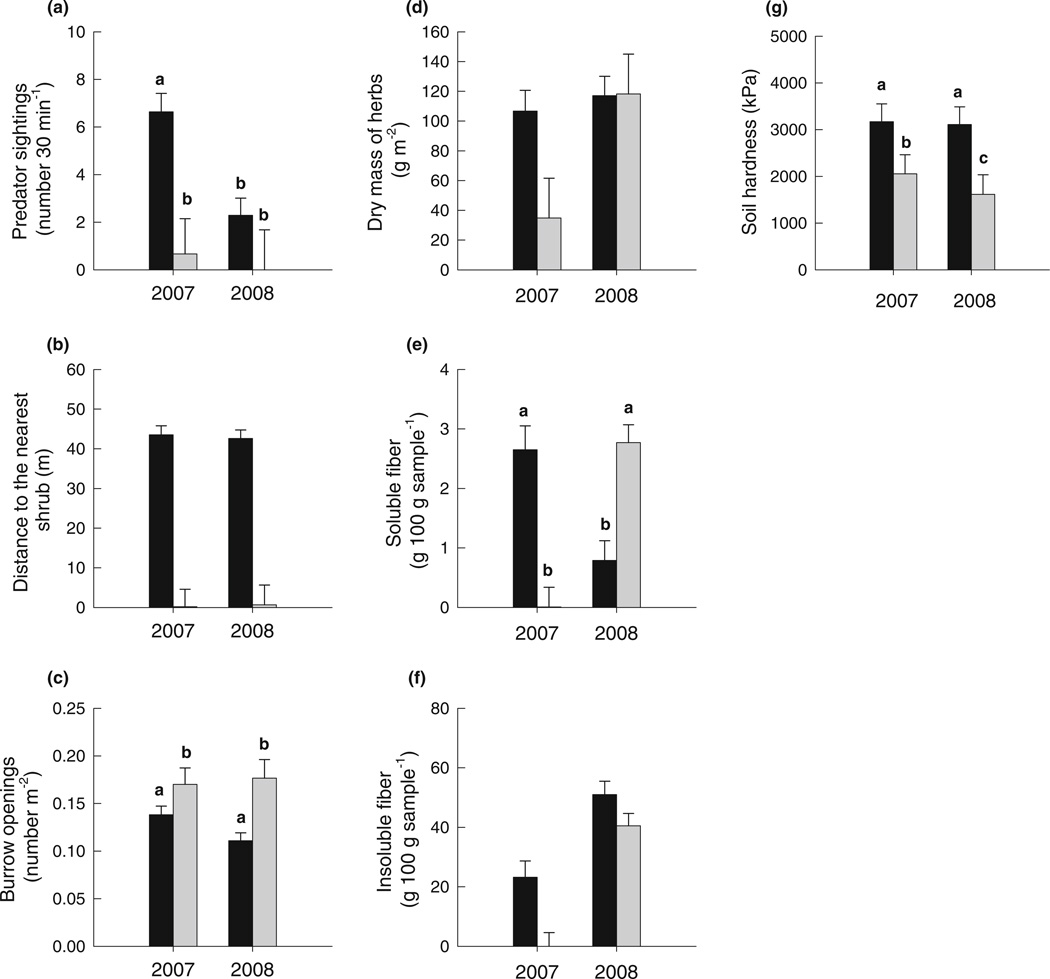
Intraspecific variation in sociality is thought to reflect a trade-off between current fitness benefits and costs that emerge from individuals' decision to join or leave groups. Since those benefits and costs may be influenced by ecological conditions, ecological variation remains a major, ultimate cause of intraspecific variation in sociality. Intraspecific comparisons of mammalian sociality across populations facing different environmental conditions have not provided a consistent relationship between ecological variation and group-living. Thus, we studied two populations of the communally rearing rodent Octodon degus to determine how co-variation between sociality and ecology supports alternative ecological causes of group living. In particular, we examined how variables linked to predation risk, thermal conditions, burrowing costs, and food availability predicted temporal and population variation in sociality. Our study revealed population and temporal variation in total group size and group composition that covaried with population and yearly differences in ecology. In particular, predation risk and burrowing costs are supported as drivers of this social variation in degus. Thermal differences, food quantity and quality were not significant predictors of social group size. In contrast to between populations, social variation within populations was largely uncoupled from ecological differences.
种内社会性的变化被认为反映了当前适应性收益与个体决定加入或离开群体所产生的成本之间的权衡。由于这些收益和成本可能受到生态条件的影响,生态变化仍然是种内社会性变化的一个主要的、终极原因。对面临不同环境条件的哺乳动物群体社会性进行种内比较,尚未发现生态变化与群居生活之间存在一致的关系。因此,我们研究了两个共同饲养的啮齿动物八齿鼠种群,以确定社会性与生态之间的共同变化如何支持群居生活的不同生态原因。具体来说,我们研究了与捕食风险、热条件、挖掘成本和食物可利用性相关的变量如何预测社会性的时间和种群变化。我们的研究揭示了群体总大小和群体组成的种群和时间变化,这些变化与生态的种群和年度差异相关。特别是,捕食风险和挖掘成本被认为是八齿鼠这种社会变化的驱动因素。热差异、食物数量和质量不是社会群体大小的显著预测因素。与种群之间的情况相反,种群内部的社会变化在很大程度上与生态差异无关。