West China Hospital Laboratory of Nanomedicine and Institute for Nanobiomedical Technology and Membrane Biology, Sichuan University, Chengdu 610041, Sichuan, China.
Int J Nanomedicine. 2012;7:571-80. doi: 10.2147/IJN.S27428. Epub 2012 Feb 2.
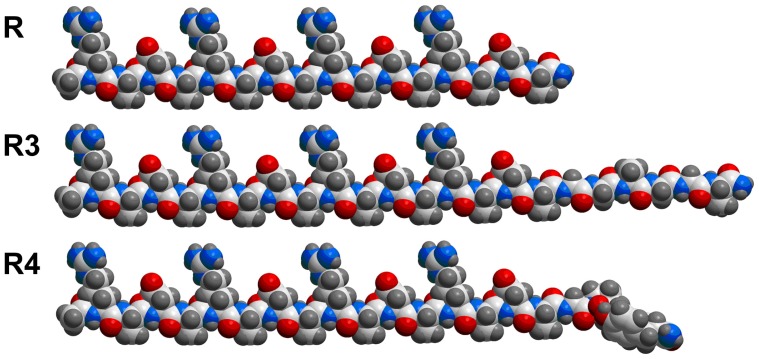
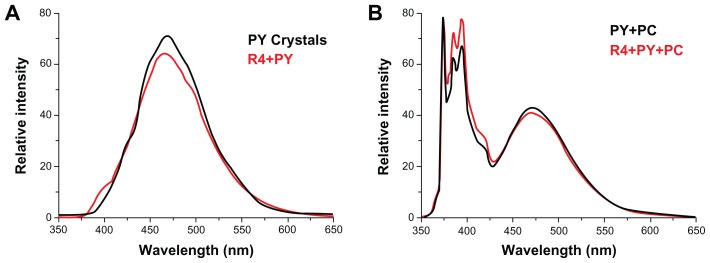
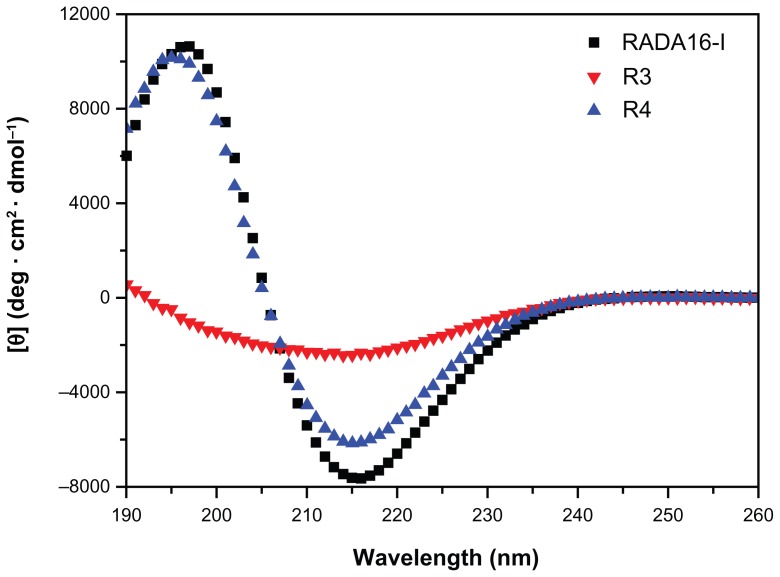
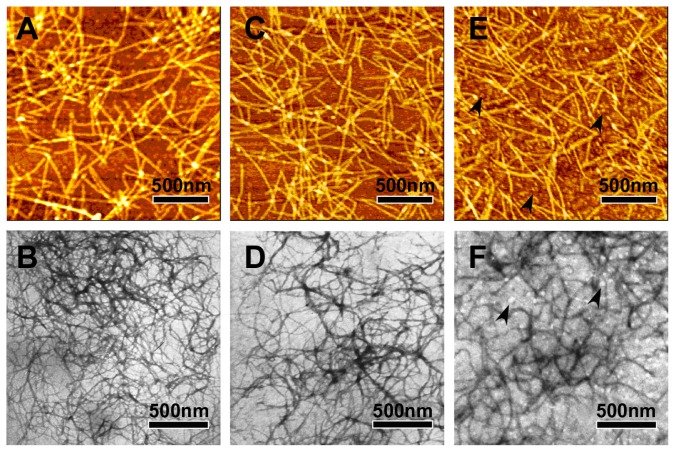
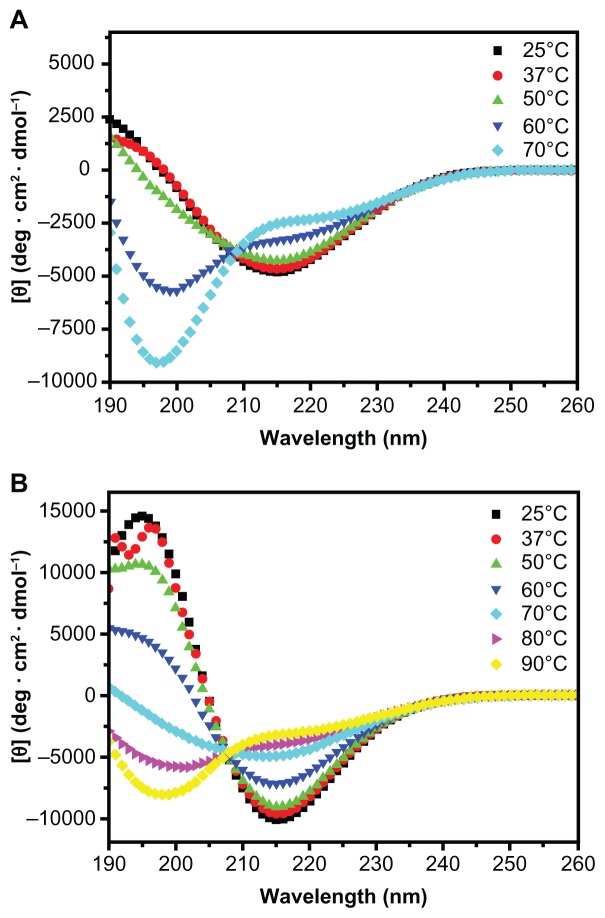
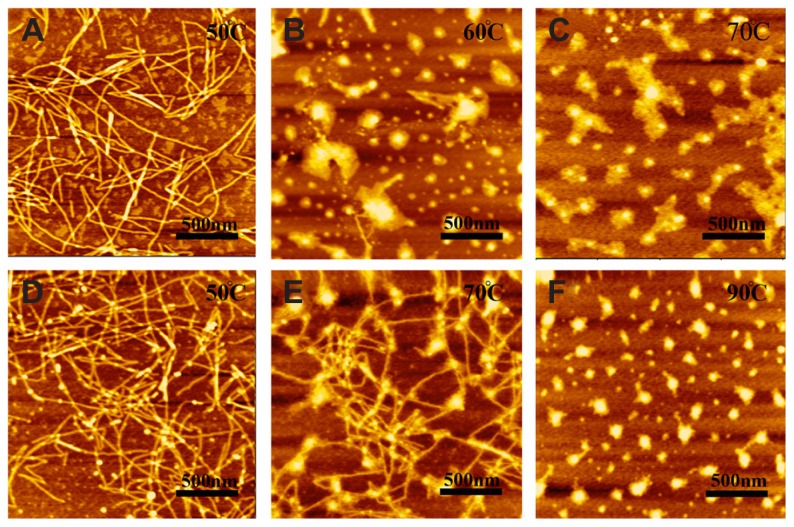
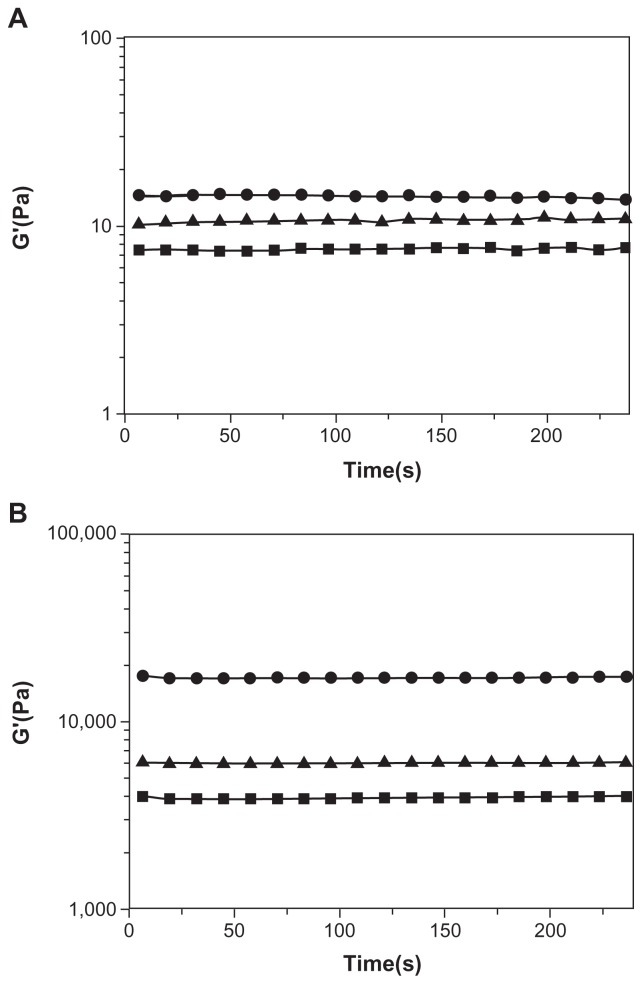
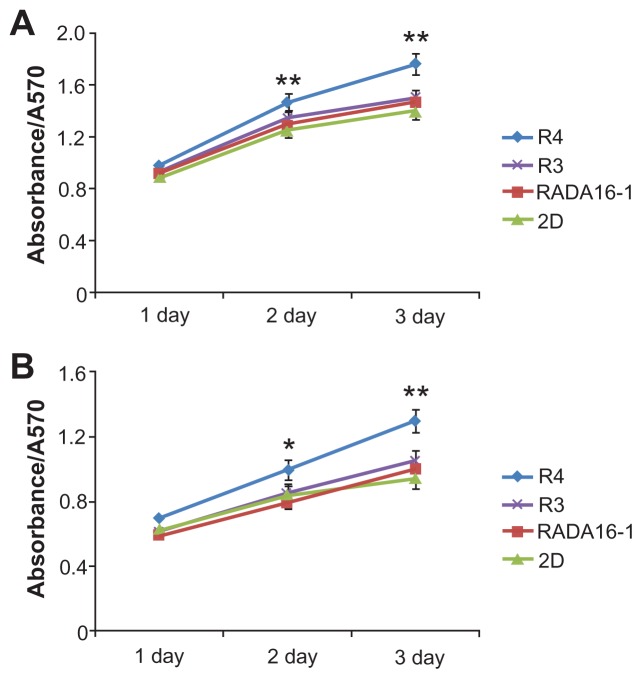
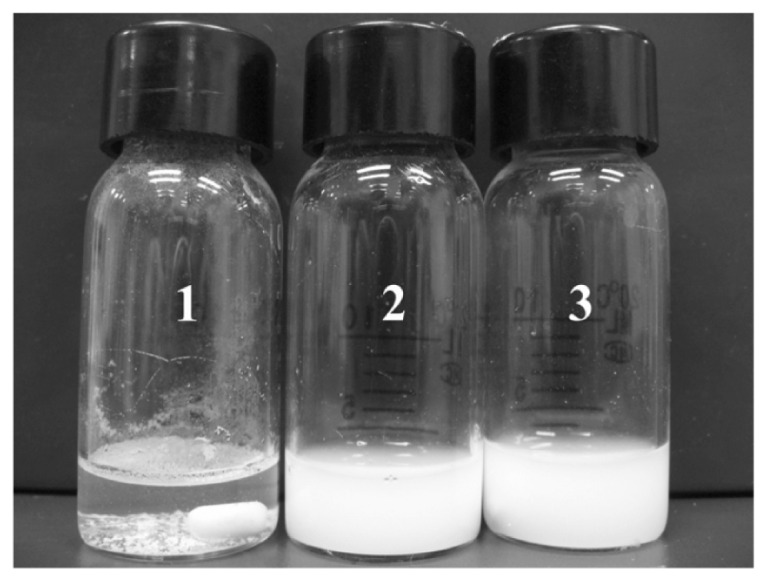
Mechanical strength of nanofiber scaffolds formed by the self-assembling peptide RADA16-I or its derivatives is not very good and limits their application. To address this problem, we inserted spidroin uncrystalline motifs, which confer incomparable elasticity and hydrophobicity to spider silk GGAGGS or GPGGY, into the C-terminus of RADA16-I to newly design two peptides: R3 (n-RADARADARADARADA-GGAGGS-c) and R4 (n-RADARADARADARADA-GPGGY-c), and then observed the effect of these motifs on biophysical properties of the peptide. Atomic force microscopy, transmitting electron microscopy, and circular dichroism spectroscopy confirm that R3 and R4 display β-sheet structure and self-assemble into long nanofibers. Compared with R3, the β-sheet structure and nanofibers formed by R4 are more stable; they change to random coil and unordered aggregation at higher temperature. Rheology measurements indicate that novel peptides form hydrogel when induced by DMEM, and the storage modulus of R3 and R4 hydrogel is 0.5 times and 3 times higher than that of RADA16-I, respectively. Furthermore, R4 hydrogel remarkably promotes growth of liver cell L02 and liver cancer cell SMCC7721 compared with 2D culture, determined by MTT assay. Novel peptides still have potential as hydrophobic drug carriers; they can stabilize pyrene microcrystals in aqueous solution and deliver this into a lipophilic environment, identified by fluorescence emission spectra. Altogether, the spider fibroin motif GPGGY most effectively enhances mechanical strength and hydrophobicity of the peptide. This study provides a new method in the design of nanobiomaterials and helps us to understand the role of the amino acid sequence in nanofiber formation.
由自组装肽 RADA16-I 或其衍生物形成的纳米纤维支架的机械强度不是很好,限制了它们的应用。为了解决这个问题,我们将蜘蛛丝 GGAGGS 或 GPGGY 所具有的赋予其无与伦比的弹性和疏水性的丝素蛋白无定形模序插入到 RADA16-I 的 C 端,新设计了两种肽:R3(n-RADARADARADARADA-GGAGGS-c)和 R4(n-RADARADARADARADA-GPGGY-c),然后观察这些模序对肽的生物物理性质的影响。原子力显微镜、透射电子显微镜和圆二色性光谱证实,R3 和 R4 呈现β-折叠结构,并自组装成长纳米纤维。与 R3 相比,R4 形成的β-折叠结构和纳米纤维更稳定;它们在较高温度下转变为无规卷曲和无定形聚集。流变学测量表明,新型肽在 DMEM 诱导下形成水凝胶,R3 和 R4 水凝胶的储能模量分别比 RADA16-I 高 0.5 倍和 3 倍。此外,通过 MTT 测定,R4 水凝胶明显促进了肝细胞 L02 和肝癌细胞 SMCC7721 的生长,优于 2D 培养。新型肽仍然具有作为疏水性药物载体的潜力;它们可以在水溶液中稳定芘微晶体,并通过荧光发射光谱将其递送至亲脂环境。总之,丝素蛋白模序 GPGGY 最有效地增强了肽的机械强度和疏水性。本研究为纳米生物材料的设计提供了一种新方法,有助于我们理解氨基酸序列在纳米纤维形成中的作用。