Department of Radiation Oncology, Klinikum rechts der Isar, Technische Universität München, Munich, Germany.
PLoS One. 2012;7(2):e31110. doi: 10.1371/journal.pone.0031110. Epub 2012 Feb 7.
Ionizing irradiation is a commonly accepted treatment modality for lung cancer patients. However, the clinical outcome is hampered by normal tissue toxicity and tumor hypoxia. Since tumors often have higher levels of active heat shock protein 90 (Hsp90) than normal tissues, targeting of Hsp90 might provide a promising strategy to sensitize tumors towards irradiation. Hsp90 client proteins include oncogenic signaling proteins, cell cycle activators, growth factor receptors and hypoxia inducible factor-1α (HIF-1α). Overexpression of HIF-1α is assumed to promote malignant transformation and tumor progression and thus might reduce the accessibility to radiotherapy.
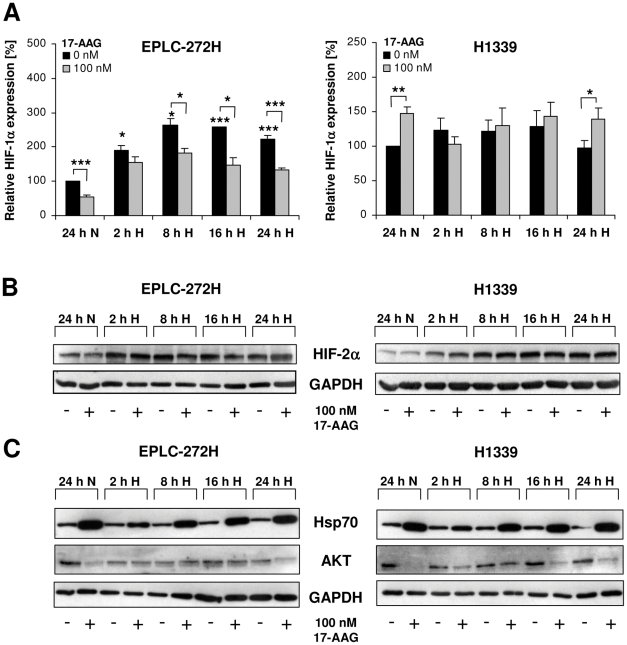
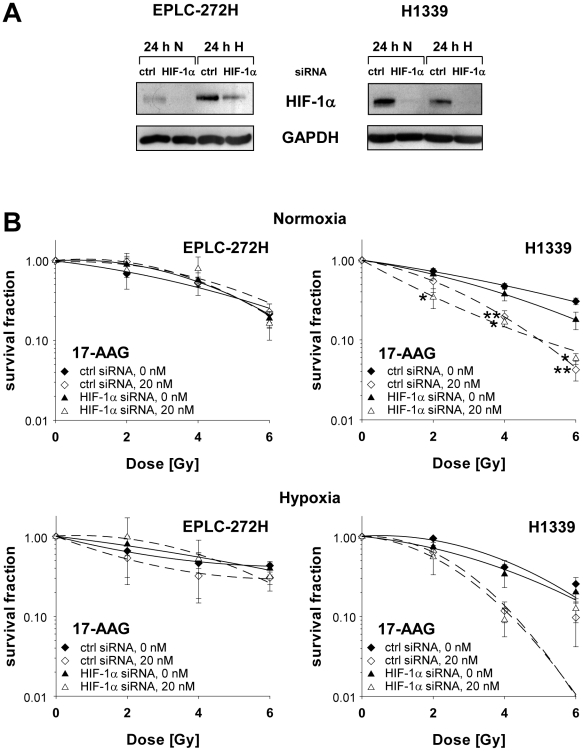
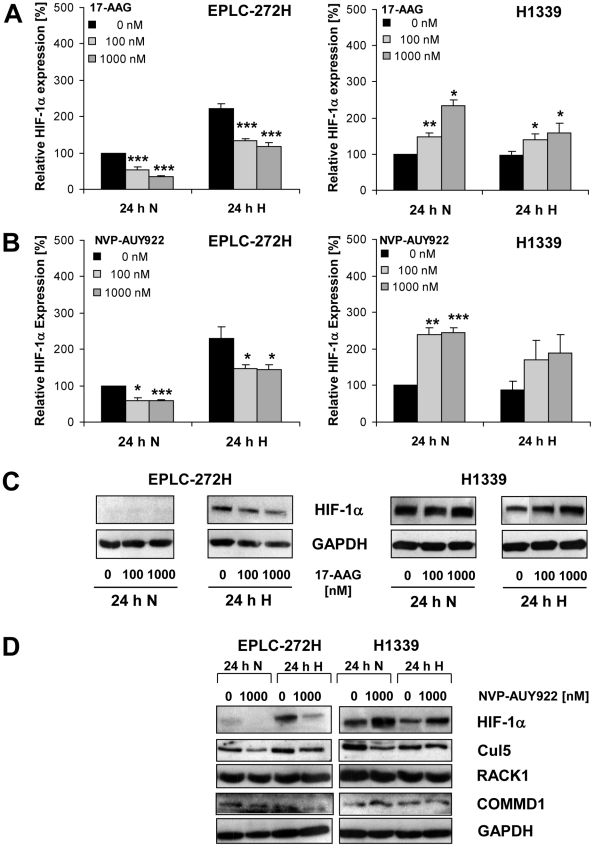
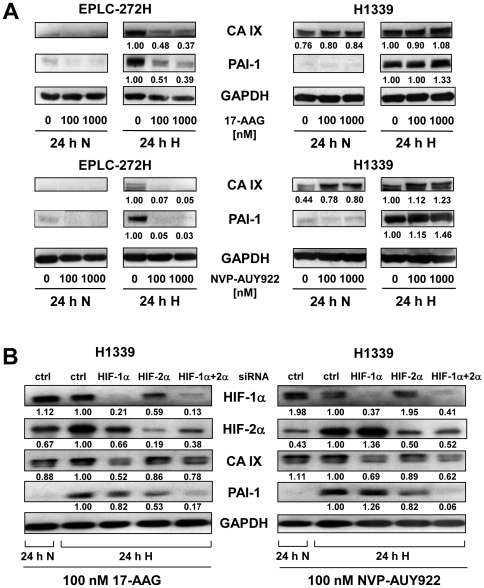
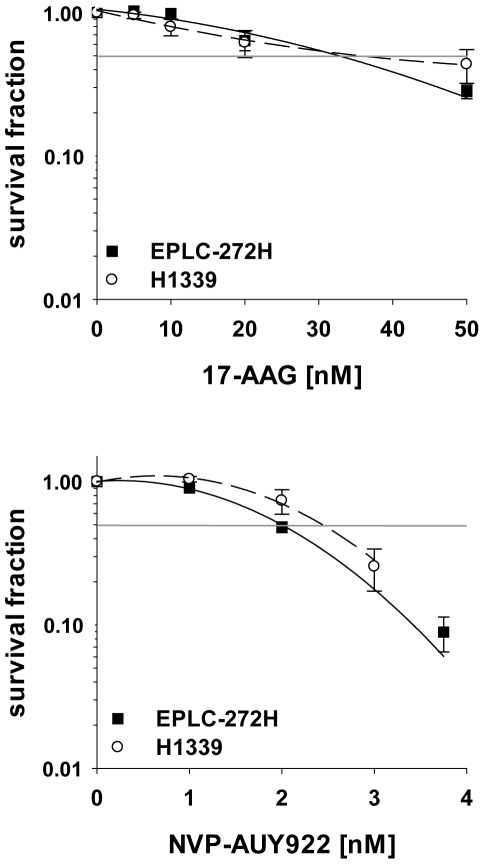
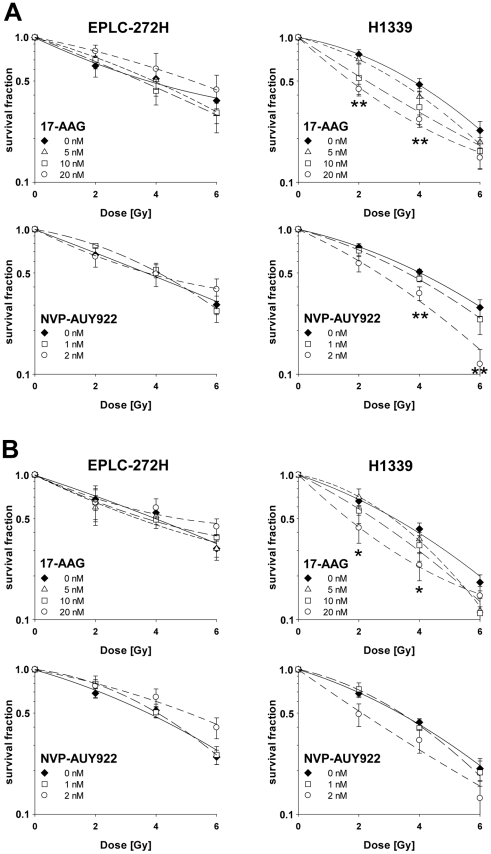
METHODOLOGY/PRINCIPAL FINDINGS: Herein, we describe the effects of the novel Hsp90 inhibitor NVP-AUY922 and 17-allylamino-17-demethoxygeldanamycin (17-AAG), as a control, on HIF-1α levels and radiosensitivity of lung carcinoma cells under normoxic and hypoxic conditions. NVP-AUY922 exhibited a similar biological activity to that of 17-AAG, but at only 1/10 of the dose. As expected, both inhibitors reduced basal and hypoxia-induced HIF-1α levels in EPLC-272H lung carcinoma cells. However, despite a down-regulation of HIF-1α upon Hsp90 inhibition, sensitivity towards irradiation remained unaltered in EPLC-272H cells under normoxic and hypoxic conditions. In contrast, treatment of H1339 lung carcinoma cells with NVP-AUY922 and 17-AAG resulted in a significant up-regulation of their initially high HIF-1α levels and a concomitant increase in radiosensitivity.
CONCLUSIONS/SIGNIFICANCE: In summary, our data show a HIF-1α-independent radiosensitization of normoxic and hypoxic H1339 lung cancer cells by Hsp90 inhibition.
电离辐射是治疗肺癌患者的常用方法。然而,正常组织毒性和肿瘤缺氧会阻碍临床疗效。由于肿瘤中活性热休克蛋白 90(Hsp90)的水平通常高于正常组织,因此针对 Hsp90 可能是一种有前途的策略,可以使肿瘤对辐射敏感。Hsp90 的客户蛋白包括致癌信号蛋白、细胞周期激活剂、生长因子受体和缺氧诱导因子-1α(HIF-1α)。HIF-1α 的过表达被认为促进恶性转化和肿瘤进展,从而可能降低对放疗的敏感性。
方法/主要发现:在此,我们描述了新型 Hsp90 抑制剂 NVP-AUY922 和 17- 烯丙基-17-去甲氧基格尔德霉素(17-AAG)(作为对照)对常氧和低氧条件下肺癌细胞中 HIF-1α 水平和放射敏感性的影响。NVP-AUY922 的生物学活性与 17-AAG 相似,但仅为 1/10。正如预期的那样,两种抑制剂均降低了 EPLC-272H 肺癌细胞中基础和低氧诱导的 HIF-1α 水平。然而,尽管 Hsp90 抑制后 HIF-1α 下调,但在常氧和低氧条件下,EPLC-272H 细胞对辐射的敏感性仍未改变。相比之下,NVP-AUY922 和 17-AAG 处理 H1339 肺癌细胞导致其最初高水平的 HIF-1α 上调,并伴随放射敏感性增加。
结论/意义:总之,我们的数据表明,Hsp90 抑制可使常氧和低氧 H1339 肺癌细胞产生 HIF-1α 非依赖性放射增敏作用。