Division of Gene Therapy Science, Graduate School of Medicine, Osaka University, Osaka, Japan.
PLoS One. 2012;7(2):e31234. doi: 10.1371/journal.pone.0031234. Epub 2012 Feb 8.
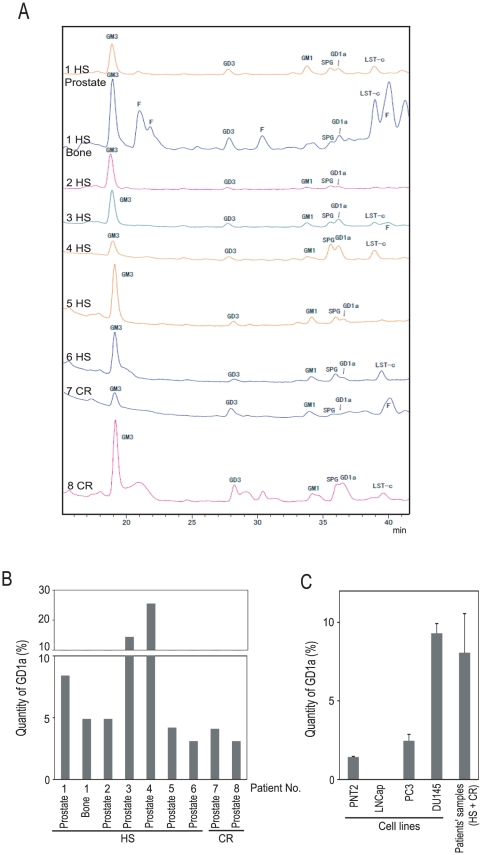
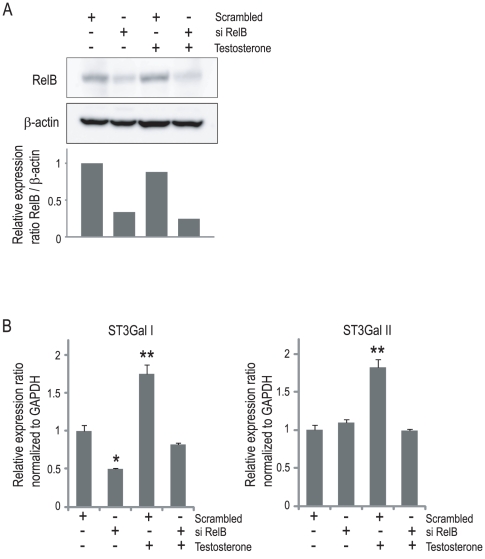
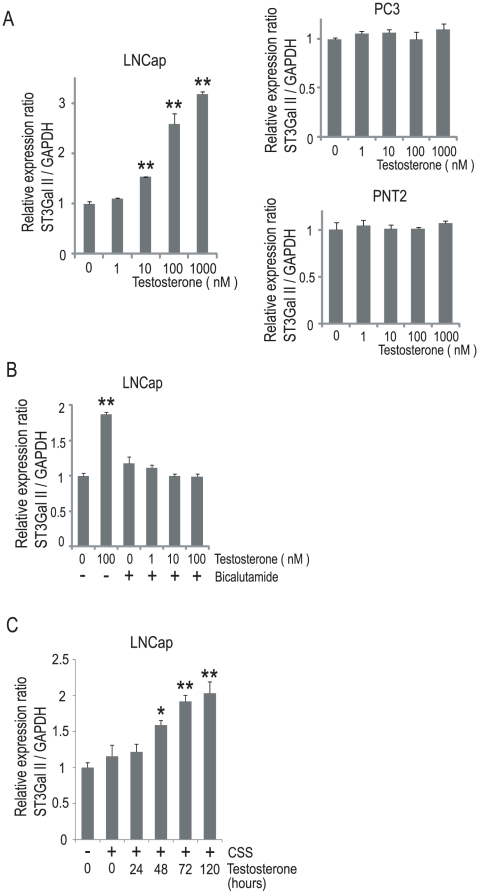
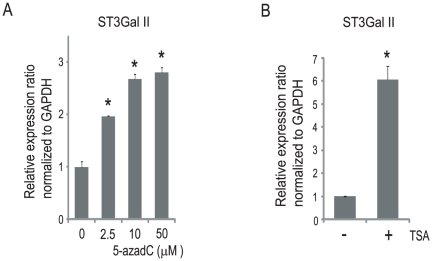
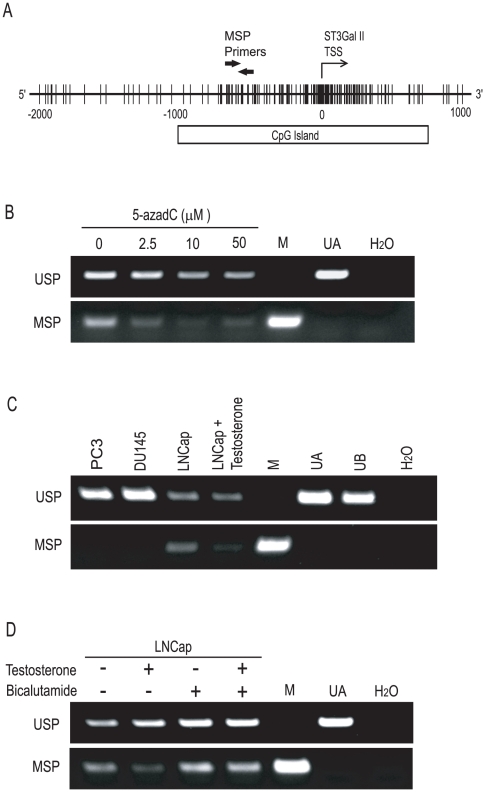
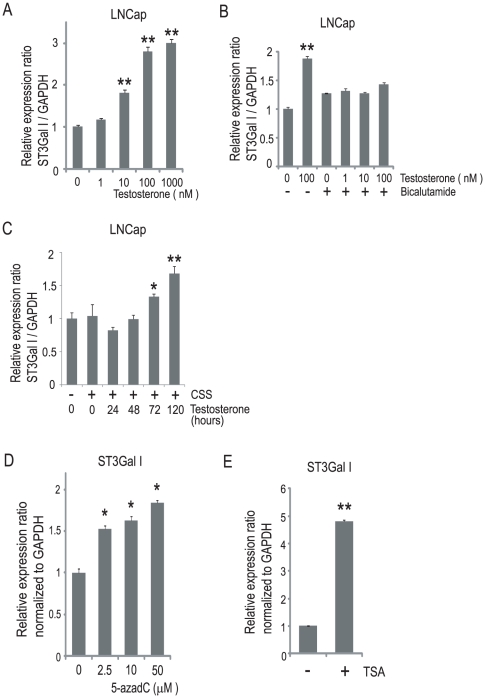
The expression of gangliosides is often associated with cancer progression. Sialyltransferases have received much attention in terms of their relationship with cancer because they modulate the expression of gangliosides. We previously demonstrated that GD1a production was high in castration-resistant prostate cancer cell lines, PC3 and DU145, mainly due to their high expression of β-galactoside α2,3-sialyltransferase (ST3Gal) II (not ST3Gal I), and the expression of both ST3Gals was regulated by NF-κB, mainly by RelB. We herein demonstrate that GD1a was produced in abundance in cancerous tissue samples from human patients with hormone-sensitive prostate cancers as well as castration-resistant prostate cancers. The expression of ST3Gal II was constitutively activated in castration-resistant prostate cancer cell lines, PC3 and DU145, because of the hypomethylation of CpG island in its promoter. However, in androgen-depleted LNCap cells, a hormone-sensitive prostate cancer cell line, the expression of ST3Gal II was silenced because of the hypermethylation of the promoter region. The expression of ST3Gal II in LNCap cells increased with testosterone treatment because of the demethylation of the CpG sites. This testosterone-dependent ST3Gal II expression was suppressed by RelB siRNA, indicating that RelB activated ST3Gal II transcription in the testosterone-induced demethylated promoter. Therefore, in hormone-sensitive prostate cancers, the production of GD1a may be regulated by androgen. This is the first report indicating that the expression of a sialyltransferase is transcriptionally regulated by androgen-dependent demethylation of the CpG sites in its gene promoter.
神经节苷脂的表达通常与癌症的进展有关。唾液酸转移酶因其与癌症的关系而受到广泛关注,因为它们调节神经节苷脂的表达。我们之前的研究表明,在去势抵抗性前列腺癌细胞系 PC3 和 DU145 中,GD1a 的产生量很高,主要是由于其β-半乳糖苷α2,3-唾液酸转移酶(ST3Gal)II 的高表达(而不是 ST3Gal I),并且这两种 ST3Gal 的表达均受 NF-κB 调节,主要由 RelB 调节。本文证明,在患有激素敏感性前列腺癌和去势抵抗性前列腺癌的人类患者的癌组织样本中,GD1a 的产生量也很丰富。在去势抵抗性前列腺癌细胞系 PC3 和 DU145 中,由于其启动子中的 CpG 岛低甲基化,ST3Gal II 的表达被持续激活。然而,在雄激素耗尽的 LNCap 细胞(一种激素敏感性前列腺癌细胞系)中,由于启动子区域的高甲基化,ST3Gal II 的表达被沉默。随着睾酮处理,LNCap 细胞中 ST3Gal II 的表达增加,因为 CpG 位点去甲基化。这种依赖于睾酮的 ST3Gal II 表达受 RelB siRNA 抑制,表明 RelB 在睾酮诱导的去甲基化启动子中激活 ST3Gal II 转录。因此,在激素敏感性前列腺癌中,GD1a 的产生可能受雄激素调节。这是第一个表明唾液酸转移酶的表达受雄激素依赖的 CpG 位点去甲基化转录调控的报告。