Pharmacy School, Wenzhou Medical College, Wenzhou, Zhejiang Province, People's Republic of China.
PLoS One. 2012;7(2):e31708. doi: 10.1371/journal.pone.0031708. Epub 2012 Feb 13.
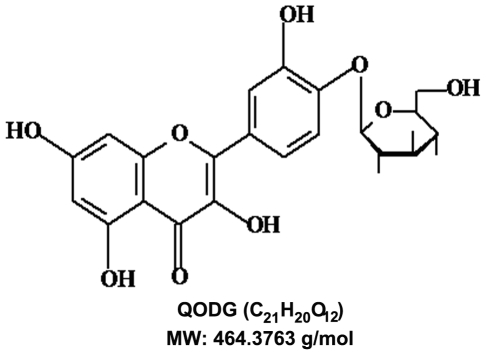
Angiogenesis plays an important role in many physiological and pathological processes. Identification of small molecules that block angiogenesis and are safe and affordable has been a challenge in drug development. Hypericum attenuatum Choisy is a Chinese herb medicine commonly used for treating hemorrhagic diseases. The present study investigates the anti-angiogenic effects of quercetin-4'-O-β-D-glucopyranoside (QODG), a flavonoid isolated from Hypericum attenuatum Choisy, in vivo and in vitro, and clarifies the underlying mechanism of the activity.
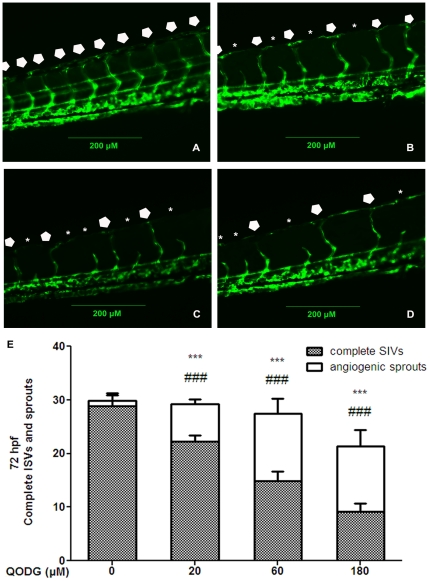
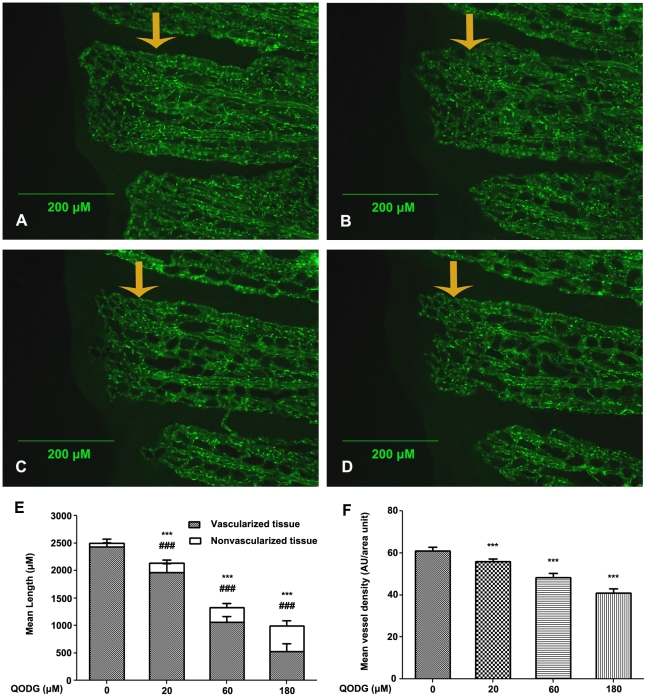
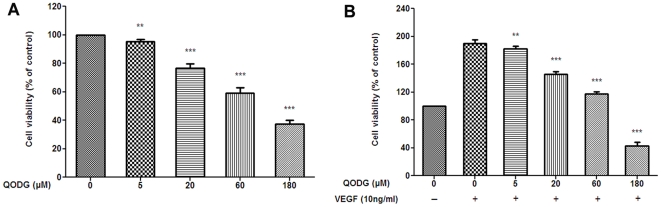
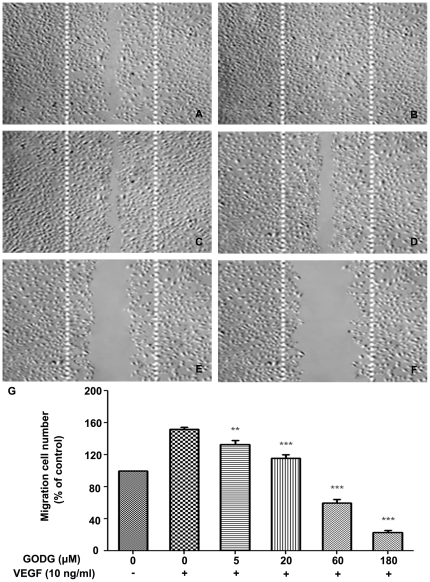
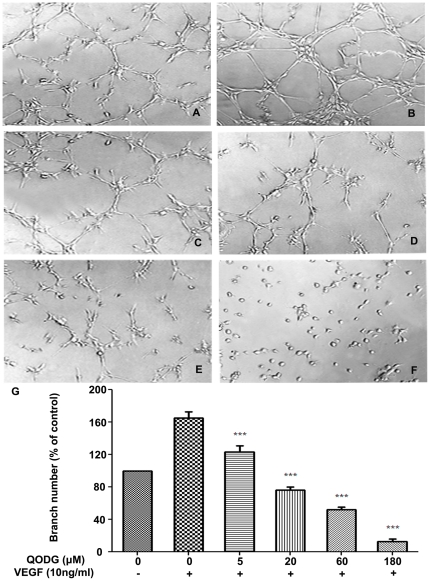
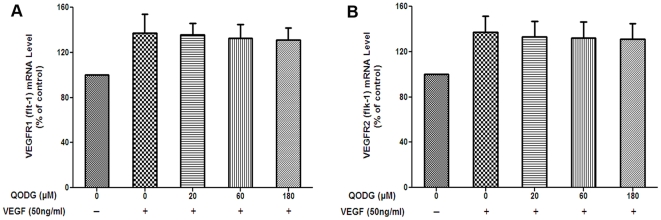
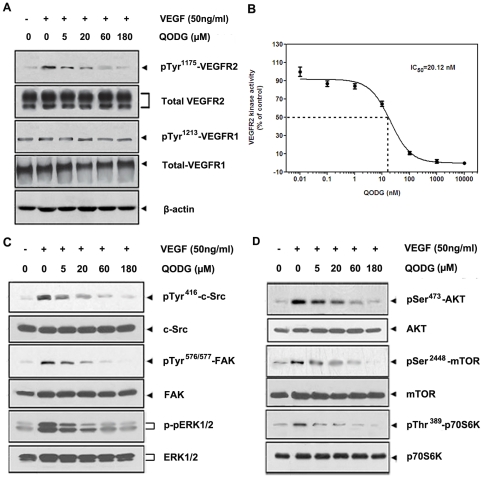
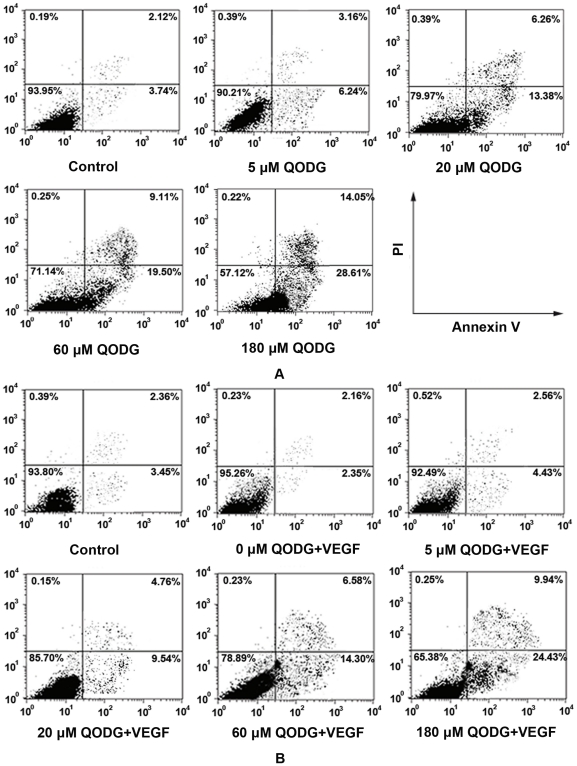
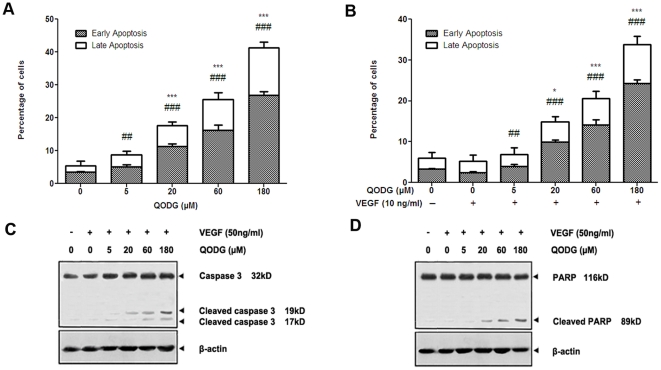
METHODOLOGY/PRINCIPAL FINDINGS: Tg(fli1:EGFP) transgenic zebrafish embryos were treated with different concentrations of quercetin-4'-O-β-D-glucopyranoside (QODG) (20, 60, 180 µM) from 6 hours post fertilisation (hpf) to 72 hpf, and adult zebrafish were allowed to recover in different concentrations of QODG (20, 60, 180 µM) for 7 days post amputation (dpa) prior morphological observation and angiogenesis phenotypes assessment. Human umbilical vein endothelial cells (HUVECs) were treated with or without VEGF and different concentrations of QODG (5, 20, 60, 180 µM), then tested for cell viability, cell migration, tube formation and apoptosis. The role of VEGFR2-mediated signaling pathway in QODG-inhibited angiogenesis was evaluated using quantitative real-time PCR (qRT-PCR) and Western blotting.
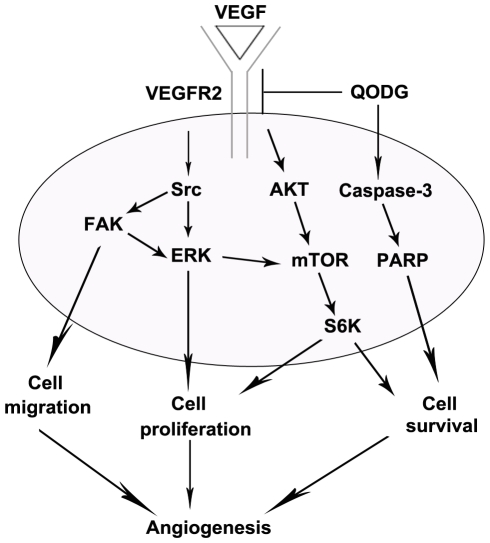
CONCLUSION/SIGNIFICANCE: Quercetin-4'-O-β-D-glucopyranoside (QODG) was shown to inhibit angiogenesis in human umbilical vein endothelial cells (HUVECs) in vitro and zebrafish in vivo via suppressing VEGF-induced phosphorylation of VEGFR2. Our results further indicate that QODG inhibits angiogenesis via inhibition of VEGFR2-mediated signaling with the involvement of some key kinases such as c-Src, FAK, ERK, AKT, mTOR and S6K and induction of apoptosis. Together, this study reveals, for the first time, that QODG acts as a potent VEGFR2 kinase inhibitor, and exerts the anti-angiogenic activity at least in part through VEGFR2-mediated signaling pathway.
血管生成在许多生理和病理过程中起着重要作用。开发能够阻断血管生成且安全、廉价的小分子药物一直是药物研发的挑战。贯叶金丝桃是一种中国草药,常用于治疗出血性疾病。本研究调查了从贯叶金丝桃中分离得到的黄酮类化合物槲皮素-4'-O-β-D-吡喃葡萄糖苷(QODG)在体内和体外的抗血管生成作用,并阐明了其活性的潜在机制。
方法/主要发现:从受精后 6 小时(hpf)至 72 hpf,用不同浓度的槲皮素-4'-O-β-D-吡喃葡萄糖苷(QODG)(20、60、180 μM)处理 Tg(fli1:EGFP)转基因斑马鱼胚胎,72 hpf 后,让成年斑马鱼在不同浓度的 QODG(20、60、180 μM)中恢复 7 天,然后进行形态学观察和血管生成表型评估。用或不用 VEGF 和不同浓度的 QODG(5、20、60、180 μM)处理人脐静脉内皮细胞(HUVECs),然后测试细胞活力、细胞迁移、管形成和细胞凋亡。使用定量实时 PCR(qRT-PCR)和 Western blot 评估 VEGFR2 介导的信号通路在 QODG 抑制血管生成中的作用。
结论/意义:槲皮素-4'-O-β-D-吡喃葡萄糖苷(QODG)在体外抑制人脐静脉内皮细胞(HUVECs)的血管生成,并在体内抑制斑马鱼的血管生成,通过抑制 VEGF 诱导的 VEGFR2 磷酸化。我们的结果进一步表明,QODG 通过抑制 VEGFR2 介导的信号通路,涉及一些关键激酶,如 c-Src、FAK、ERK、AKT、mTOR 和 S6K,以及诱导细胞凋亡,抑制血管生成。总的来说,这项研究首次表明,QODG 作为一种有效的 VEGFR2 激酶抑制剂,通过 VEGFR2 介导的信号通路发挥其抗血管生成活性。