Division of Developmental Immunology, La Jolla Institute for Allergy and Immunology, California, USA
Ann N Y Acad Sci. 2012 Apr;1253(1):68-79. doi: 10.1111/j.1749-6632.2011.06435.x. Epub 2012 Feb 21.
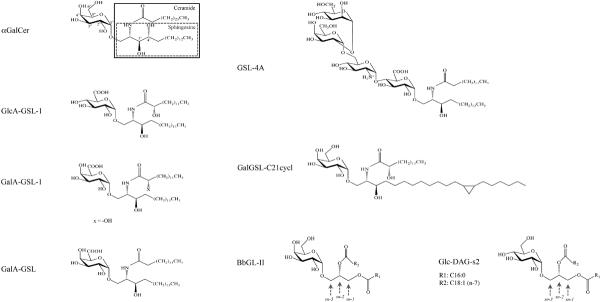
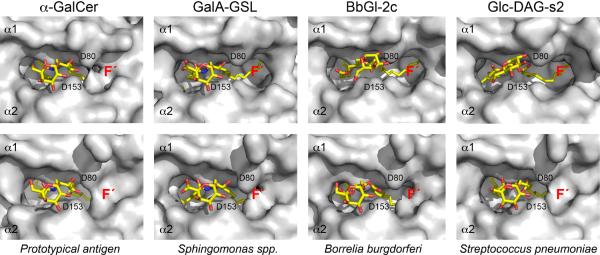
Natural killer T (NKT) cells are a T cell subpopulation that were named originally based on coexpression of receptors found on natural killer (NK) cells, cells of the innate immune system, and by T lymphocytes. The maturation and activation of NKT cells requires presentation of glycolipid antigens by CD1d, a cell surface protein distantly related to the major histocompatibility complex (MHC)-encoded antigen presenting molecules. This specificity distinguishes NKT cells from most CD4(+) and CD8(+) T cells that recognize peptides presented by MHC class I and class II molecules. The rapid secretion of a large amount of both Th1 and Th2 cytokines by activated NKT cells endows them with the ability to play a vital role in the host immune defense against various microbial infections. In this review, we summarize progress on identifying the sources of microbe-derived glycolipid antigens recognized by NKT cells and the biochemical basis for their recognition.
自然杀伤 T(NKT)细胞是 T 细胞亚群,最初根据其在自然杀伤(NK)细胞、先天免疫系统细胞和 T 淋巴细胞上共表达的受体而命名。NKT 细胞的成熟和激活需要 CD1d 呈递糖脂抗原,CD1d 是一种细胞表面蛋白,与主要组织相容性复合体(MHC)编码的抗原呈递分子具有远缘关系。这种特异性将 NKT 细胞与大多数识别 MHC 类 I 和类 II 分子呈递的肽的 CD4(+)和 CD8(+)T 细胞区分开来。活化的 NKT 细胞快速分泌大量 Th1 和 Th2 细胞因子,使它们能够在宿主抵抗各种微生物感染的免疫防御中发挥重要作用。在这篇综述中,我们总结了识别 NKT 细胞识别的微生物衍生糖脂抗原的来源和其识别的生化基础的进展。