Kamakura Research Laboratories, Chugai Pharmaceutical Co. Ltd., Kamakura, Kanagawa, Japan.
Sci Rep. 2012;2:259. doi: 10.1038/srep00259. Epub 2012 Feb 10.
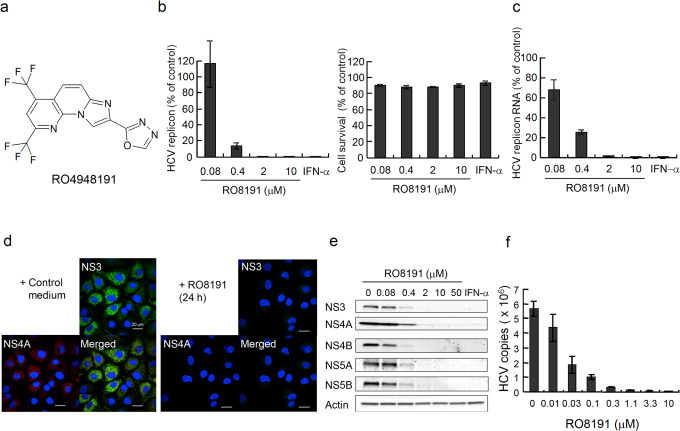
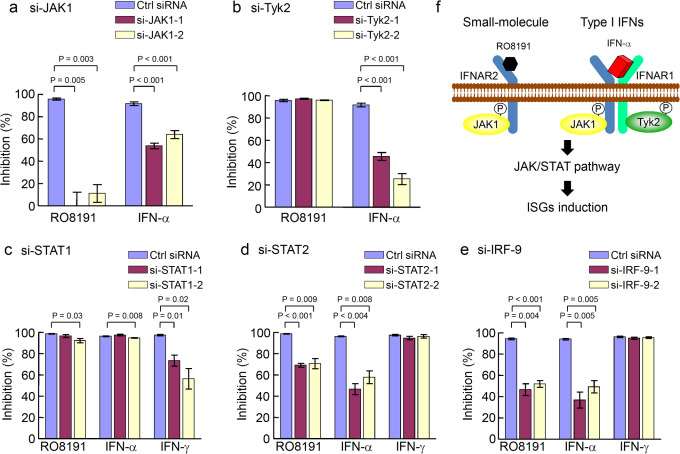
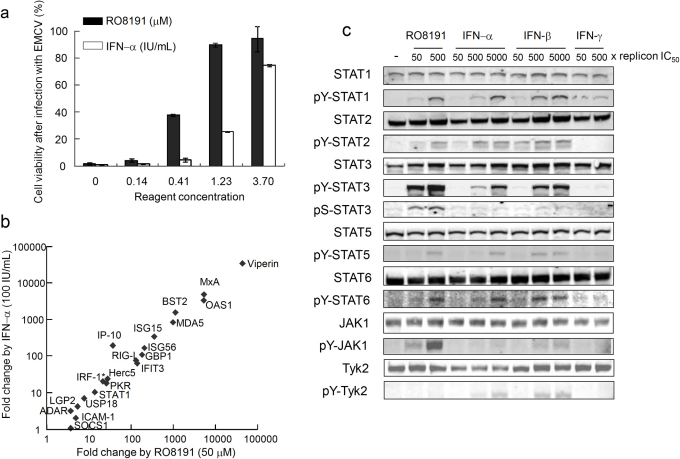
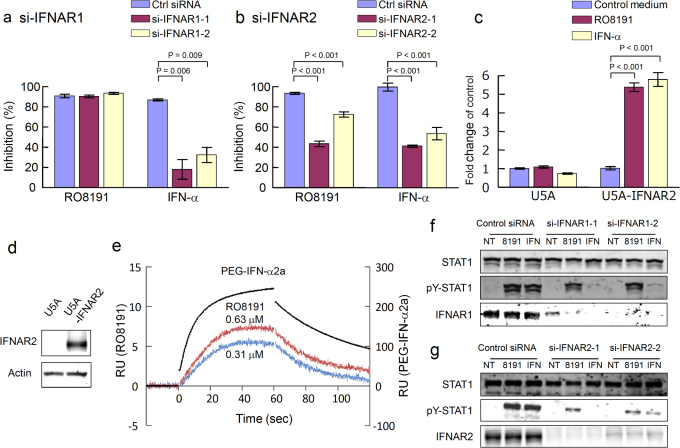
Most acute hepatitis C virus (HCV) infections become chronic and some progress to liver cirrhosis or hepatocellular carcinoma. Standard therapy involves an interferon (IFN)-α-based regimen, and efficacy of therapy has been significantly improved by the development of protease inhibitors. However, several issues remain concerning the injectable form and the side effects of IFN. Here, we report an orally available, small-molecule type I IFN receptor agonist that directly transduces the IFN signal cascade and stimulates antiviral gene expression. Like type I IFN, the small-molecule compound induces IFN-stimulated gene (ISG) expression for antiviral activity in vitro and in vivo in mice, and the ISG induction mechanism is attributed to a direct interaction between the compound and IFN-α receptor 2, a key molecule of IFN-signaling on the cell surface. Our study highlights the importance of an orally active IFN-like agent, both as a therapy for antiviral infections and as a potential IFN substitute.
大多数急性丙型肝炎病毒 (HCV) 感染会转为慢性,有些则会发展为肝硬化或肝细胞癌。标准治疗包括基于干扰素 (IFN)-α的方案,而蛋白酶抑制剂的发展显著提高了治疗的疗效。然而,关于干扰素的注射剂型和副作用仍存在一些问题。在这里,我们报告了一种可口服的小分子 I 型干扰素受体激动剂,它可以直接转导 IFN 信号级联并刺激抗病毒基因表达。与 I 型 IFN 一样,小分子化合物在体外和体内诱导抗病毒活性的 IFN 刺激基因 (ISG) 表达,并且 ISG 诱导机制归因于化合物与 IFN-α受体 2 的直接相互作用,后者是细胞表面 IFN 信号的关键分子。我们的研究强调了具有口服活性的 IFN 样药物的重要性,它既是治疗抗病毒感染的药物,也是潜在的 IFN 替代品。