Department of Pharmacology, School of Medicine, Health Sciences Center, State University of New York at Stony Brook, Stony Brook, NY 11794-8651, USA.
J Cell Sci. 2012 May 15;125(Pt 10):2446-56. doi: 10.1242/jcs.100933. Epub 2012 Feb 22.
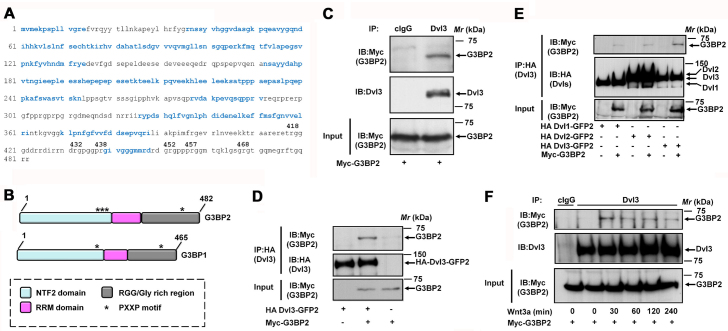
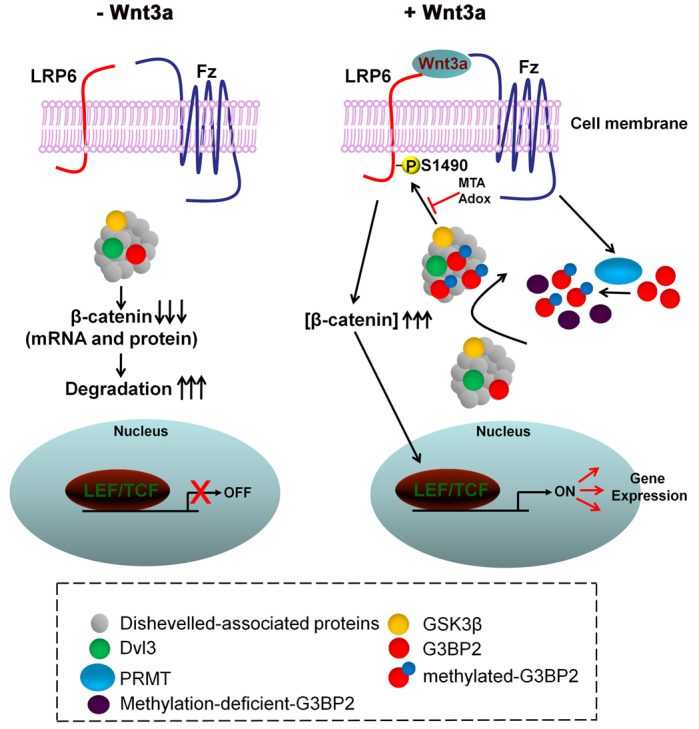
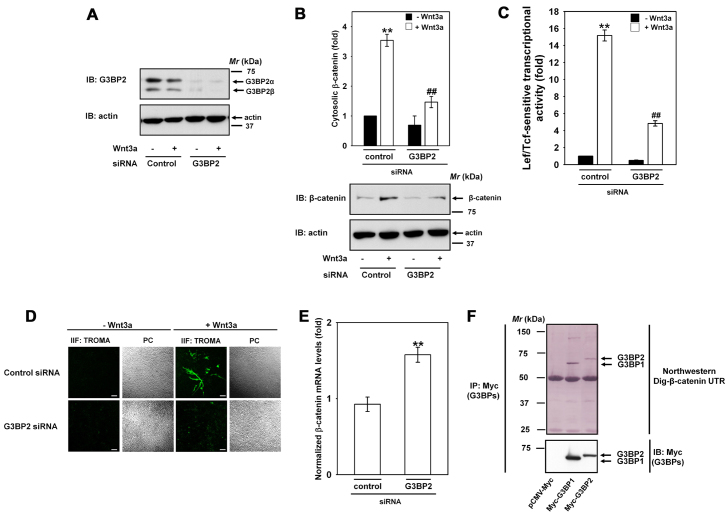
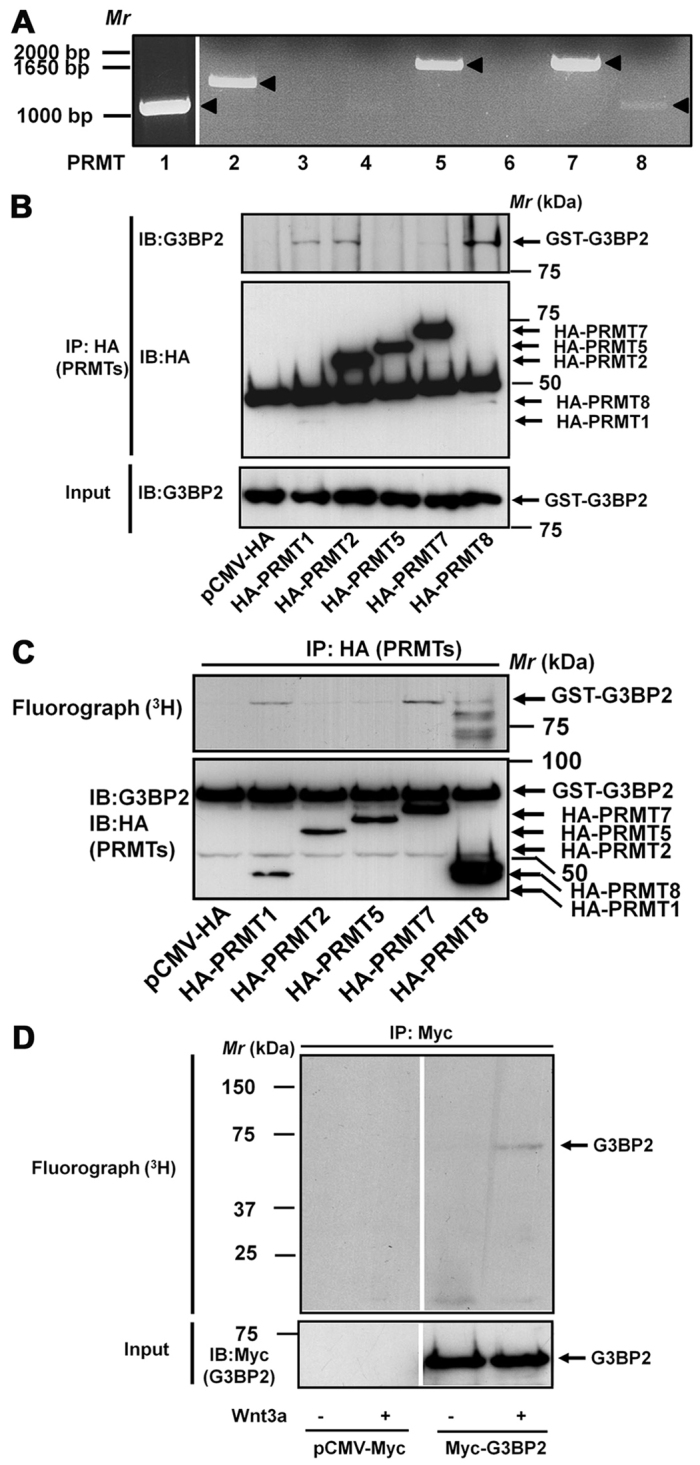
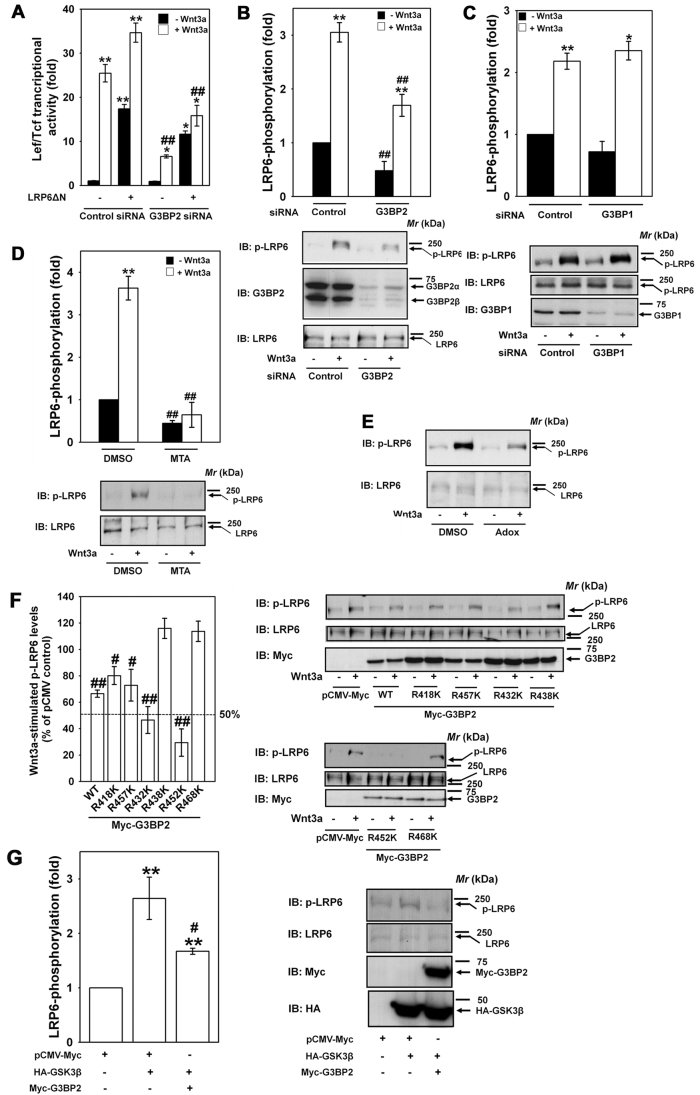
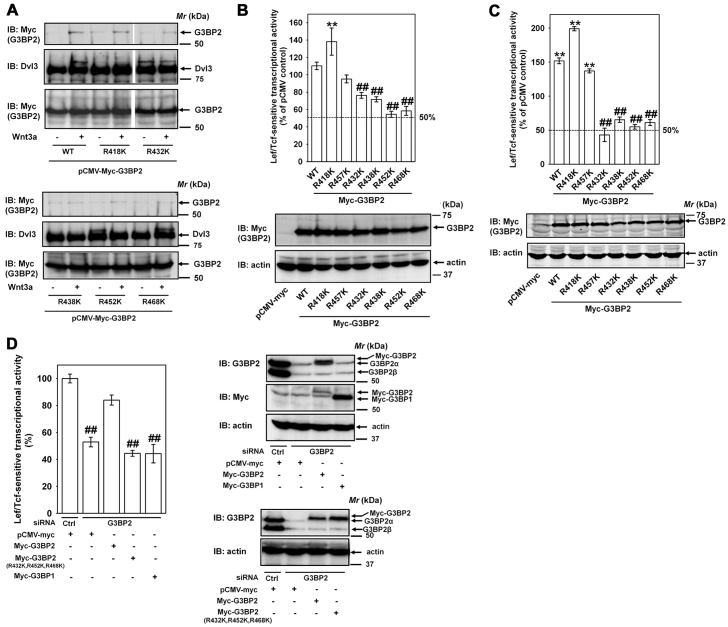
Wnt signaling is initiated upon binding of Wnt proteins to Frizzled proteins and their co-receptors LRP5 and 6. The signal is then propagated to several downstream effectors, mediated by the phosphoprotein scaffold, dishevelled. We report a novel role for arginine methylation in regulating Wnt3a-stimulated LRP6 phosphorylation. G3BP2, a dishevelled-associated protein, is methylated in response to Wnt3a. The Wnt3a-induced LRP6 phosphorylation is attenuated by G3BP2 knockdown, chemical inhibition of methyl transferase activity or expression of methylation-deficient mutants of G3BP2. Arginine methylation of G3BP2 appears to be a Wnt3a-sensitive 'switch' regulating LRP6 phosphorylation and canonical Wnt-β-catenin signaling.
Wnt 信号的起始是由 Wnt 蛋白与 Frizzled 蛋白及其共同受体 LRP5 和 6 的结合所触发的。然后,信号通过磷酸蛋白支架 dishevelled 传递到几个下游效应器。我们报告了精氨酸甲基化在调节 Wnt3a 刺激的 LRP6 磷酸化中的新作用。G3BP2 是 dishevelled 相关蛋白,它在响应 Wnt3a 时被甲基化。LRP6 磷酸化的 Wnt3a 诱导被 G3BP2 敲低、甲基转移酶活性的化学抑制或 G3BP2 的甲基化缺陷突变体的表达所减弱。G3BP2 的精氨酸甲基化似乎是调节 LRP6 磷酸化和经典 Wnt-β-catenin 信号的 Wnt3a 敏感“开关”。