Lim Yongchul, Lee Ju Yeon, Ha Su Jin, Yu Suyeun, Shin Jung Kyong, Kim Hee Cheol
1Department of Surgery, Samsung Medical Center, Sungkyunkwan University School of Medicine, 81, Irwon-ro, Gangnam-gu, Seoul, 135-710 South Korea.
2Korea Basic Science Institute, Research Center for Bioconvergence Analysis, Ochang, South Korea.
Proteome Sci. 2020 May 19;18:6. doi: 10.1186/s12953-020-00162-8. eCollection 2020.
Protein arginine methylation reaction is catalyzed by protein arginine methyltransferase (PRMT) and the modification is implicated in various diseases including cancer. Currently, thousands of arginine methylation sites have been identified using high-resolution mass spectrometry-based proteomics technology. However, identification of arginine methylation using clinical samples at proteome level has not been reported yet. The objective of the present study was to identify, monomethyl-arginine (MMA) and asymmetric dimethyl-arginine (ADMA) sites in colorectal cancer (CRC) tissues at proteome level.
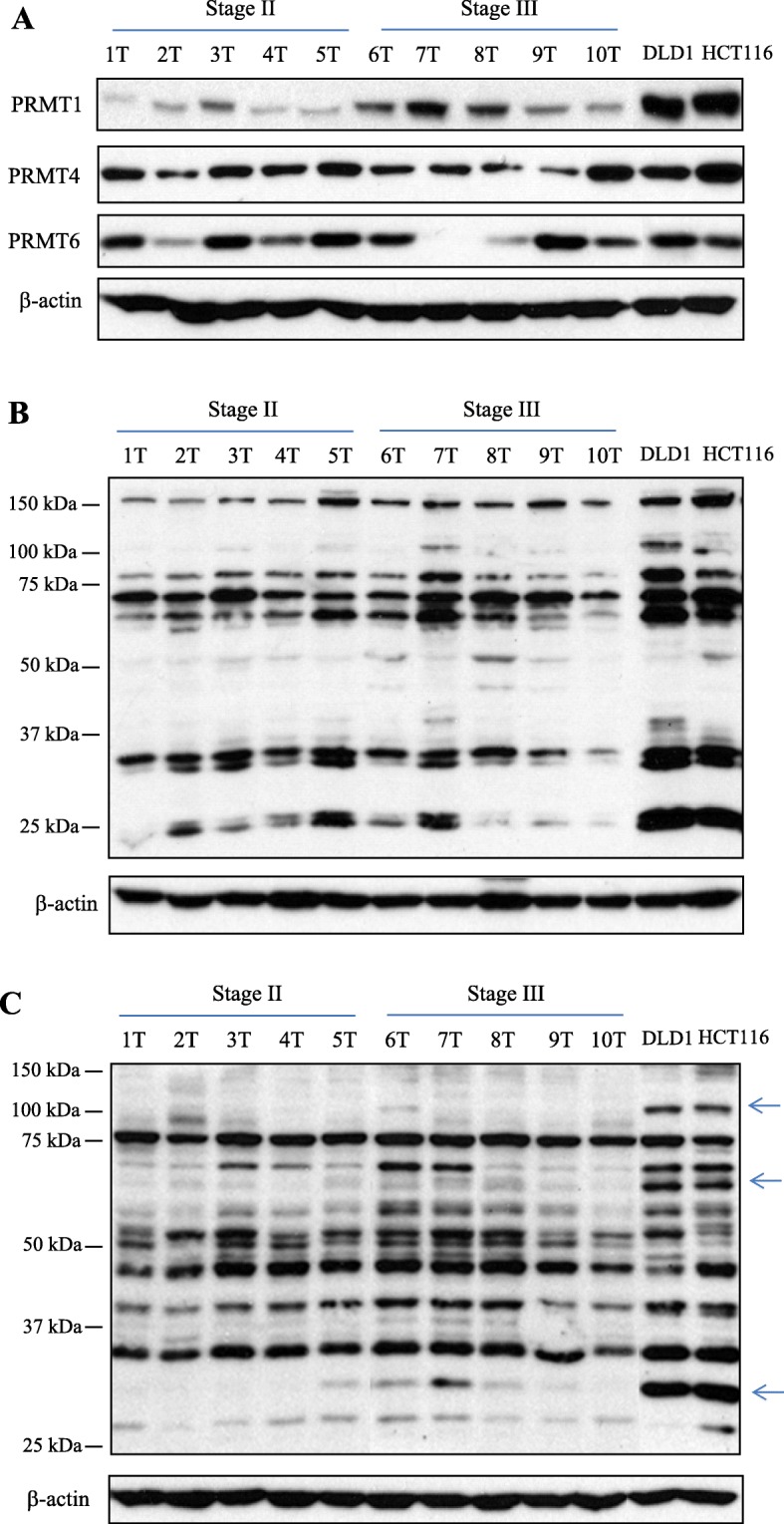
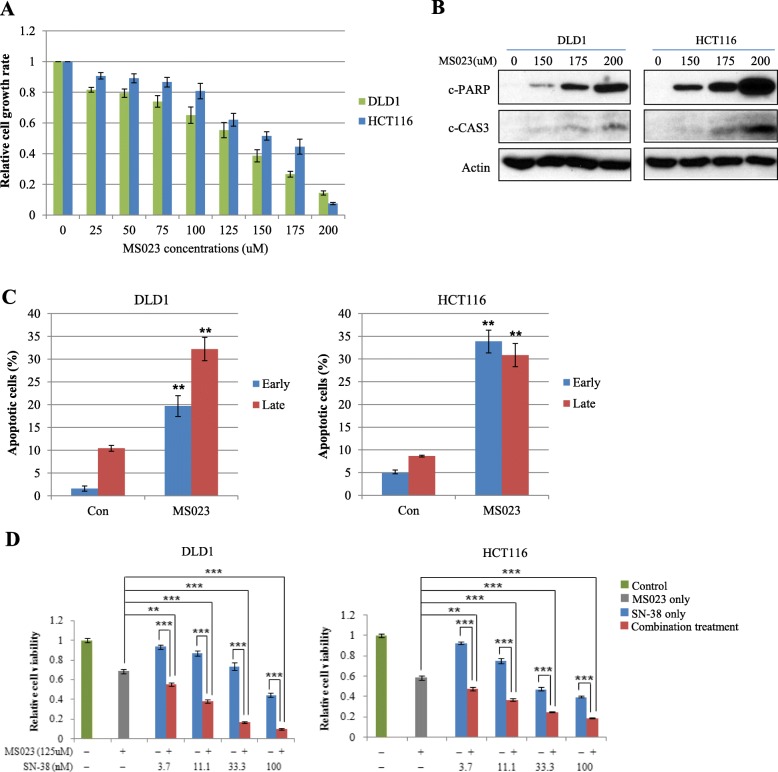
Pooled CRC tissue samples from 10 patients with stage II and III were digested by trypsin and these digests were further processed and lyophilized. Using monomethyl- or asymmetric dimethyl arginine (MMA or ADMA, respectively) motif kits, methylarginine-containing peptides were enriched and subsequently analyzed by high-resolution LC-MS/MS. DLD1 and HCT116 colon cancer cells were treated with type I PRMTs inhibitor (MS023) alone or combined with SN-38, and the effect of the drugs on CRC cell proliferation and apoptosis was measured by water-soluble tetrazolium salt (WST-1) assay and FACS analysis, respectively.
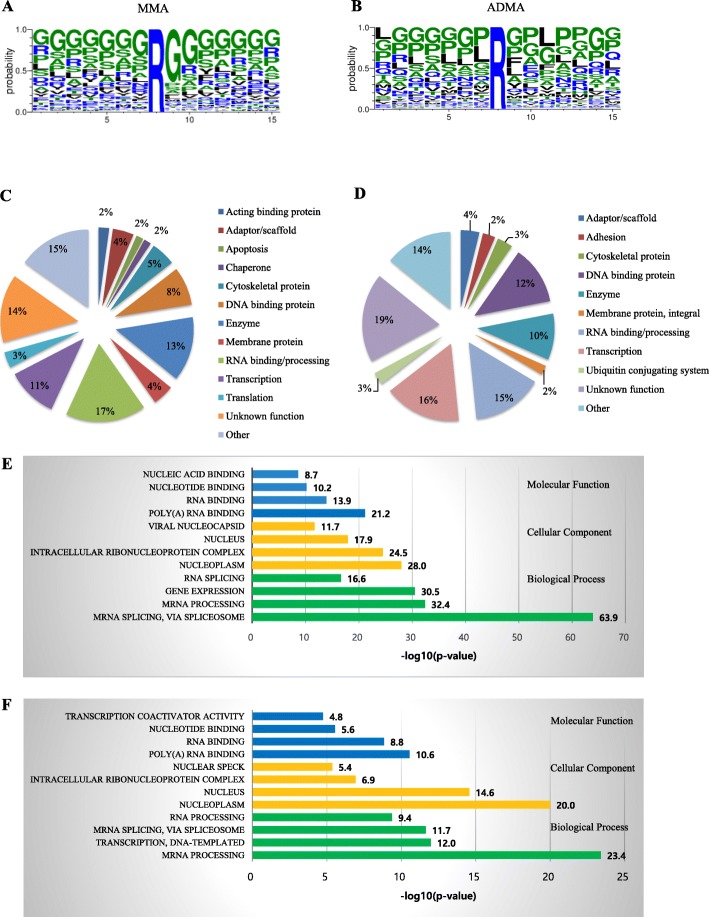
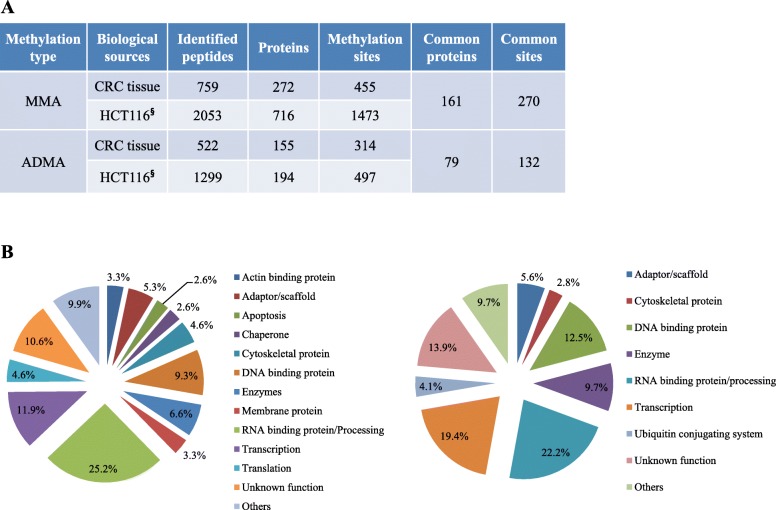
In the present study, 455 MMA sites of 272 proteins and 314 ADMA sites of 155 proteins were identified from CRC tissues acquired from patients. In addition, 216 methylation sites and 75 substrates for PRMTs were newly identified. These results reveal the significant presence of MMA and ADMA sites on nucleic acid binding proteins and protein complexes involved in transcription. To investigate the effect of protein arginine methylation in CRC proliferation and apoptosis, MS023 was treated to two CRC cell lines. After 48 h treatment with various concentrations of MS023, CRC cell proliferation was significantly suppressed, with concomitant apoptosis induction. Furthermore, MS023 treatment significantly enhanced the inhibitory effect of SN-38 on CRC cell proliferation.
This work reports the first comprehensive analysis of arginine methylation with clinical sample and suggests that type I PRMTs are potential therapeutic targets for drug discovery in CRC.
蛋白质精氨酸甲基化反应由蛋白质精氨酸甲基转移酶(PRMT)催化,这种修饰与包括癌症在内的多种疾病有关。目前,使用基于高分辨率质谱的蛋白质组学技术已鉴定出数千个精氨酸甲基化位点。然而,尚未有在蛋白质组水平上利用临床样本鉴定精氨酸甲基化的报道。本研究的目的是在蛋白质组水平上鉴定结直肠癌(CRC)组织中的单甲基精氨酸(MMA)和不对称二甲基精氨酸(ADMA)位点。
将10例II期和III期患者的CRC组织样本混合,用胰蛋白酶消化,这些消化产物进一步处理并冻干。使用单甲基或不对称二甲基精氨酸(分别为MMA或ADMA)基序试剂盒富集含甲基精氨酸的肽段,随后通过高分辨率液相色谱-串联质谱进行分析。DLD1和HCT116结肠癌细胞单独用I型PRMTs抑制剂(MS023)处理或与SN-38联合处理,分别通过水溶性四氮唑盐(WST-1)测定法和流式细胞术分析药物对CRC细胞增殖和凋亡的影响。
在本研究中,从患者获得的CRC组织中鉴定出272种蛋白质的455个MMA位点和155种蛋白质的314个ADMA位点。此外,新鉴定出216个甲基化位点和75个PRMTs底物。这些结果揭示了MMA和ADMA位点在参与转录的核酸结合蛋白和蛋白质复合物上的显著存在。为了研究蛋白质精氨酸甲基化在CRC增殖和凋亡中的作用,将MS023处理两种CRC细胞系。用不同浓度的MS023处理48小时后,CRC细胞增殖受到显著抑制,同时诱导凋亡。此外,MS023处理显著增强了SN-38对CRC细胞增殖的抑制作用。
本研究首次对临床样本中的精氨酸甲基化进行了全面分析,并表明I型PRMTs是CRC药物研发的潜在治疗靶点。