Department of Microbiology and Institute for Genomic Biology, University of Illinois, Urbana-Champaign, Urbana, Illinois, United States of America.
PLoS Biol. 2012 Feb;10(2):e1001265. doi: 10.1371/journal.pbio.1001265. Epub 2012 Feb 21.
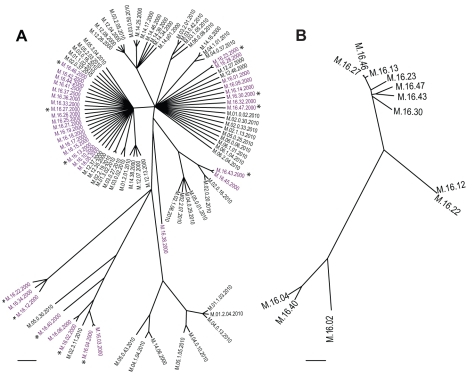
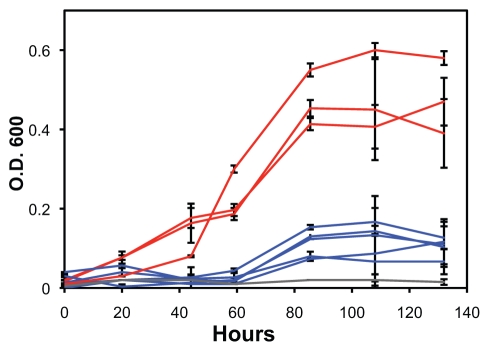
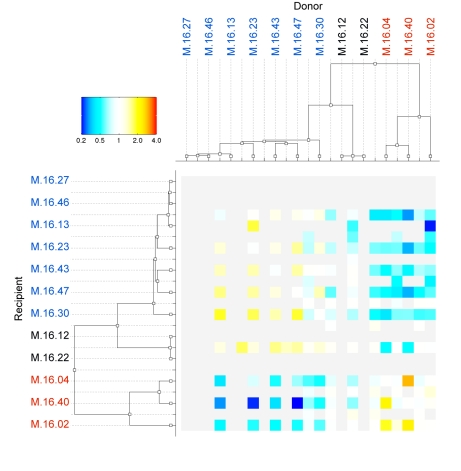
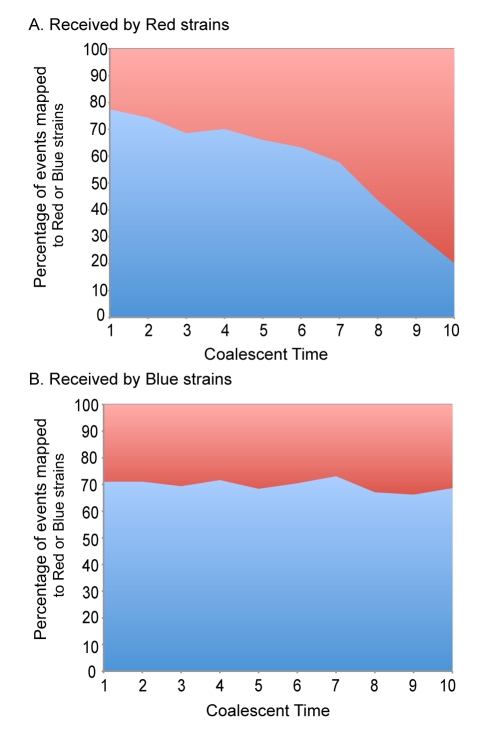
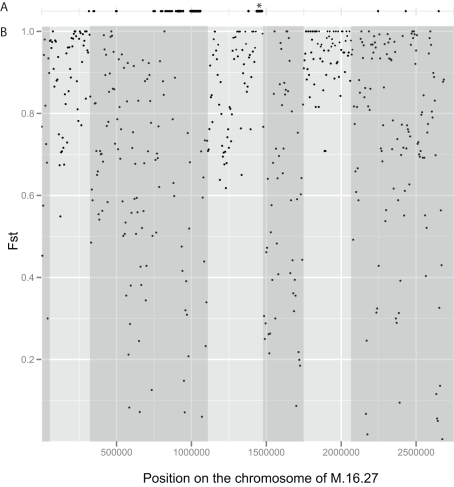
Despite a growing appreciation of their vast diversity in nature, mechanisms of speciation are poorly understood in Bacteria and Archaea. Here we use high-throughput genome sequencing to identify ongoing speciation in the thermoacidophilic Archaeon Sulfolobus islandicus. Patterns of homologous gene flow among genomes of 12 strains from a single hot spring in Kamchatka, Russia, demonstrate higher levels of gene flow within than between two persistent, coexisting groups, demonstrating that these microorganisms fit the biological species concept. Furthermore, rates of gene flow between two species are decreasing over time in a manner consistent with incipient speciation. Unlike other microorganisms investigated, we do not observe a relationship between genetic divergence and frequency of recombination along a chromosome, or other physical mechanisms that would reduce gene flow between lineages. Each species has its own genetic island encoding unique physiological functions and a unique growth phenotype that may be indicative of ecological specialization. Genetic differentiation between these coexisting groups occurs in large genomic "continents," indicating the topology of genomic divergence during speciation is not uniform and is not associated with a single locus under strong diversifying selection. These data support a model where species do not require physical barriers to gene flow but are maintained by ecological differentiation.
尽管人们越来越认识到它们在自然界中的巨大多样性,但细菌和古菌的物种形成机制仍了解甚少。在这里,我们使用高通量基因组测序来鉴定嗜热嗜酸古菌 Sulfolobus islandicus 中的正在进行的物种形成。来自俄罗斯堪察加半岛一个温泉的 12 株菌的同源基因流动模式表明,在两个持久共存的群体内部的基因流动水平高于群体之间,这表明这些微生物符合生物学物种概念。此外,两个物种之间的基因流动速率随着时间的推移呈下降趋势,这与初期物种形成一致。与其他研究的微生物不同,我们没有观察到沿染色体的遗传分化和重组频率之间存在关系,或者其他会减少谱系间基因流动的物理机制。每个物种都有自己的遗传岛,编码独特的生理功能和独特的生长表型,这可能表明其具有生态特化性。这些共存群体之间的遗传分化发生在大型基因组“大陆”上,这表明物种形成过程中基因组分化的拓扑结构不均匀,并且与受强烈多样化选择的单个基因座无关。这些数据支持了一种模式,即物种不需要基因流动的物理障碍,但通过生态分化来维持。