Cluster of Excellence Languages of Emotion, Freie Universität Berlin, Berlin, Germany.
PLoS One. 2012;7(2):e31441. doi: 10.1371/journal.pone.0031441. Epub 2012 Feb 21.
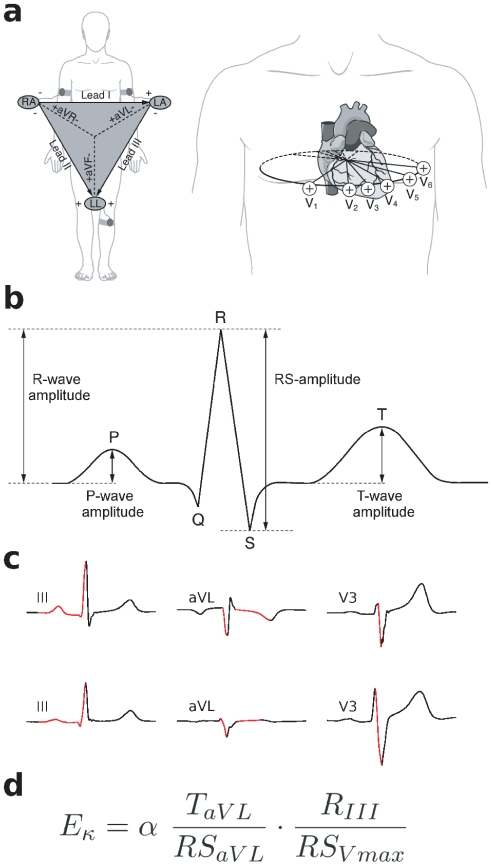
There are well-established relations between personality and the heart, as evidenced by associations between negative emotions on the one hand, and coronary heart disease or chronic heart failure on the other. However, there are substantial gaps in our knowledge about relations between the heart and personality in healthy individuals. Here, we investigated whether amplitude patterns of the electrocardiogram (ECG) correlate with neurotisicm, extraversion, agreeableness, warmth, positive emotion, and tender-mindedness as measured with the Neuroticism-Extraversion-Openness (NEO) personality inventory. Specifically, we investigated (a) whether a cardiac amplitude measure that was previously reported to be related to flattened affectivity (referred to as Eκ values) would explain variance of NEO scores, and (b) whether correlations can be found between NEO scores and amplitudes of the ECG.
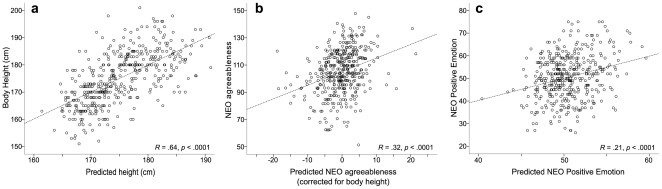
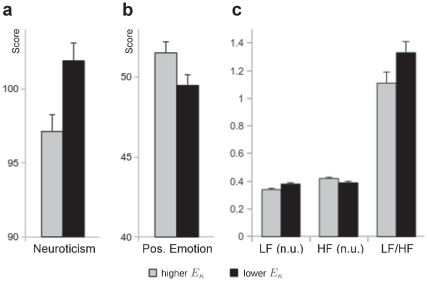
METHODOLOGY/PRINCIPAL FINDINGS: NEO scores and rest ECGs were obtained from 425 healthy individuals. Neuroticism and positive emotion significantly differed between individuals with high and low Eκ values. In addition, stepwise cross-validated regressions indicated correlations between ECG amplitudes and (a) agreeableness, as well as (b) positive emotion.
CONCLUSIONS/SIGNIFICANCE: These results are the first to demonstrate that ECG amplitude patterns provide information about the personality of an individual as measured with NEO personality scales and facets. These findings open new perspectives for a more efficient personality assessment using cardiac measures, as well as for more efficient risk-stratification and pre-clinical diagnosis of individuals at risk for cardiac, affective and psychosomatic disorders.
个性与心脏之间存在着既定的关系,这一点从一方面的负面情绪与冠心病或慢性心力衰竭之间的关联就可以证明。然而,我们对健康个体中心脏与个性之间的关系知之甚少。在这里,我们研究了心电图(ECG)的幅度模式是否与神经质、外向性、宜人性、温暖、积极情绪和温柔特质相关,这些特质是通过神经症-外向性-开放性(NEO)人格量表来测量的。具体来说,我们调查了(a)以前与情感平坦化有关的心脏幅度测量(称为 Eκ 值)是否可以解释 NEO 分数的差异,以及(b)NEO 分数与 ECG 幅度之间是否存在相关性。
方法/主要发现:从 425 名健康个体中获得了 NEO 分数和静息 ECG。神经质和积极情绪在 Eκ 值高和低的个体之间存在显著差异。此外,逐步交叉验证回归表明,ECG 幅度与(a)宜人性以及(b)积极情绪之间存在相关性。
结论/意义:这些结果首次表明,心电图幅度模式提供了关于个体个性的信息,这些信息是通过 NEO 人格量表和方面来测量的。这些发现为使用心脏测量进行更有效的个性评估以及为心脏、情感和身心障碍风险个体的更有效的风险分层和临床前诊断开辟了新的视角。