State Key Laboratory of Medical Genomics, Shanghai Institute of Hematology, Shanghai Rui Jin Hospital, Shanghai Jiao Tong University School of Medicine, Shanghai, China.
Cell Death Dis. 2012 Mar 1;3(3):e275. doi: 10.1038/cddis.2012.13.
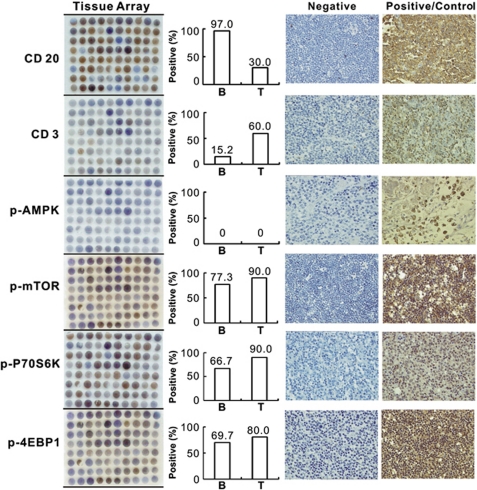
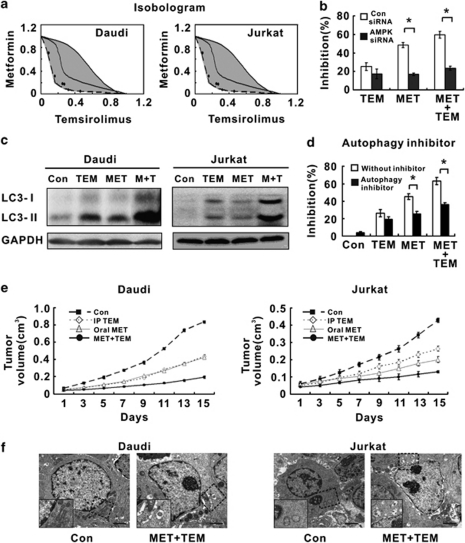
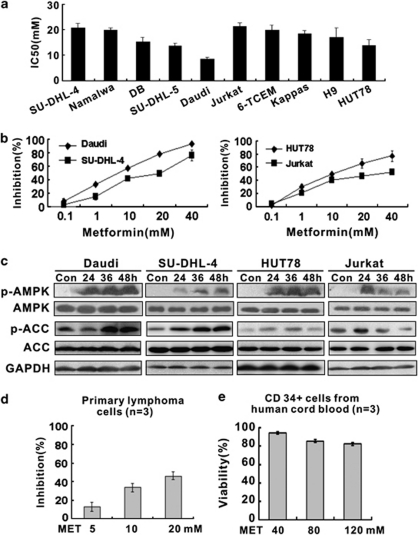
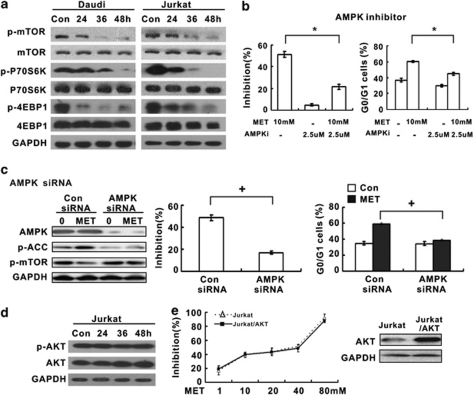
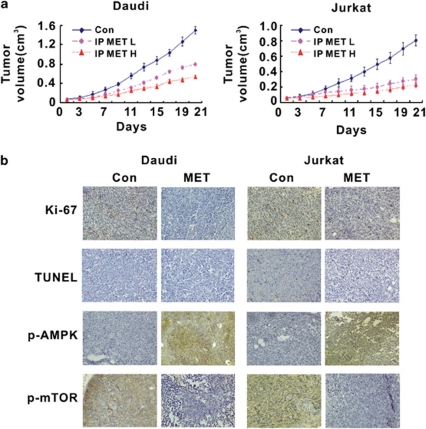
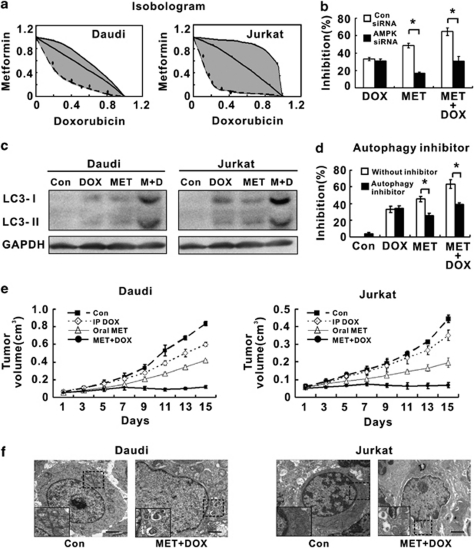
Adenosine monophosphate-activated protein kinase (AMPK) acts as a major sensor of cellular energy status in cancers and is critically involved in cell sensitivity to anticancer agents. Here, we showed that AMPK was inactivated in lymphoma and related to the upregulation of the mammalian target of rapamycin (mTOR) pathway. AMPK activator metformin potentially inhibited the growth of B- and T-lymphoma cells. Strong antitumor effect was also observed on primary lymphoma cells while sparing normal hematopoiesis ex vivo. Metformin-induced AMPK activation was associated with the inhibition of the mTOR signaling without involving AKT. Moreover, lymphoma cell response to the chemotherapeutic agent doxorubicin and mTOR inhibitor temsirolimus was significantly enhanced when co-treated with metformin. Pharmacologic and molecular knock-down of AMPK attenuated metformin-mediated lymphoma cell growth inhibition and drug sensitization. In vivo, metformin induced AMPK activation, mTOR inhibition and remarkably blocked tumor growth in murine lymphoma xenografts. Of note, metformin was equally effective when given orally. Combined treatment of oral metformin with doxorubicin or temsirolimus triggered lymphoma cell autophagy and functioned more efficiently than either agent alone. Taken together, these data provided first evidence for the growth-inhibitory and drug-sensitizing effect of metformin on lymphoma. Selectively targeting mTOR pathway through AMPK activation may thus represent a promising new strategy to improve treatment of lymphoma patients.
腺苷酸活化蛋白激酶 (AMPK) 作为细胞能量状态在癌症中的主要传感器,对于细胞对抗癌药物的敏感性至关重要。在这里,我们表明 AMPK 在淋巴瘤中失活,并且与哺乳动物雷帕霉素靶蛋白 (mTOR) 途径的上调有关。AMPK 激活剂二甲双胍可能抑制 B 细胞和 T 细胞淋巴瘤细胞的生长。在体外,还观察到对原发性淋巴瘤细胞具有强烈的抗肿瘤作用,同时保留正常造血。二甲双胍诱导的 AMPK 激活与 mTOR 信号的抑制有关,而不涉及 AKT。此外,当与二甲双胍共同处理时,淋巴瘤细胞对化疗药物阿霉素和 mTOR 抑制剂替西罗莫司的反应显著增强。药理学和分子敲低 AMPK 减弱了二甲双胍介导的淋巴瘤细胞生长抑制和药物增敏作用。在体内,二甲双胍诱导 AMPK 激活、mTOR 抑制,并显著阻断了小鼠淋巴瘤异种移植中的肿瘤生长。值得注意的是,口服二甲双胍同样有效。口服二甲双胍联合阿霉素或替西罗莫司治疗可引发淋巴瘤细胞自噬,比单独使用任何一种药物更有效。总之,这些数据首次提供了二甲双胍对淋巴瘤的生长抑制和药物增敏作用的证据。通过 AMPK 激活选择性靶向 mTOR 途径可能代表改善淋巴瘤患者治疗的一种有前途的新策略。