Division of Radiology, Mayo Clinic, Rochester, MN 55905, USA.
Harvard University, Cambridge, MA 02138, USA.
Int J Mol Sci. 2024 Jul 8;25(13):7494. doi: 10.3390/ijms25137494.
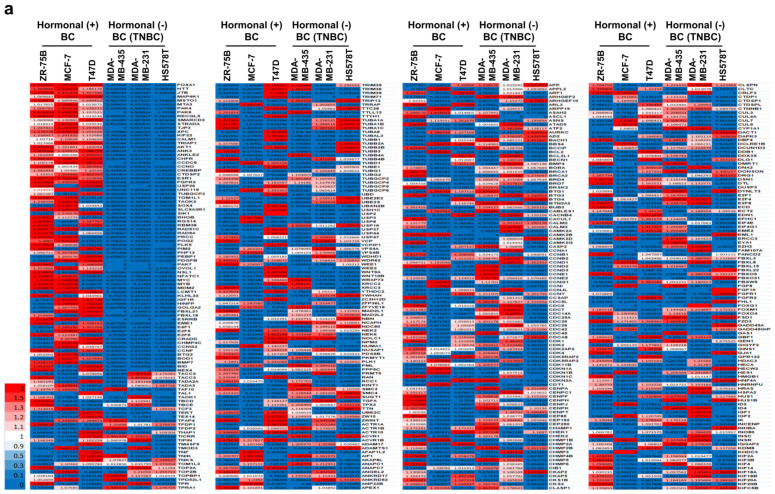
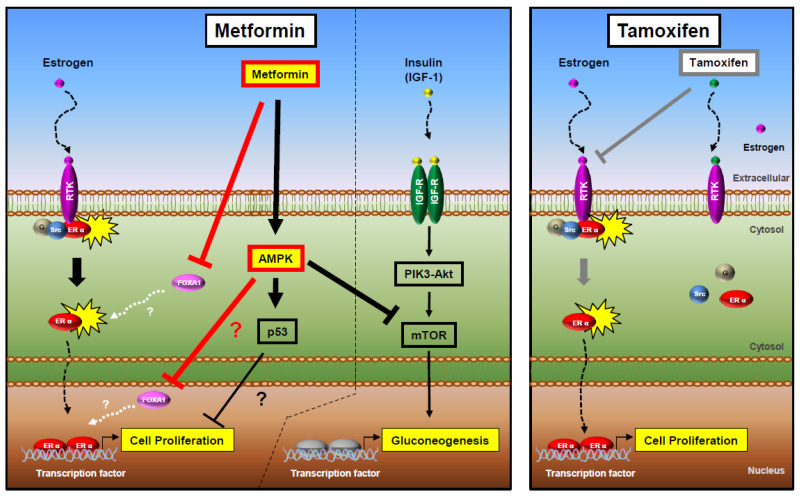
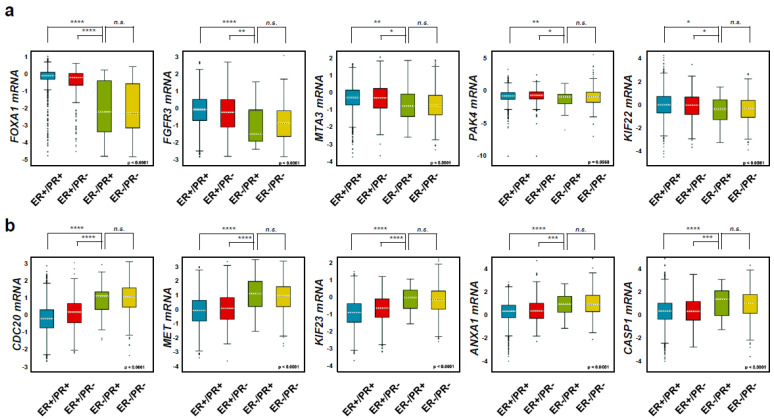
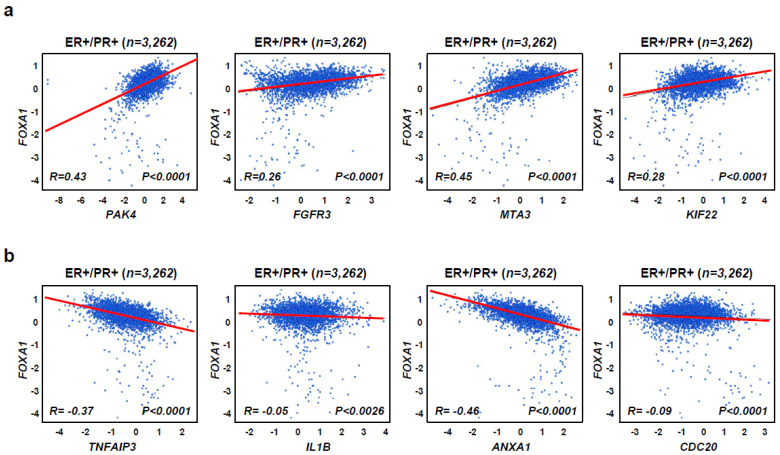
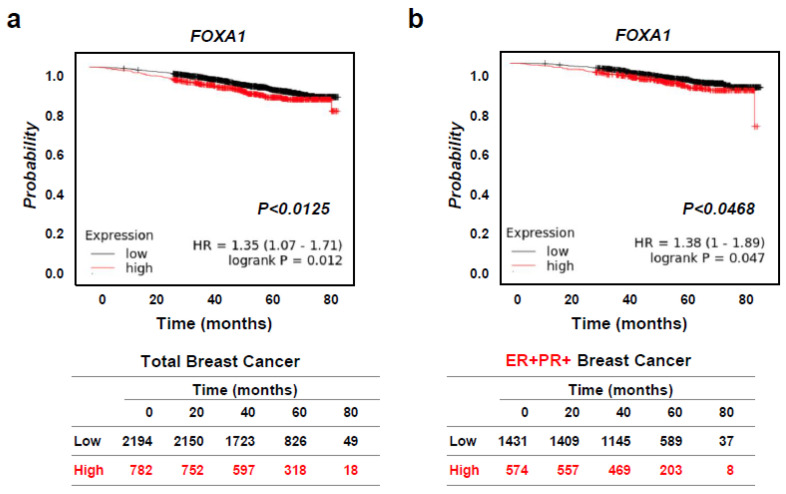
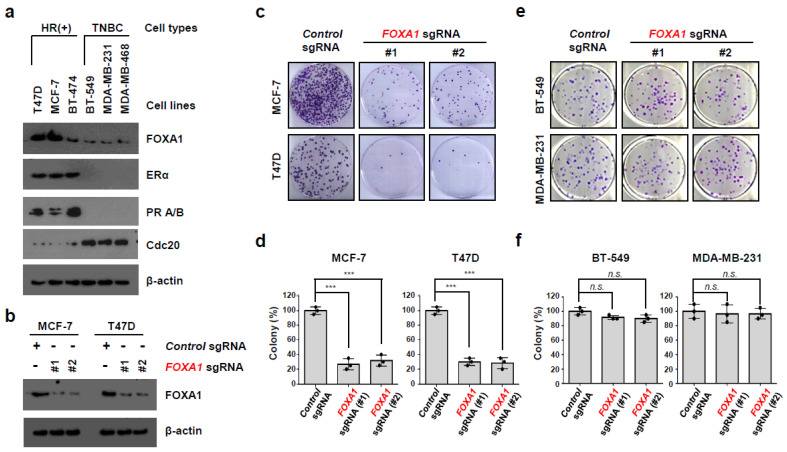
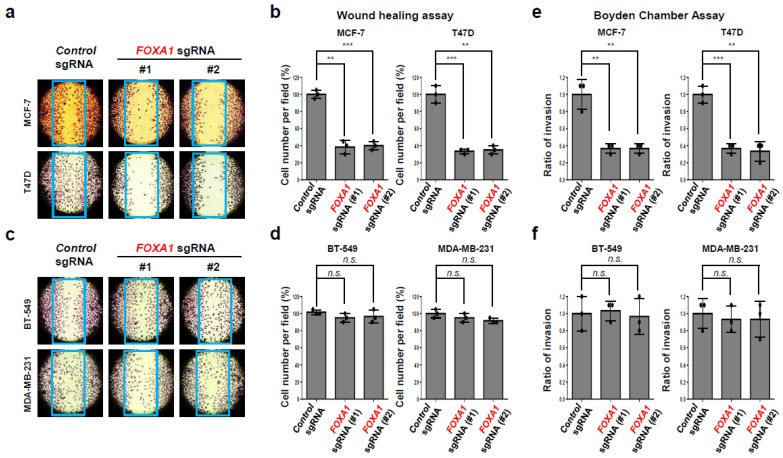
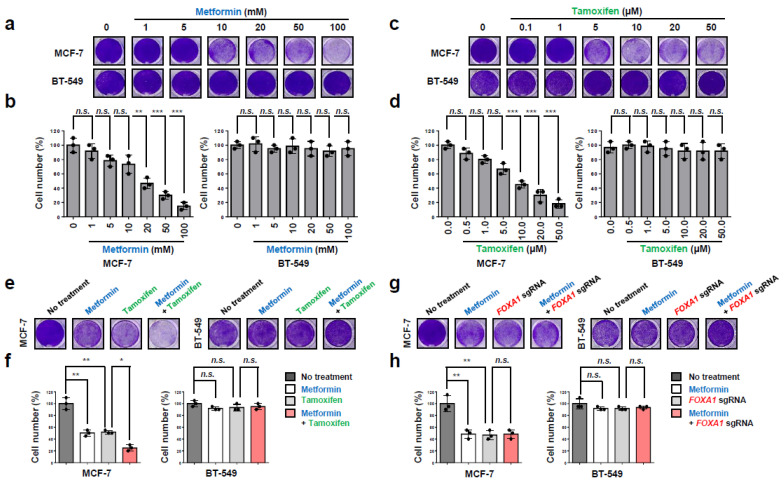
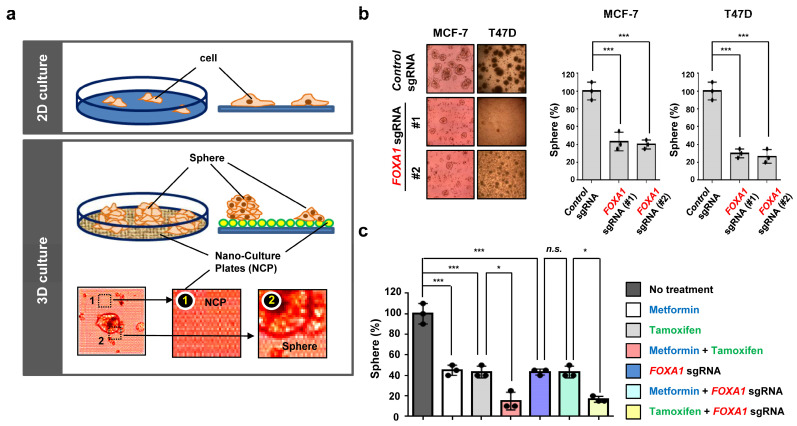
Women with type 2 diabetes (T2D) have a higher risk of being diagnosed with breast cancer and have worse survival than non-diabetic women if they do develop breast cancer. However, more research is needed to elucidate the biological underpinnings of these relationships. Here, we found that forkhead box A1 (), a forkhead family transcription factor, and metformin (1,1-dimethylbiguanide hydrochloride), a medication used to treat T2D, may impact hormone-receptor-positive (HR+) breast cancer (BC) tumor cell growth and metastasis. Indeed, fourteen diabetes-associated genes are highly expressed in only three HR+ breast cancer cell lines but not the other subtypes utilizing a 53,805 gene database obtained from NCBI GEO. Among the diabetes-related genes, , , , , and were highly expressed in HR+ breast cancer from 4032 breast cancer patient tissue samples using the Breast Cancer Gene Expression Omnibus. Notably, elevated expression correlated with poorer overall survival in patients with estrogen-receptor-positive/progesterone-receptor-positive (ER+/PR+) breast cancer. Furthermore, experiments demonstrated that loss of the gene inhibited tumor proliferation and invasion in vitro using MCF-7 and T47D HR+ breast cancer cell lines. Metformin, an anti-diabetic medication, significantly suppressed tumor cell growth in MCF-7 cells. Additionally, either metformin treatment or gene deletion enhanced tamoxifen-induced tumor growth inhibition in HR+ breast cancer cell lines within an ex vivo three-dimensional (3D) organoid model. Therefore, the diabetes-related medicine metformin and gene inhibition might be a new treatment for patients with HR+ breast cancer when combined with tamoxifen, an endocrine therapy.
患有 2 型糖尿病 (T2D) 的女性如果患上乳腺癌,其被诊断出患有乳腺癌的风险比非糖尿病女性更高,且如果患上乳腺癌,其生存率也更差。然而,需要更多的研究来阐明这些关系的生物学基础。在这里,我们发现叉头框蛋白 A1 (),一种叉头家族转录因子,以及二甲双胍(1,1-二甲基双胍盐酸盐),一种用于治疗 T2D 的药物,可能会影响激素受体阳性 (HR+)乳腺癌 (BC) 肿瘤细胞的生长和转移。事实上,只有在三个 HR+乳腺癌细胞系中,而不是其他亚型中,利用从 NCBI GEO 获得的 53,805 个基因数据库,才会高度表达 14 个与糖尿病相关的基因。在与糖尿病相关的基因中,、、、、和在利用 Breast Cancer Gene Expression Omnibus 从 4032 个乳腺癌患者组织样本中高度表达 HR+乳腺癌。值得注意的是,表达水平升高与雌激素受体阳性/孕激素受体阳性 (ER+/PR+)乳腺癌患者的总体生存率较差相关。此外,实验表明,利用 MCF-7 和 T47D HR+乳腺癌细胞系,缺失 基因会抑制肿瘤的体外增殖和侵袭。二甲双胍,一种抗糖尿病药物,显著抑制 MCF-7 细胞的肿瘤细胞生长。此外,在 HR+乳腺癌细胞系的体外三维 (3D) 类器官模型中,无论是二甲双胍治疗还是 基因缺失,都增强了他莫昔芬诱导的肿瘤生长抑制作用。因此,与内分泌治疗他莫昔芬联合使用,与糖尿病相关的药物二甲双胍和 基因抑制可能成为 HR+乳腺癌患者的一种新治疗方法。