Department of Oncology and Hematology, BMT with section Pneumology, University Medical Center Hamburg-Eppendorf, Hubertus Wald Tumorzentrum/University Cancer Center Hamburg, Hamburg, Germany.
PLoS One. 2012;7(2):e31998. doi: 10.1371/journal.pone.0031998. Epub 2012 Feb 22.
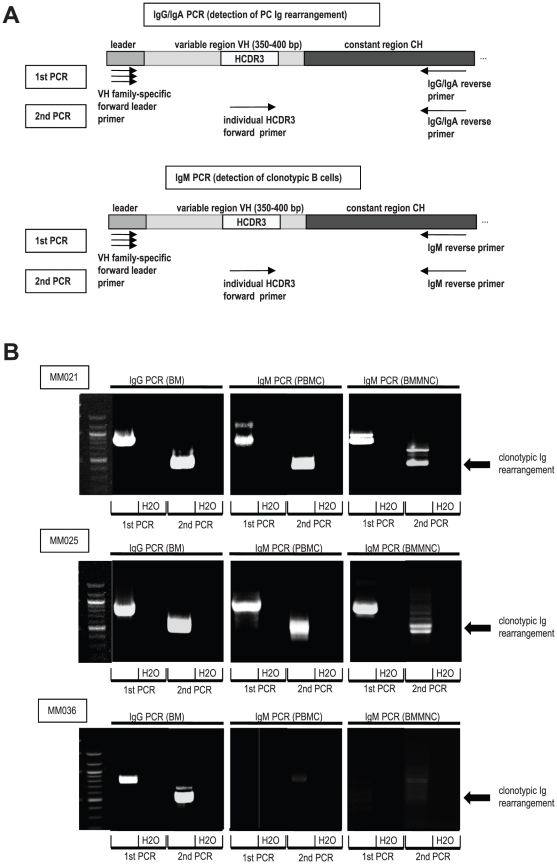
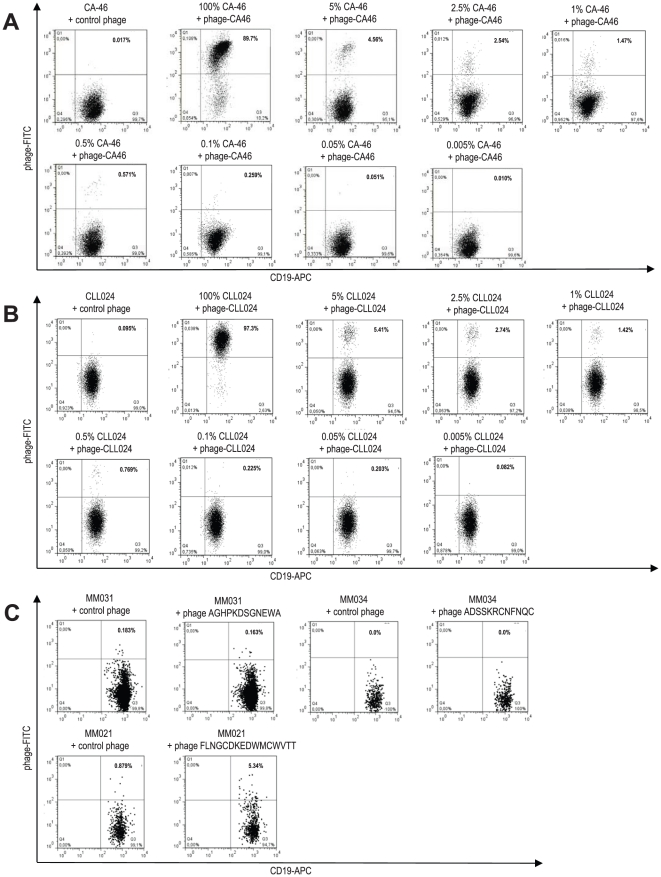
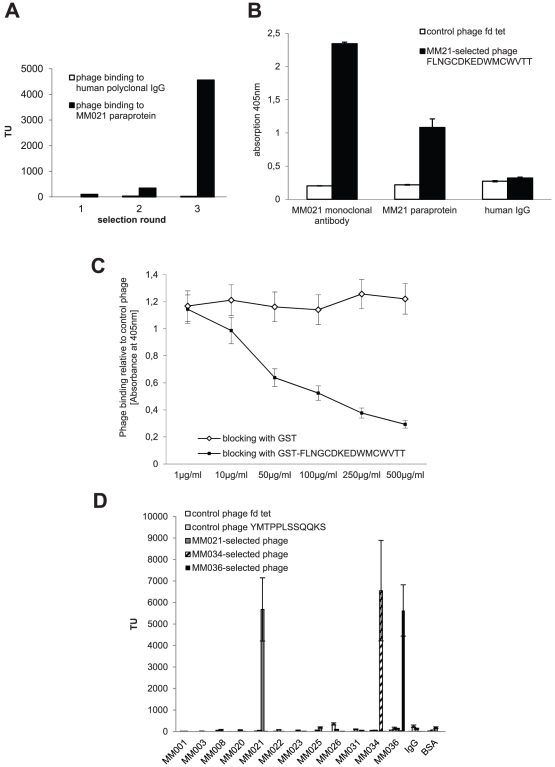
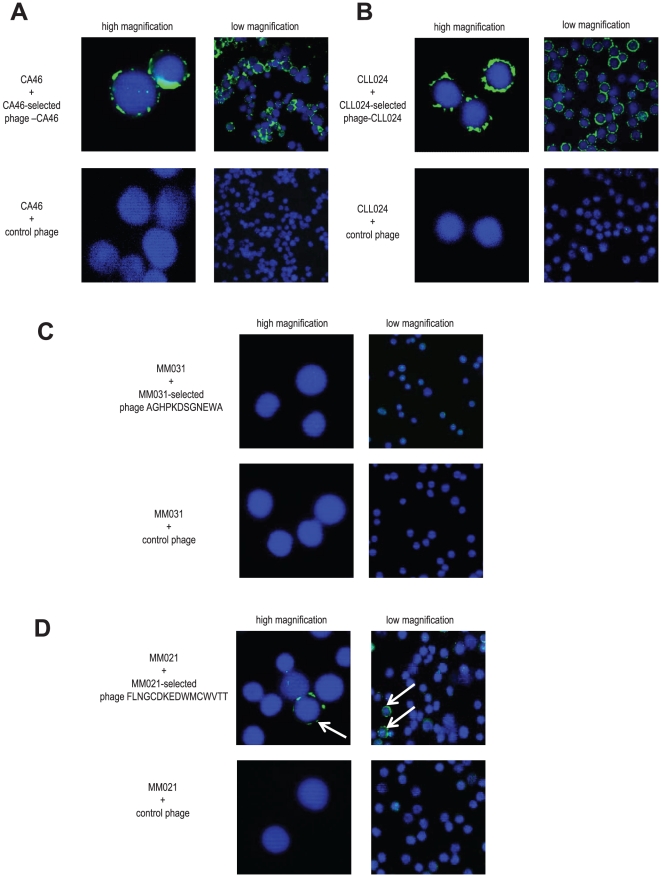
In multiple myeloma, circulating "clonotypic" B cells, that express the immunoglobulin rearrangement of the malignant plasma cell clone, can be indirectly detected by PCR. Their role as potential "feeder" cells for the malignant plasma cell pool remains controversial. Here we established for the first time an approach that allows direct tracking of such clonotypic cells by labeling with patient-specific immunoglobulin ligands in 15 patients with myeloma. Fifty percent of patients showed evidence of clonotypic B cells in blood or bone marrow by PCR. Epitope-mimicking peptides from random libraries were selected on each patient's individual immunoglobulin and used as ligands to trace cells expressing the idiotypic immunoglobulin on their surface. We established a flow cytometry and immunofluorescence protocol to track clonotypic B cells and validated it in two independent monoclonal B cell systems. Using this method, we found clonotypic B cells in only one out of 15 myeloma patients. In view of the assay's validated sensitivity level of 10(-3), this surprising data suggests that the abundance of such cells has been vastly overestimated in the past and that they apparently represent a very rare population in myeloma. Our novel tracing approach may open perspectives to isolate and analyze clonotypic B cells and determine their role in myeloma pathobiology.
在多发性骨髓瘤中,表达恶性浆细胞克隆免疫球蛋白重排的循环“克隆型”B 细胞可以通过 PCR 间接检测。它们作为恶性浆细胞池的潜在“滋养”细胞的作用仍存在争议。在这里,我们首次建立了一种方法,通过在 15 名骨髓瘤患者中使用患者特异性免疫球蛋白配体对这些克隆型细胞进行直接标记,从而可以直接跟踪这些细胞。通过 PCR,50%的患者的血液或骨髓中存在克隆型 B 细胞的证据。从随机文库中选择与每个患者的个体免疫球蛋白结合的表位模拟肽,并将其用作配体来追踪表面表达独特型免疫球蛋白的细胞。我们建立了一种用于跟踪克隆型 B 细胞的流式细胞术和免疫荧光方案,并在两个独立的单克隆 B 细胞系统中对其进行了验证。使用这种方法,我们仅在 15 名骨髓瘤患者中的 1 名中发现了克隆型 B 细胞。鉴于该检测方法验证的灵敏度为 10(-3),这一令人惊讶的数据表明,过去对这些细胞的丰度估计过高,而且它们显然在骨髓瘤中代表非常罕见的群体。我们的新型追踪方法可能为分离和分析克隆型 B 细胞并确定它们在骨髓瘤发病机制中的作用开辟了前景。