Radiation Oncology, David Geffen School of Medicine at University of California Los Angeles, Los Angeles, California, United States of America.
PLoS One. 2012;7(2):e32062. doi: 10.1371/journal.pone.0032062. Epub 2012 Feb 22.
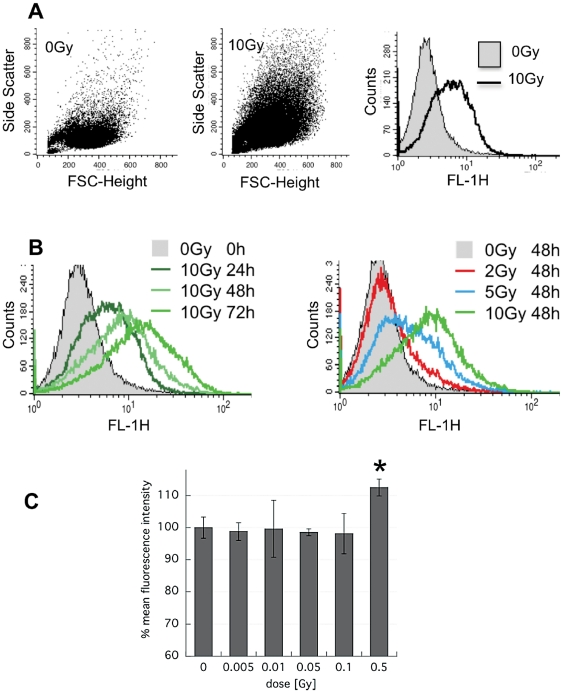
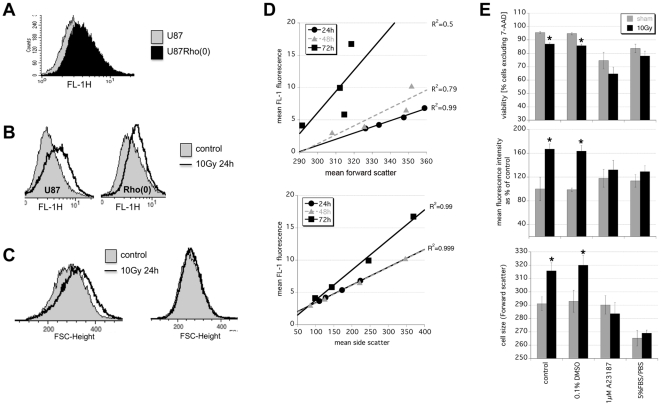
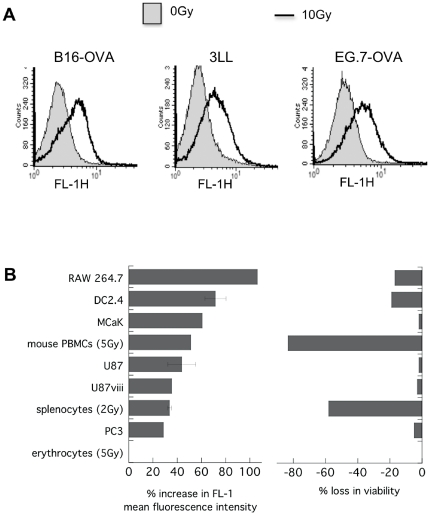
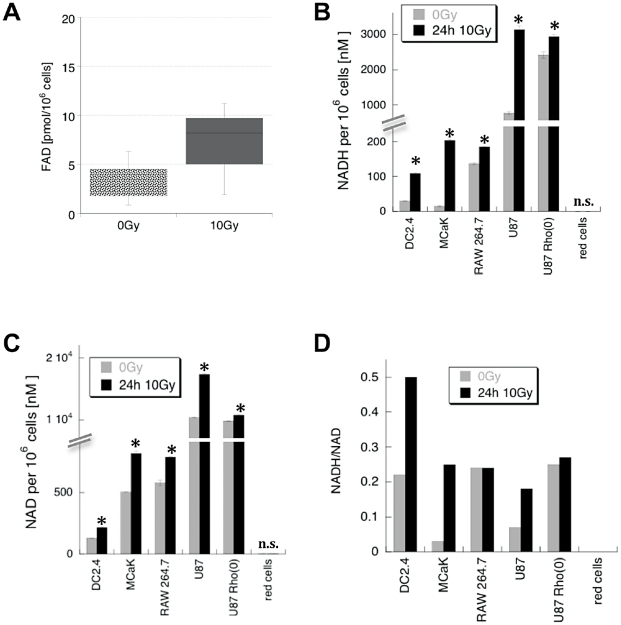
Cells often autofluoresce in response to UV radiation excitation and this can reflect critical aspects of cellular metabolism. Here we report that many different human and murine cell types respond to ionizing radiation with a striking rise in autofluorescence that is dependent on dose and time. There was a highly reproducible fluorescent shift at various wavelengths, which was mirrored by an equally reproducible rise in the vital intracellular metabolic co-factors FAD and NADH. It appears that mitochondria, metabolism and Ca(2+) homeostasis are important for this to occur as cells without mitochondria or cells unable to alter calcium levels did not behave in this way. We believe these radiation-induced changes are of biological importance and that autofluorescence may even provide us with a tool to monitor radiation responses in the clinic.
细胞通常会对紫外线辐射激发产生自发荧光,这可以反映细胞代谢的关键方面。在这里,我们报告说,许多不同的人类和鼠类细胞类型会对电离辐射产生显著的自发荧光增加,这种增加与剂量和时间有关。在不同的波长下,存在着高度可重复的荧光位移,这与细胞内重要代谢辅助因子 FAD 和 NADH 同样可重复的增加相吻合。线粒体、代谢和 Ca(2+) 稳态似乎对这种情况的发生很重要,因为没有线粒体或无法改变钙离子水平的细胞不会以这种方式表现。我们认为这些由辐射引起的变化具有生物学意义,自发荧光甚至可能为我们提供一种工具,以便在临床上监测辐射反应。