Department of Immunology, Juntendo University School of Medicine, 2-1-1 Hongo, Tokyo, 113-8421, Japan.
Arthritis Res Ther. 2012 Mar 5;14(2):R45. doi: 10.1186/ar3758.
Osteoclastogenesis plays an important role in the bone erosion of rheumatoid arthritis (RA). Recently, Notch receptors have been implicated in the development of osteoclasts. However, the responsible Notch ligands have not been identified yet. This study was undertaken to determine the role of individual Notch receptors and ligands in osteoclastogenesis.
Mouse bone marrow-derived macrophages or human peripheral blood monocytes were used as osteoclast precursors and cultured with receptor activator of nuclear factor-kappaB ligand (RANKL) and macrophage-colony stimulating factor (M-CSF) to induce osteoclasts. Osteoclasts were detected by tartrate-resistant acid phosphatase (TRAP) staining. K/BxN serum-induced arthritic mice and ovariectomized mice were treated with anti-mouse Delta-like 1 (Dll1) blocking monoclonal antibody (mAb).
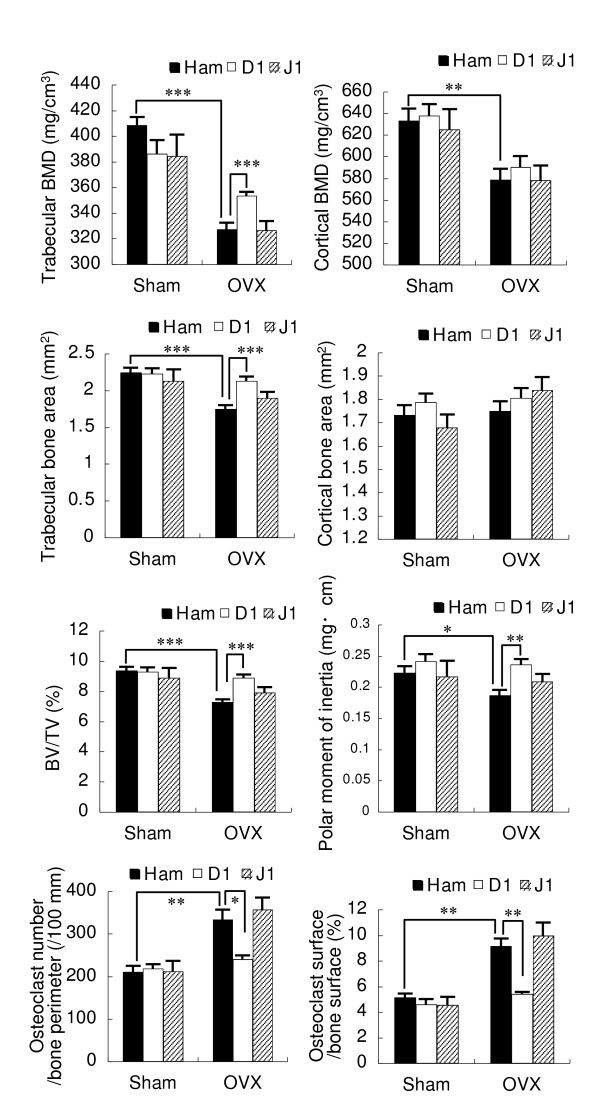
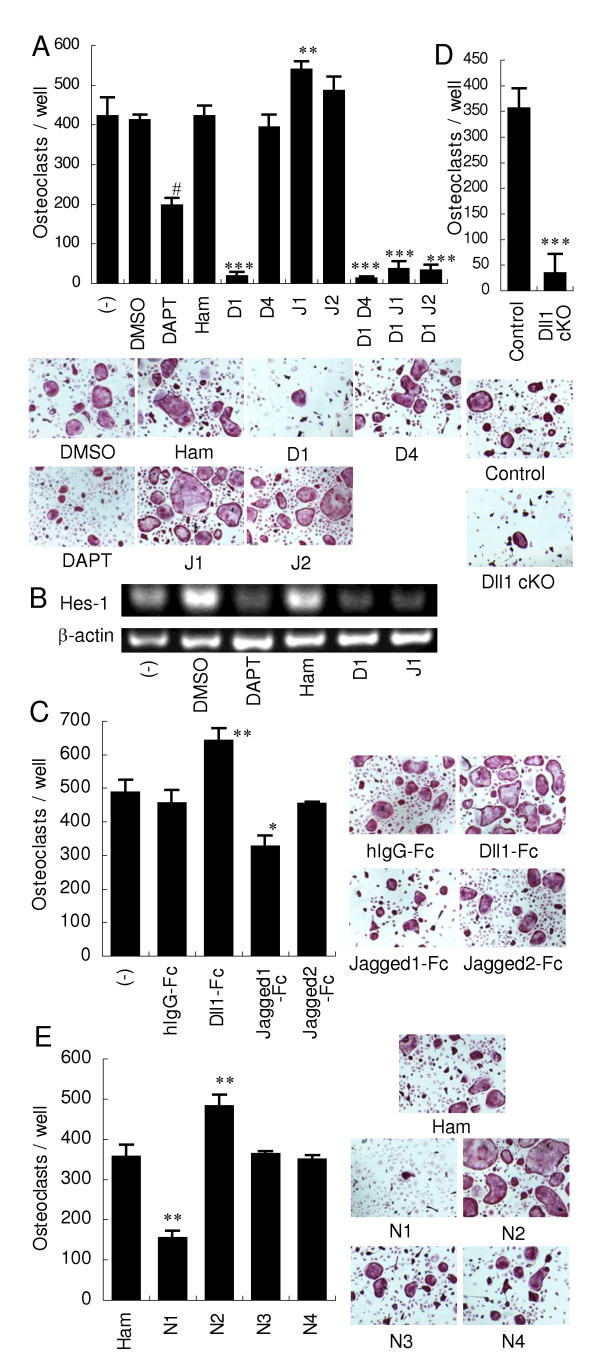
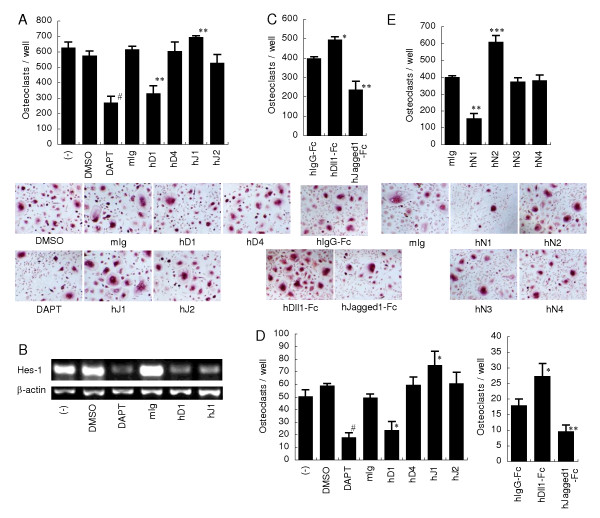
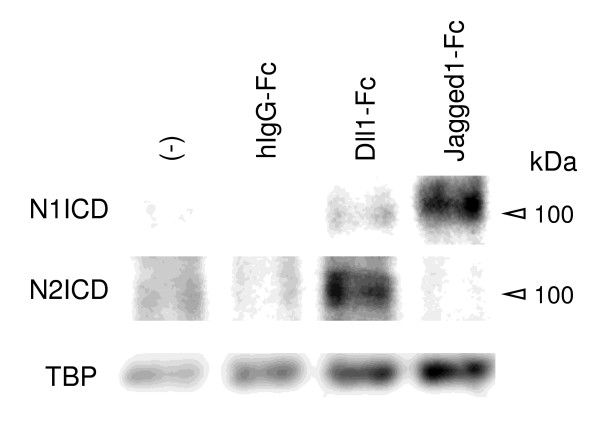
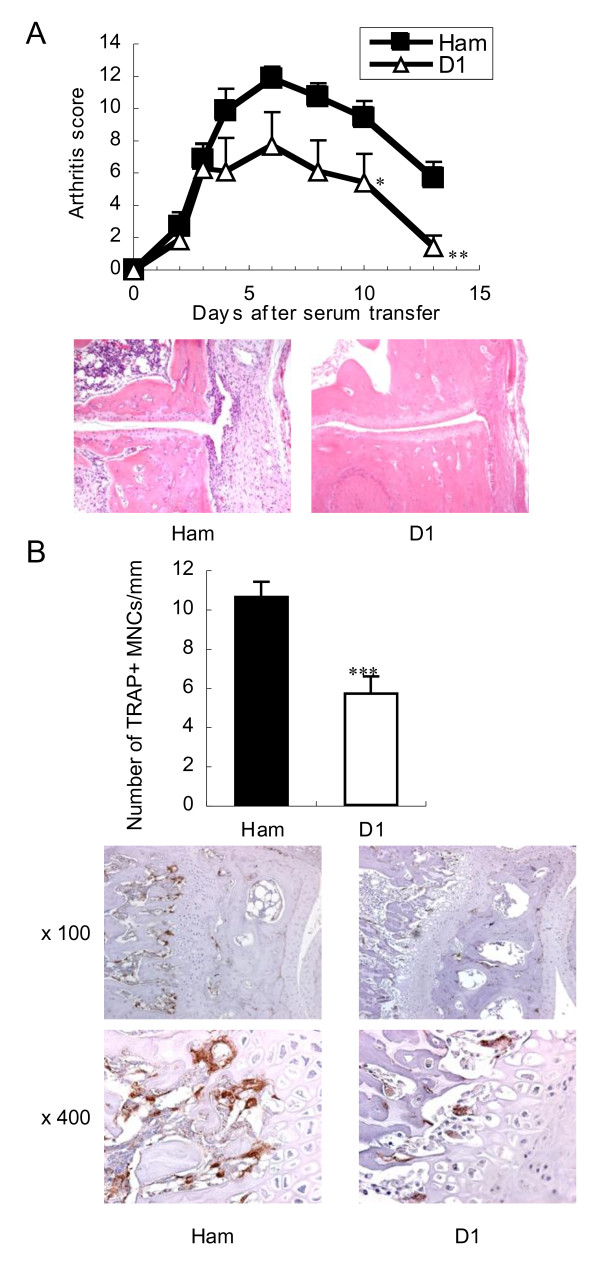
Blockade of a Notch ligand Dll1 with mAb inhibited osteoclastogenesis and, conversely, immobilized Dll1-Fc fusion protein enhanced it in both mice and humans. In contrast, blockade of a Notch ligand Jagged1 enhanced osteoclastogenesis and immobilized Jagged1-Fc suppressed it. Enhancement of osteoclastogenesis by agonistic anti-Notch2 mAb suggested that Dll1 promoted osteoclastogenesis via Notch2, while suppression by agonistic anti-Notch1 mAb suggested that Jagged1 suppressed osteoclastogenesis via Notch1. Inhibition of Notch signaling by a gamma-secretase inhibitor suppressed osteoclastogenesis, implying that Notch2/Dll1-mediated enhancement was dominant. Actually, blockade of Dll1 ameliorated arthritis induced by K/BxN serum transfer, reduced the number of osteoclasts in the affected joints and suppressed ovariectomy-induced bone loss.
The differential regulation of osteoclastogenesis by Notch2/Dll1 and Notch1/Jagged1 axes may be a novel target for amelioration of bone erosion in RA patients.
破骨细胞生成在类风湿关节炎(RA)的骨侵蚀中起着重要作用。最近,Notch 受体被认为参与了破骨细胞的发育。然而,负责的 Notch 配体尚未被确定。本研究旨在确定单个 Notch 受体和配体在破骨细胞生成中的作用。
使用鼠骨髓来源的巨噬细胞或人外周血单核细胞作为破骨细胞前体,并用核因子-kappaB 受体激活剂(RANKL)和巨噬细胞集落刺激因子(M-CSF)培养诱导破骨细胞。通过抗酒石酸酸性磷酸酶(TRAP)染色检测破骨细胞。用抗鼠 Delta-like 1(Dll1)阻断单克隆抗体(mAb)治疗 K/BxN 血清诱导的关节炎小鼠和卵巢切除小鼠。
用 mAb 阻断 Notch 配体 Dll1 抑制破骨细胞生成,相反,固定化 Dll1-Fc 融合蛋白在小鼠和人中增强了破骨细胞生成。相比之下,阻断 Notch 配体 Jagged1 增强了破骨细胞生成,而固定化 Jagged1-Fc 抑制了破骨细胞生成。激动型抗 Notch2 mAb 增强破骨细胞生成表明 Dll1 通过 Notch2 促进破骨细胞生成,而激动型抗 Notch1 mAb 抑制破骨细胞生成表明 Jagged1 通过 Notch1 抑制破骨细胞生成。Notch 信号通路的抑制通过 γ-分泌酶抑制剂抑制破骨细胞生成,这意味着 Notch2/Dll1 介导的增强是占主导地位的。实际上,阻断 Dll1 可改善 K/BxN 血清转移诱导的关节炎,减少受累关节中的破骨细胞数量并抑制卵巢切除诱导的骨质流失。
Notch2/Dll1 和 Notch1/Jagged1 轴对破骨细胞生成的差异调节可能是改善 RA 患者骨侵蚀的新靶点。