Seito Naoki, Yamashita Tadashi, Tsukuda Yukinori, Matsui Yuichiro, Urita Atsushi, Onodera Tomohiro, Mizutani Takeomi, Haga Hisashi, Fujitani Naoki, Shinohara Yasuro, Minami Akio, Iwasaki Norimasa
Hokkaido University, Sapporo, Japan.
Arthritis Rheum. 2012 Aug;64(8):2579-88. doi: 10.1002/art.34463.
Glycosphingolipids (GSLs) are ubiquitous membrane components that modulate transmembrane signaling and mediate cell-to-cell and cell-to-matrix interactions. GSL expression is decreased in the articular cartilage of humans with osteoarthritis (OA). This study was undertaken to determine the functional role of GSLs in cartilage metabolism related to OA pathogenesis in mice.
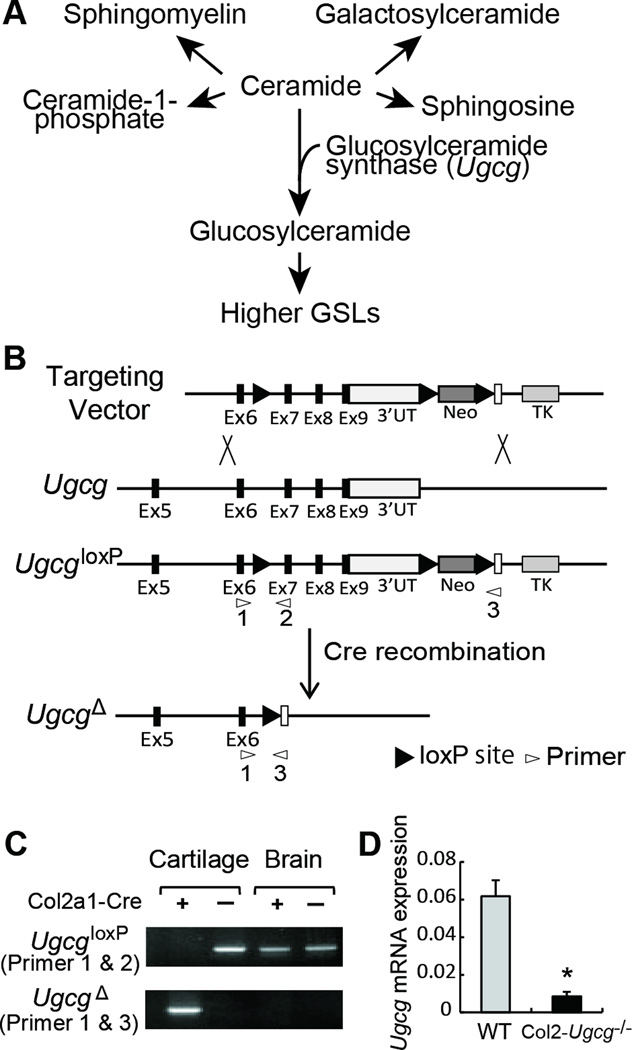
We generated mice with knockout of the chondrocyte-specific Ugcg gene, which encodes an initial enzyme of major GSL synthesis, using the Cre/loxP system (Col2-Ugcg(-/-) mice). In vivo OA and in vitro cartilage degradation models were used to evaluate the effect of GSLs on the cartilage degradation process.
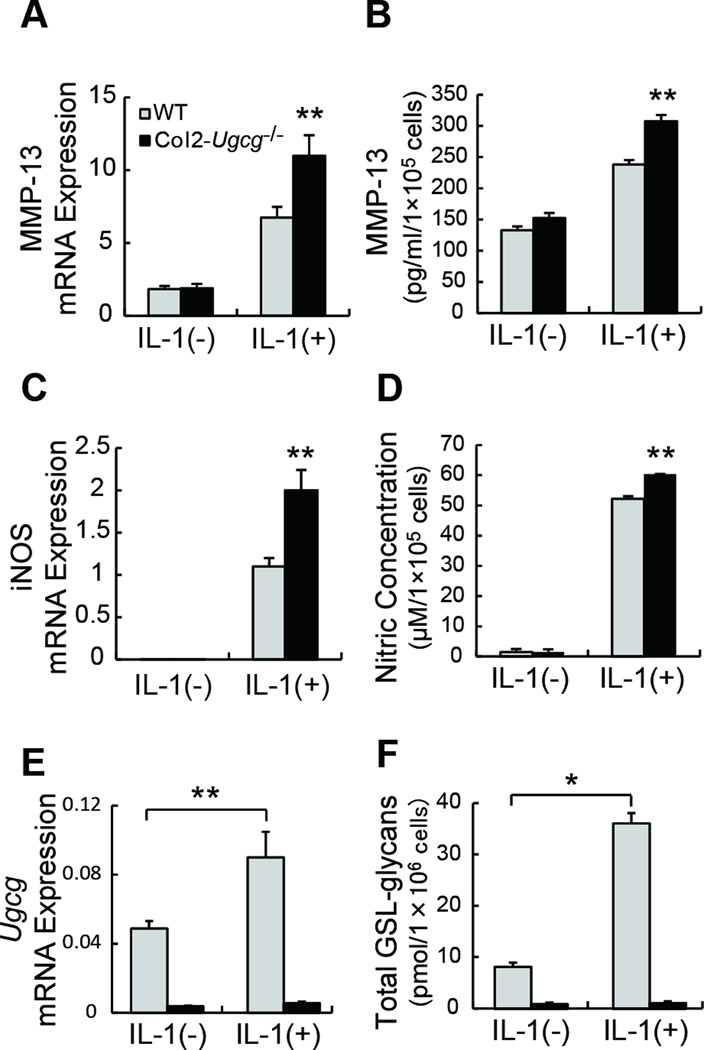
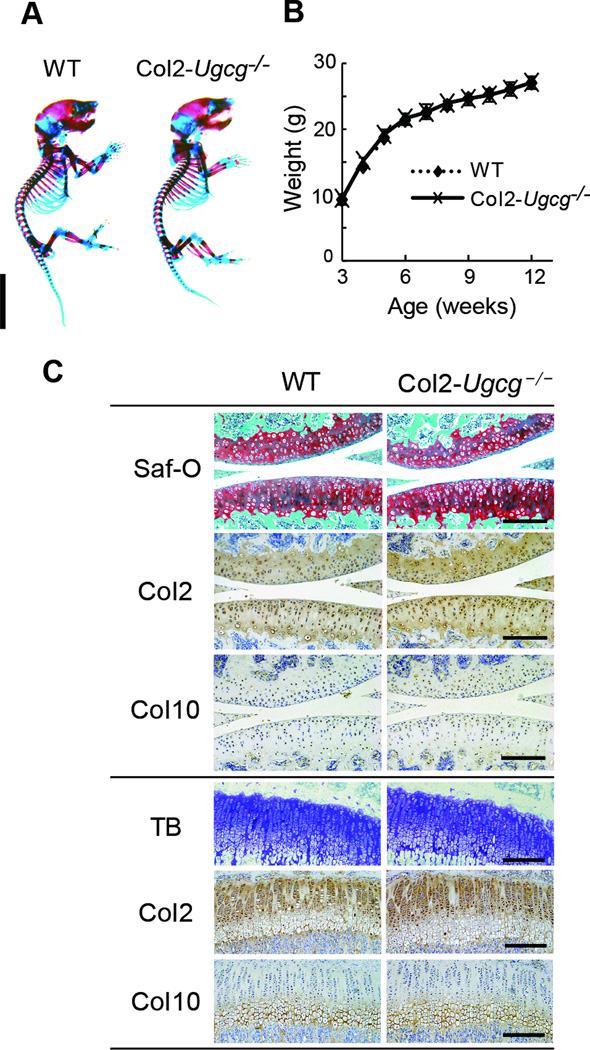
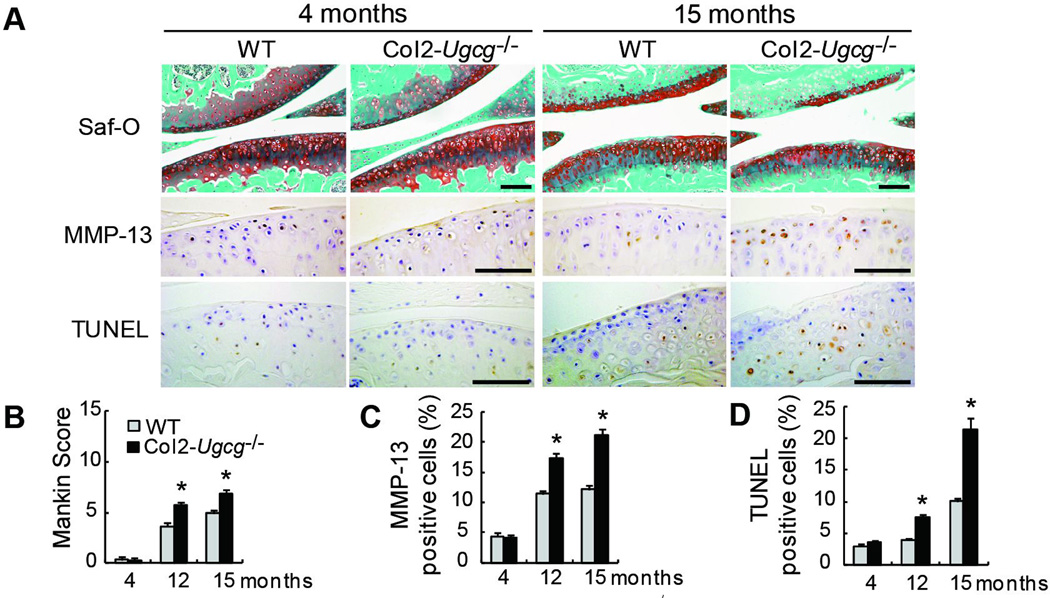
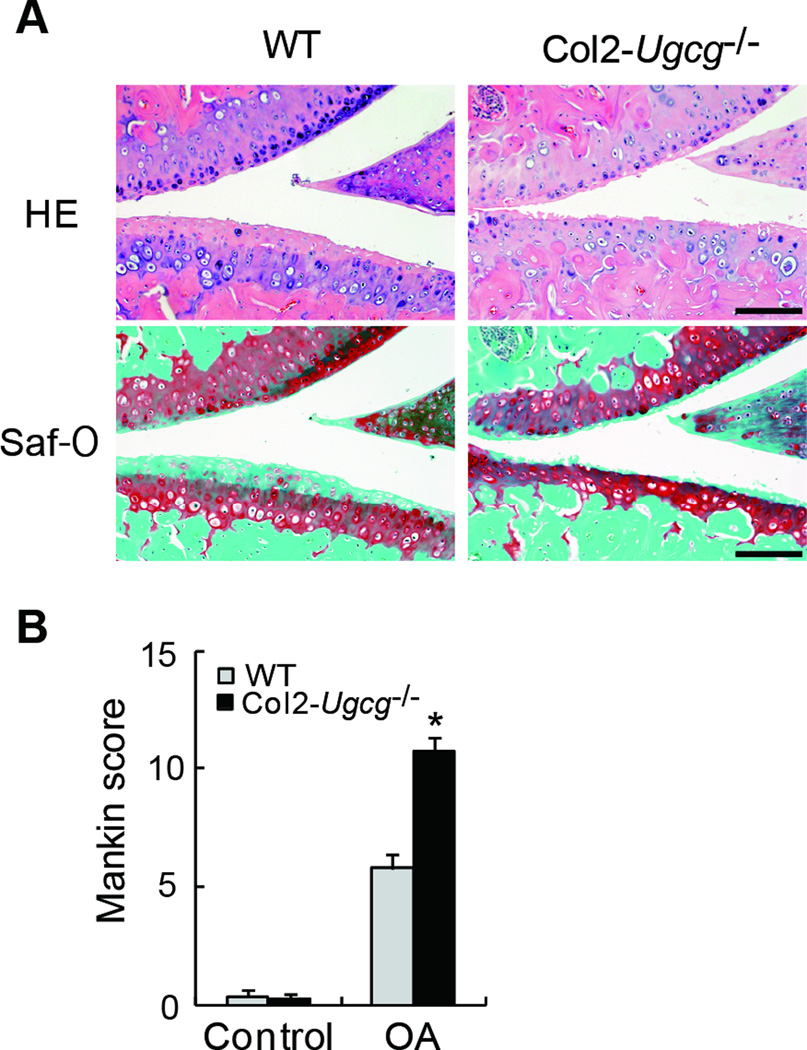
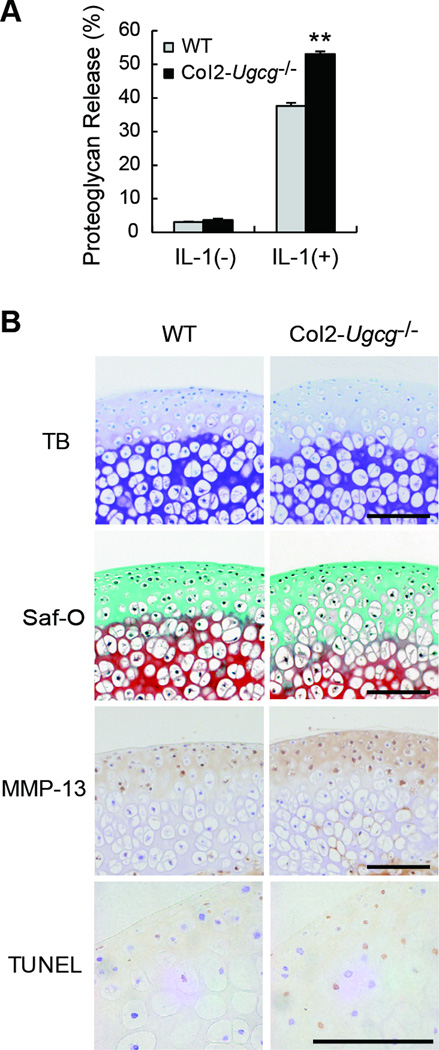
Although Col2-Ugcg(-/-) mice developed and grew normally, OA changes in these mice were dramatically enhanced with aging, through the overexpression of matrix metalloproteinase 13 and chondrocyte apoptosis, compared to their wild-type (WT) littermates. Col2-Ugcg(-/-) mice showed more severe instability-induced pathologic OA in vivo and interleukin-1α (IL-1α)-induced cartilage degradation in vitro. IL-1α stimulation of chondrocytes from WT mice significantly increased Ugcg messenger RNA expression and up-regulated GSL metabolism.
Our results indicate that GSL deficiency in mouse chondrocytes enhances the development of OA. However, this deficiency does not affect the development and organization of cartilage tissue in mice at a young age. These findings indicate that GSLs maintain cartilage molecular metabolism and prevent disease progression, although GSLs are not essential for chondrogenesis of progenitor and stem cells and cartilage development in young mice. GSL metabolism in the cartilage is a potential target for developing a novel treatment for OA.
糖鞘脂(GSLs)是普遍存在的膜成分,可调节跨膜信号传导并介导细胞间和细胞与基质间的相互作用。在骨关节炎(OA)患者的关节软骨中,GSL表达降低。本研究旨在确定GSLs在与小鼠OA发病机制相关的软骨代谢中的功能作用。
我们使用Cre/loxP系统(Col2-Ugcg(-/-)小鼠)生成了软骨细胞特异性Ugcg基因敲除的小鼠,该基因编码主要GSL合成的初始酶。体内OA和体外软骨降解模型用于评估GSLs对软骨降解过程的影响。
尽管Col2-Ugcg(-/-)小鼠正常发育和生长,但与野生型(WT)同窝小鼠相比,随着年龄增长,这些小鼠的OA变化通过基质金属蛋白酶13的过表达和软骨细胞凋亡而显著增强。Col2-Ugcg(-/-)小鼠在体内表现出更严重的不稳定诱导的病理性OA,在体外表现出白细胞介素-1α(IL-1α)诱导的软骨降解。IL-1α刺激WT小鼠的软骨细胞可显著增加Ugcg信使核糖核酸表达并上调GSL代谢。
我们的结果表明,小鼠软骨细胞中的GSL缺乏会增强OA的发展。然而,这种缺乏并不影响幼年小鼠软骨组织的发育和组织。这些发现表明,尽管GSLs对于幼年小鼠祖细胞和干细胞的软骨生成以及软骨发育不是必需的,但它们可维持软骨分子代谢并防止疾病进展。软骨中的GSL代谢是开发OA新型治疗方法的潜在靶点。