The Chemical Therapeutic Program, The Sidney Kimmel Comprehensive Cancer Center, The Johns Hopkins University School of Medicine, Baltimore, Maryland, USA.
Prostate. 2012 Oct 1;72(14):1491-505. doi: 10.1002/pros.22504. Epub 2012 Mar 6.
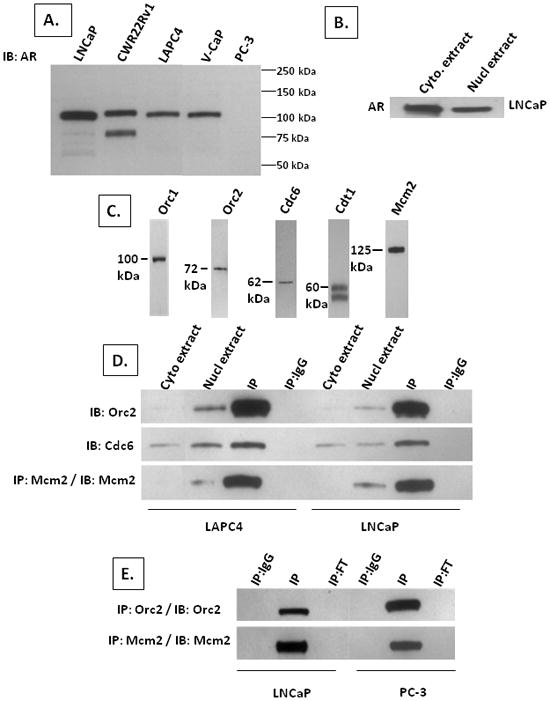
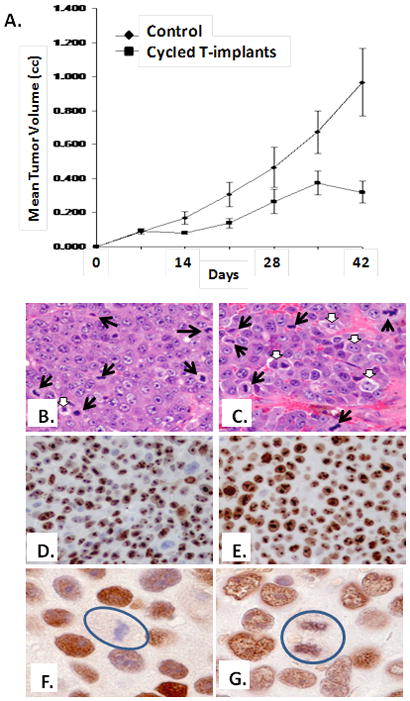
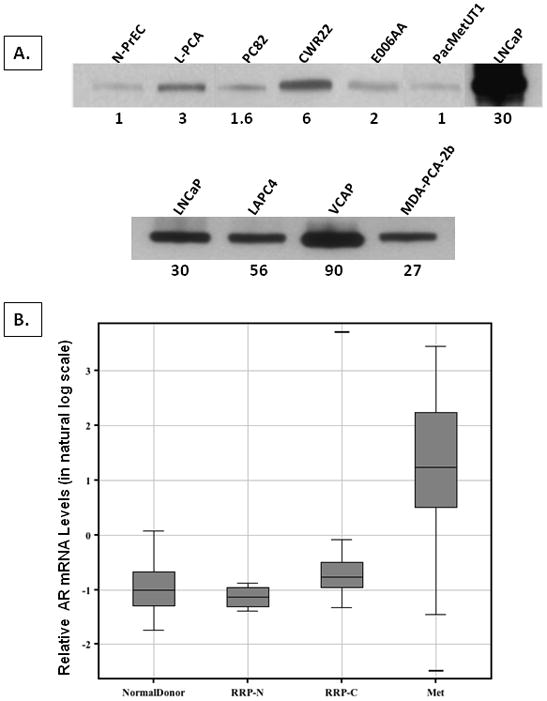
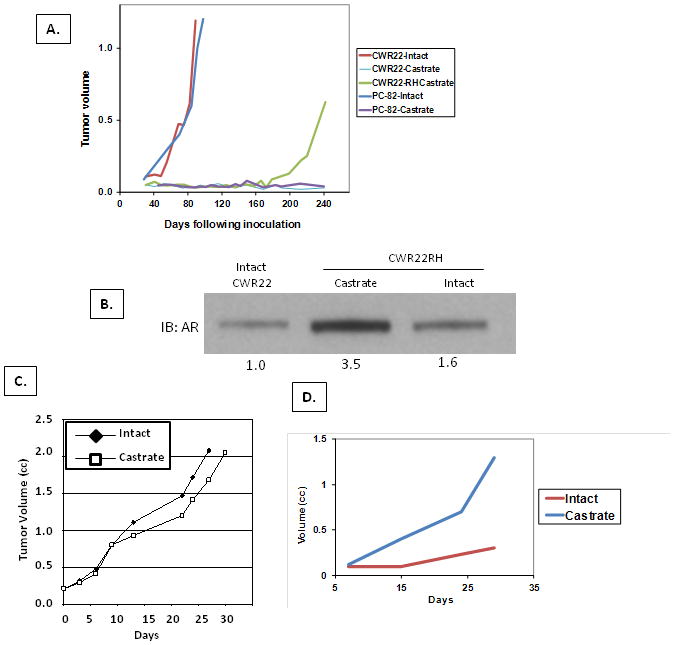
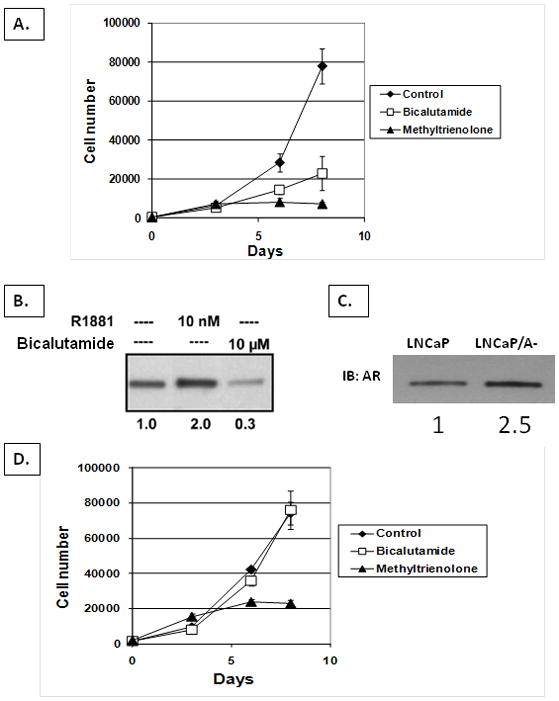
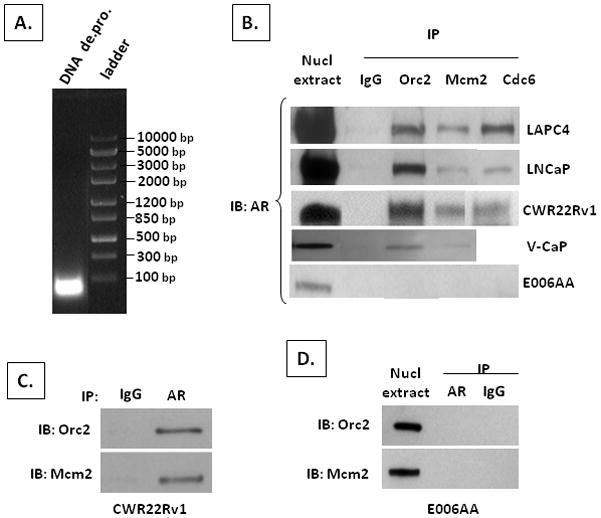
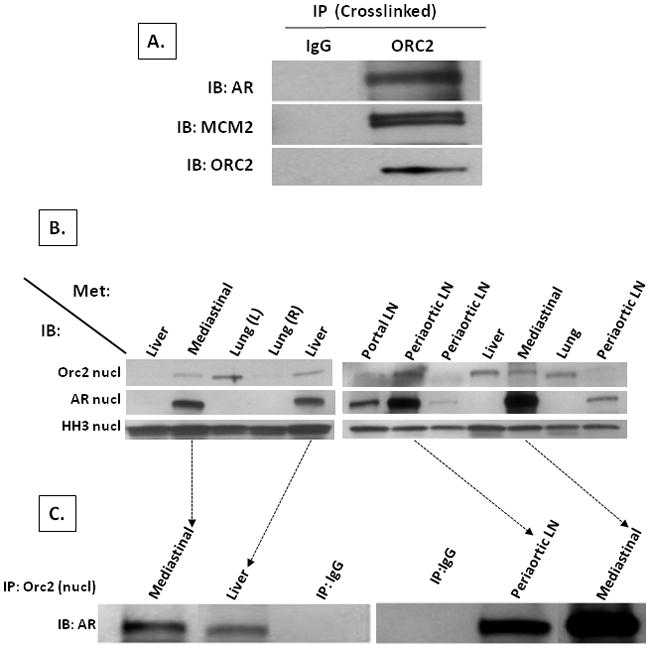
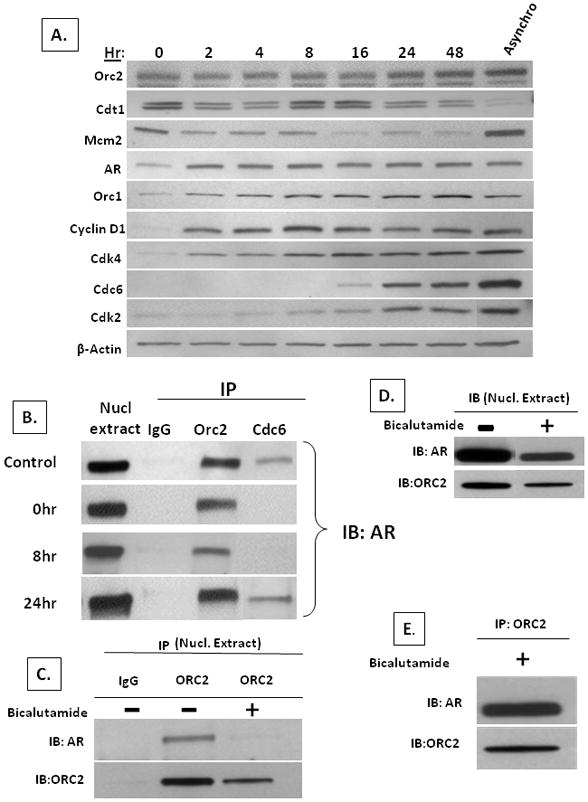
Cell culture/xenograft and gene arrays of clinical material document that development of castration resistant prostate cancer (CRPC) cells involves acquisition of adaptive auto-regulation resulting in >25-fold increase in Androgen Receptor (AR) protein expression in a low androgen environment. Such adaptive AR increase paradoxically is a liability in castrated hosts, however, when supraphysiologic androgen is acutely replaced. Cell synchronization/anti-androgen response is due to AR binding to replication complexes (RC) at origin of replication sites (ORS) in early G1 associated with licensing/restricting DNA for single round of duplication during S-phase. When CRPC cells are acutely exposed to supraphysiologic androgen, adaptively increased nuclear AR is over-stabilized, preventing sufficient degradation in mitosis, inhibiting DNA re-licensing, and thus death in the subsequent cell cycle. These mechanistic results and the fact that AR/RC binding occurs in metastatic CRPCs directly from patients provides a paradigm shifting rationale for bipolar androgen therapy (BAT) in patient progressing on chronic androgen ablation. BAT involves giving sequential cycles alternating between periods of acute supraphysiologic androgen followed by acute ablation to take advantage of vulnerability produced by adaptive auto-regulation and binding of AR to RC in CRPC cells. BAT therapy is effective in xenografts and based upon positive results has entered clinical testing.
细胞培养/异种移植和临床标本的基因阵列表明,去势抵抗性前列腺癌 (CRPC) 细胞的发展涉及获得适应性自身调节,导致雄激素受体 (AR) 蛋白在低雄激素环境中的表达增加 25 倍以上。这种适应性 AR 增加在去势宿主中是一种不利因素,然而,当超生理雄激素被急性替代时。细胞同步/抗雄激素反应是由于 AR 在早期 G1 与复制起点 (OR) 处的复制复合物 (RC) 结合,与 S 期单轮复制相关联的许可证/限制 DNA。当 CRPC 细胞被急性暴露于超生理雄激素时,适应性增加的核 AR 被过度稳定,从而阻止有丝分裂中足够的降解,抑制 DNA 重新许可证化,从而在随后的细胞周期中死亡。这些机制结果以及 AR/RC 结合发生在直接从患者中转移的 CRPC 中的事实,为在慢性雄激素消融过程中进展的患者提供了双相雄激素治疗 (BAT) 的范式转变依据。BAT 涉及在急性超生理雄激素后交替进行急性消融的周期交替,以利用适应性自身调节和 AR 与 RC 在 CRPC 细胞中的结合产生的脆弱性。BAT 治疗在异种移植中有效,并基于阳性结果已进入临床测试。