Functional and Evolutionary Entomology, Gembloux Agro-Bio Tech, University of Liege, Gembloux, Belgium.
PLoS One. 2012;7(3):e32564. doi: 10.1371/journal.pone.0032564. Epub 2012 Mar 1.
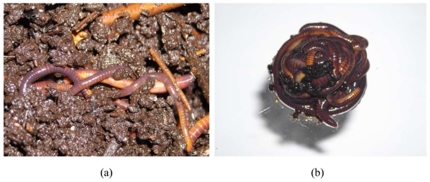
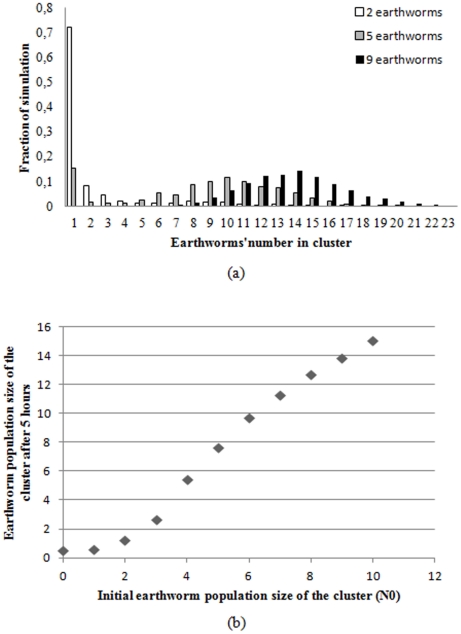
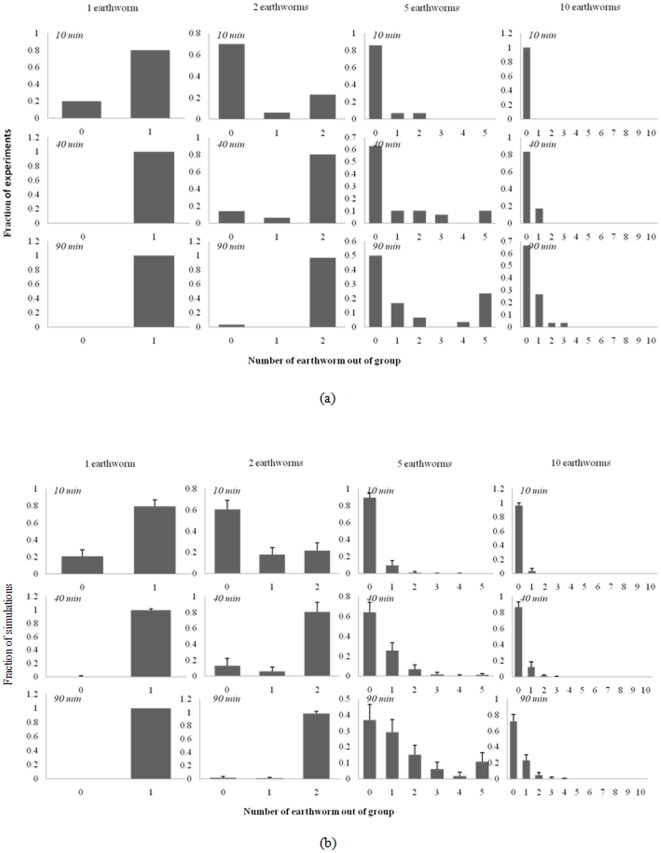
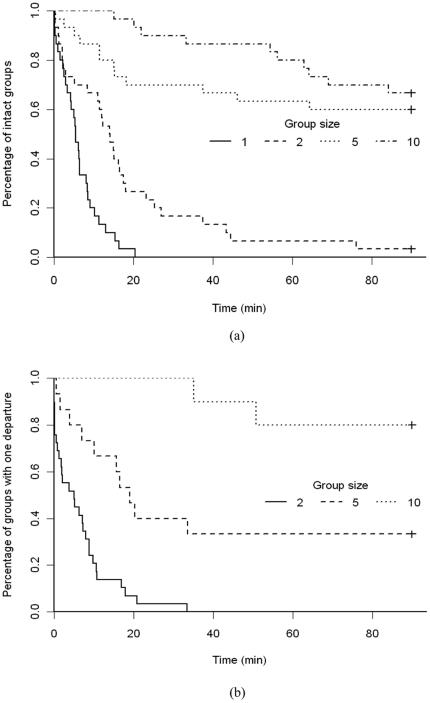
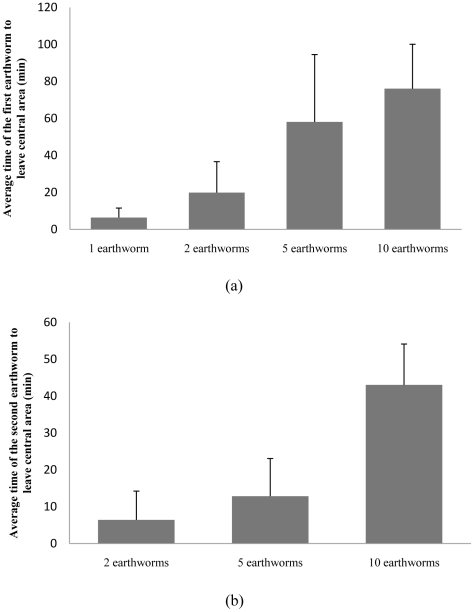
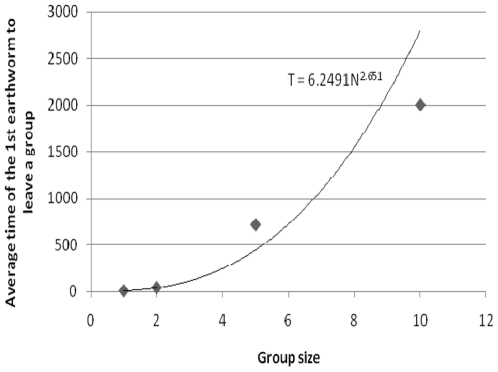
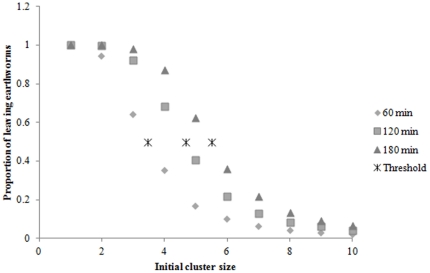
Despite their ubiquity and ecological significance in temperate ecosystems, the behavioural ecology of earthworms is not well described. This study examines the mechanisms that govern aggregation behaviour specially the tendency of individuals to leave or join groups in the compost earthworm Eisenia fetida, a species with considerable economic importance, especially in waste management applications. Through behavioural assays combined with mathematical modelling, we provide the first evidence of self-assembled social structures in earthworms and describe key mechanisms involved in cluster formation. We found that the probability of an individual joining a group increased with group size, while the probability of leaving decreased. Moreover, attraction to groups located at a distance was observed, suggesting a role for volatile cues in cluster formation. The size of earthworm clusters appears to be a key factor determining the stability of the group. These findings enhance our understanding of intra-specific interactions in earthworms and have potential implications for extraction and collection of earthworms in vermicomposting processes.
尽管在温带生态系统中蚯蚓无处不在且具有重要的生态意义,但它们的行为生态学仍未得到充分描述。本研究通过行为分析和数学建模,探究了控制蚯蚓聚集行为的机制,特别是个体在堆肥中离开或加入群体的倾向。这种聚集行为在具有重要经济价值的蚯蚓物种(特别是在废物管理应用中)中很常见。我们首次提供了蚯蚓中自我组装的社会结构的证据,并描述了群体形成的关键机制。我们发现,个体加入群体的概率随着群体规模的增加而增加,而离开的概率则降低。此外,还观察到对远距离群体的吸引力,这表明挥发性线索在群体形成中起作用。蚯蚓群体的大小似乎是决定群体稳定性的关键因素。这些发现增强了我们对蚯蚓种内相互作用的理解,并且对蚯蚓在堆肥过程中的提取和收集具有潜在影响。