State Key Laboratory of Cancer Biology, Department of Biochemistry and Molecular Biology, Fourth Mgilitary Medical University, 710032 Xi'an, China.
Mol Biol Cell. 2012 May;23(9):1628-35. doi: 10.1091/mbc.E11-05-0412. Epub 2012 Mar 7.
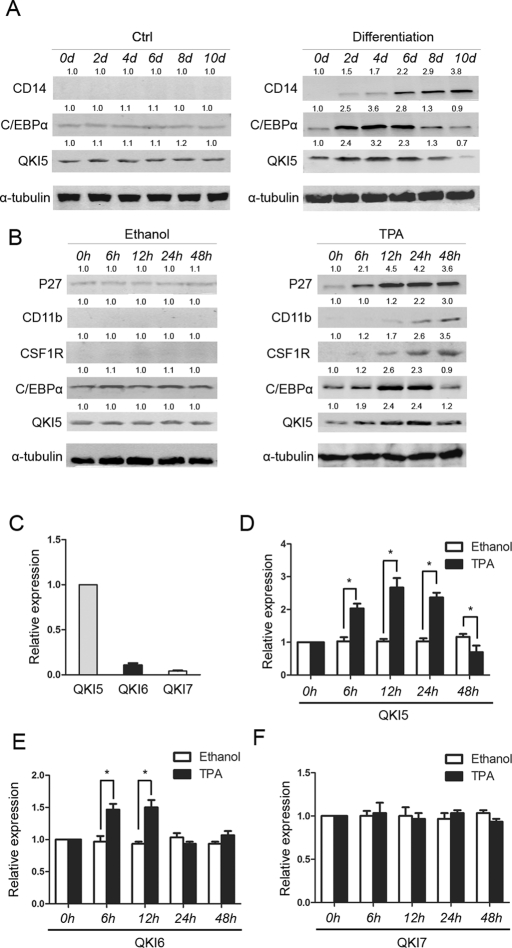
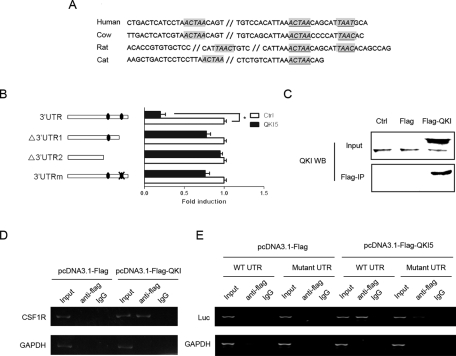
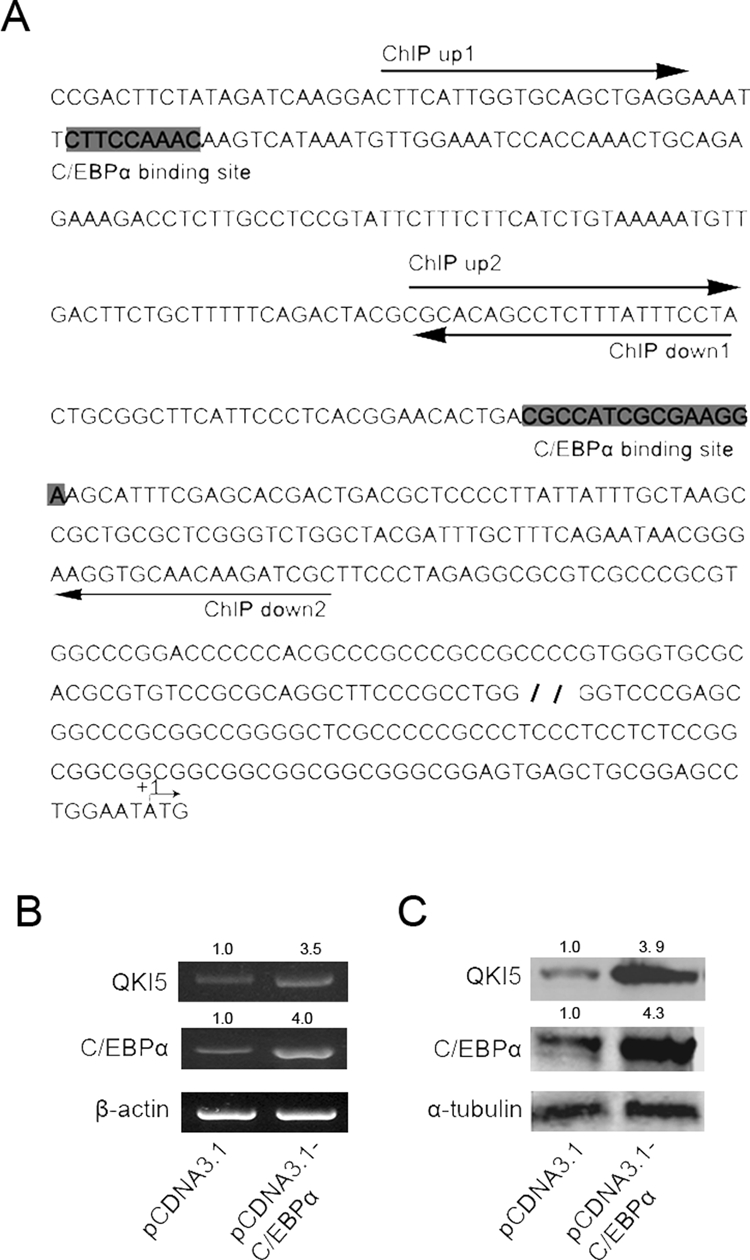
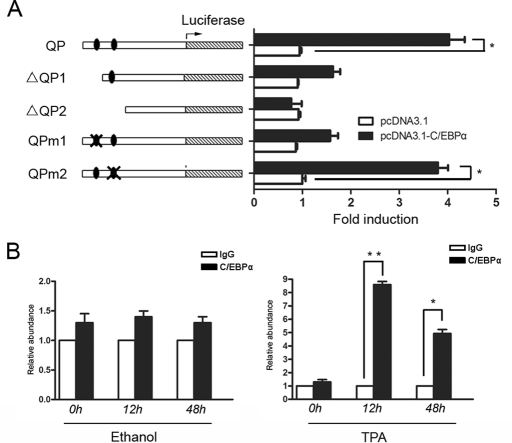
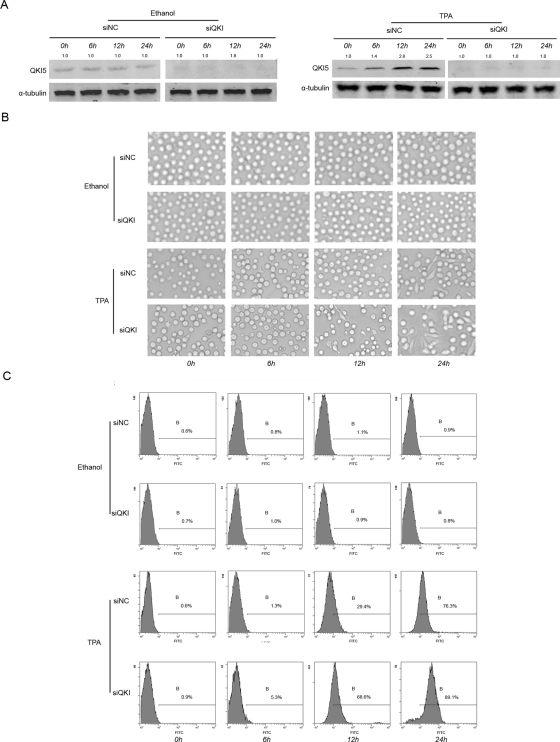
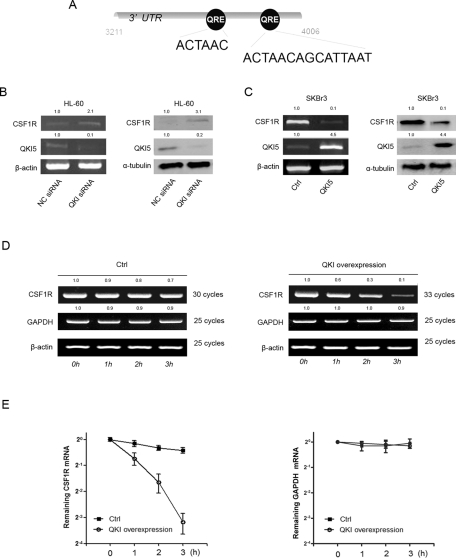
Differentiated macrophages are essential for the innate immune system; however, the molecular mechanisms underlying the generation of macrophages remain largely unknown. Here we show that the RNA-binding protein QKI, mainly QKI-5, is transcriptionally activated in the early differentiated monocytic progenitors when CCAAT/enhancer-binding protein (C/EBP) α is expressed. The forced expression of C/EBPα increases the endogenous expression of QKI. Chromatin immunoprecipitation analysis and reporter assays further confirm that C/EBPα activates the transcription of QKI, primarily by binding to the distal C/EBPα-binding site. Blocking the induction of QKI using RNA interference enhances the expression of endogenous CSF1R and facilitates macrophage differentiation. Further study of the mechanism reveals that QKI-5 facilitates the degradation of CSF1R mRNA by interacting with the distal QRE in the 3' untranslated region. In summary, we show that in committed macrophage progenitors, C/EBPα-activated QKI-5 negatively regulates macrophage differentiation by down-regulating CSF1R expression, forming a negative feedback loop during macrophage differentiation.
分化的巨噬细胞对于先天免疫系统至关重要;然而,巨噬细胞产生的分子机制在很大程度上仍然未知。在这里,我们表明,当 CCAAT/增强子结合蛋白 (C/EBP)α 表达时,RNA 结合蛋白 QKI(主要是 QKI-5)在早期分化的单核细胞祖细胞中被转录激活。强制表达 C/EBPα 会增加内源性 QKI 的表达。染色质免疫沉淀分析和报告基因分析进一步证实,C/EBPα 通过结合远端 C/EBPα 结合位点来激活 QKI 的转录。使用 RNA 干扰阻断 QKI 的诱导会增强内源性 CSF1R 的表达并促进巨噬细胞分化。对机制的进一步研究表明,QKI-5 通过与 3'UTR 中的远端 QRE 相互作用促进 CSF1R mRNA 的降解。总之,我们表明,在定向的巨噬细胞祖细胞中,C/EBPα 激活的 QKI-5 通过下调 CSF1R 表达负调控巨噬细胞分化,在巨噬细胞分化过程中形成负反馈环。