Department of Pediatric Surgery, Dr, von Hauner Children's Hospital, Ludwig-Maximilians-University Munich, 80337 Munich, Federal Republic of Germany.
Mol Cancer. 2012 Mar 8;11:9. doi: 10.1186/1476-4598-11-9.
Hepatoblastoma (HB) is an embryonal liver neoplasm of early childhood with a poor prognosis for patients with distant metastases and vascular invasion. We and others have previously shown that the overexpression of insulin-like growth factor 2 (IGF2), loss of imprinting at the IGF2/H19 locus, and amplification of pleomorphic adenoma gene 1 (PLAG1) are common features in HB, suggesting a critical role of the IGF axis in hepatoblastomagenesis. In this study, we investigated the role of the insulin-like growth factor binding protein 3 (IGFBP3), a known competitor of the IGF axis, in pediatric liver cancers.
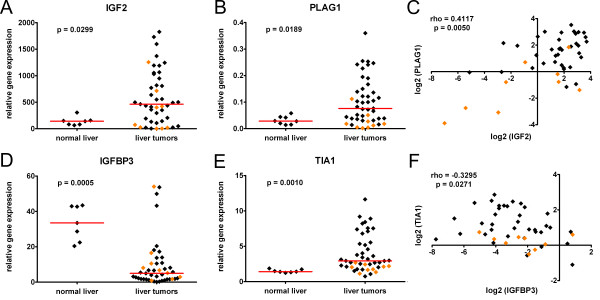
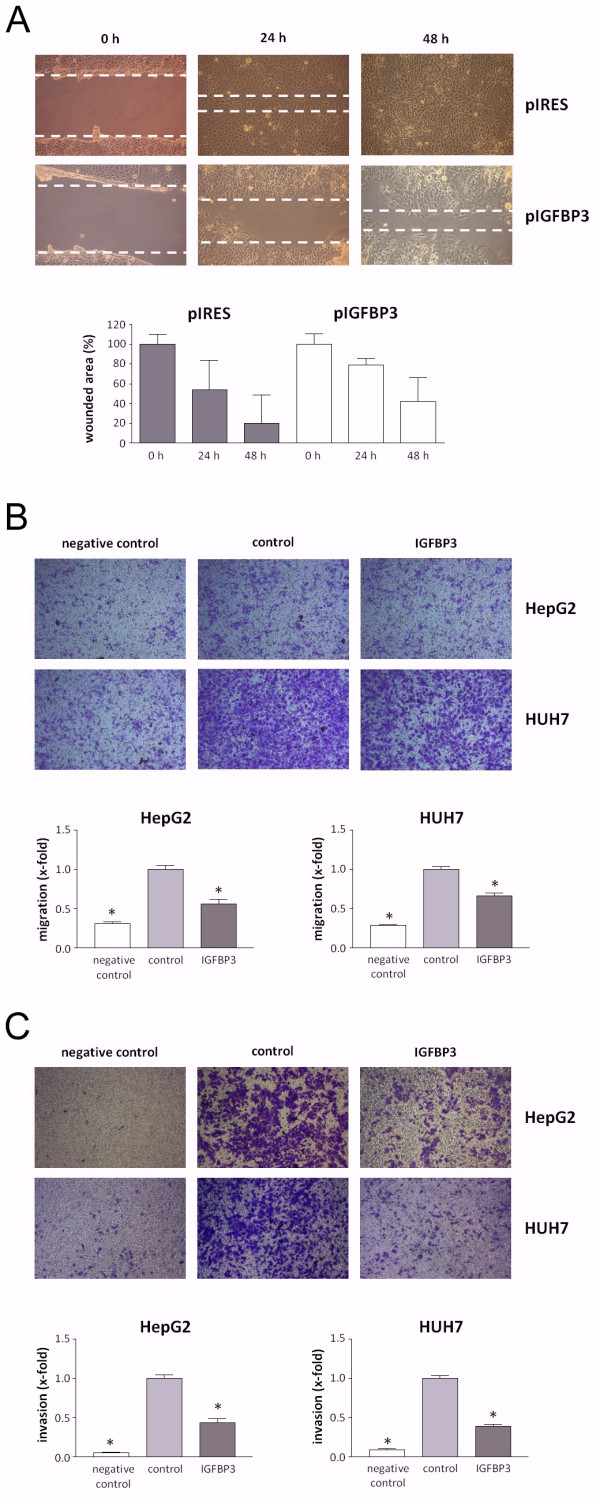
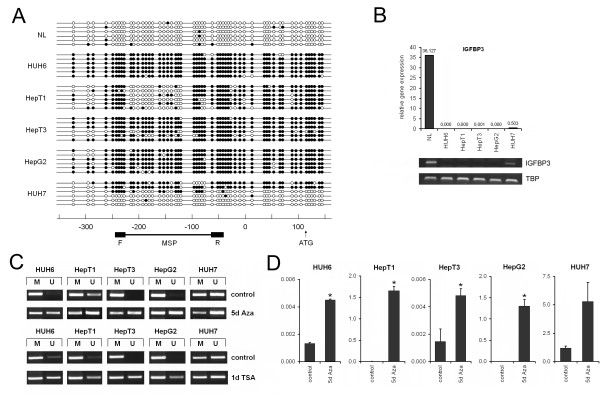
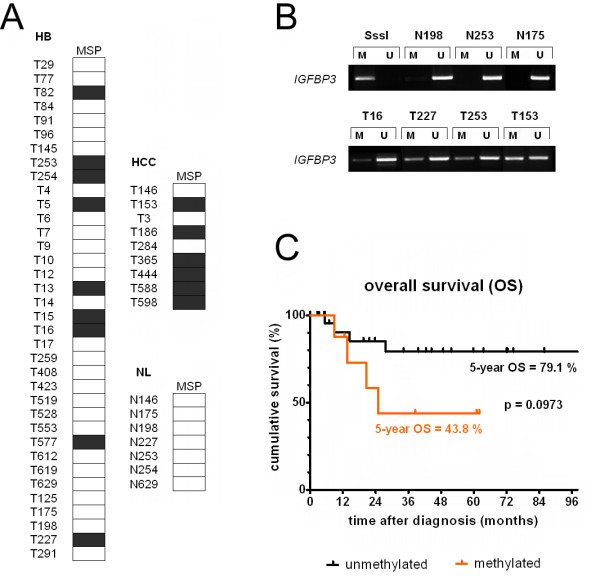
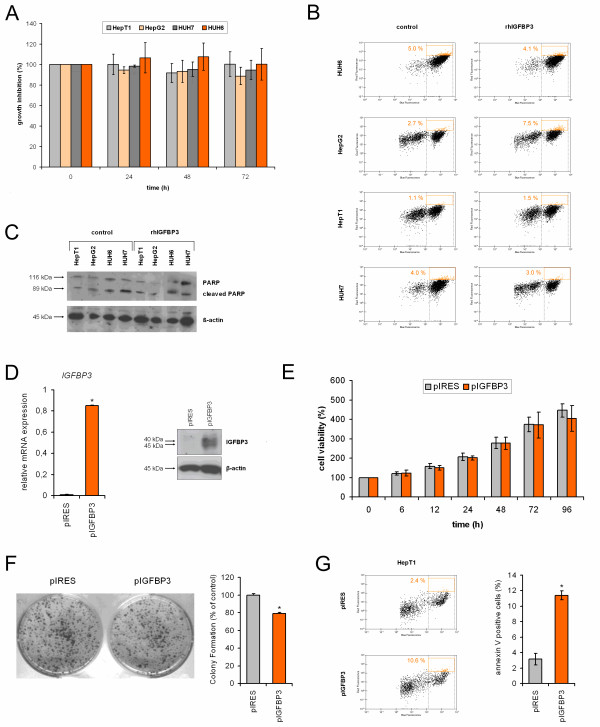
The IGFBP3 gene was highly expressed in normal pediatric livers but was heavily downregulated in four HB cell lines and the majority of HB primary tumors (26/36). Detailed methylation analysis of CpG sites in the IGFBP3 promoter region by bisulfite sequencing revealed a high degree of DNA methylation, which is causatively associated with the suppression of IGFBP3 in HB cell lines. Consequently, the treatment of HB cell lines with 5-aza-2'-deoxycytidine resulted in DNA demethylation and reactivation of the epigenetically silenced IGFBP3 expression. Interestingly, IGFBP3 promoter methylation predominantly occurred in metastatic HB with vascular invasion. Restoring IGFBP3 expression in HB cells resulted in reduced colony formation, migration, and invasion.
This study provides the first direct evidence that the reactivation of IGFBP3 decreases aggressive properties of pediatric liver cancer cells and that IGFBP3 promoter methylation might be used as an indicator for vessel-invasive tumor growth in HB patients.
肝母细胞瘤(HB)是一种婴幼儿胚胎性肝脏肿瘤,对于发生远处转移和血管侵犯的患者,预后较差。我们和其他人之前已经表明,胰岛素样生长因子 2(IGF2)的过表达、IGF2/H19 基因座的印迹丢失以及多形性腺瘤基因 1(PLAG1)的扩增是 HB 的常见特征,提示 IGF 轴在肝母细胞瘤发生中起关键作用。在这项研究中,我们研究了胰岛素样生长因子结合蛋白 3(IGFBP3)在小儿肝癌中的作用,IGFBP3 是 IGF 轴的已知竞争者。
IGFBP3 基因在正常小儿肝脏中高度表达,但在四个 HB 细胞系和大多数 HB 原发性肿瘤(26/36)中被强烈下调。通过亚硫酸氢盐测序对 IGFBP3 启动子区域的 CpG 位点进行详细的甲基化分析表明,存在高度的 DNA 甲基化,这与 HB 细胞系中 IGFBP3 的抑制密切相关。因此,HB 细胞系用 5-氮杂-2'-脱氧胞苷处理导致 DNA 去甲基化和表观遗传沉默的 IGFBP3 表达重新激活。有趣的是,IGFBP3 启动子甲基化主要发生在具有血管侵犯的转移性 HB 中。在 HB 细胞中恢复 IGFBP3 表达导致集落形成、迁移和侵袭减少。
本研究首次直接证明 IGFBP3 的重新激活降低了小儿肝癌细胞的侵袭性,并且 IGFBP3 启动子甲基化可能可作为 HB 患者血管侵袭性肿瘤生长的指标。