Department of Bioengineering, University of Washington, Seattle, WA 98195, USA.
Nucleic Acids Res. 2012 Jun;40(11):e85. doi: 10.1093/nar/gks213. Epub 2012 Mar 8.
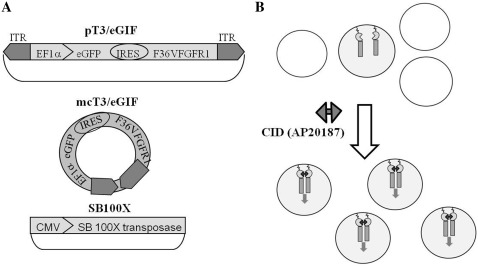
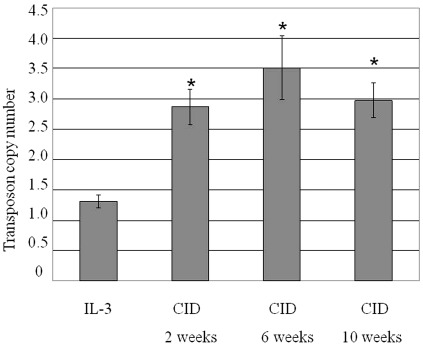
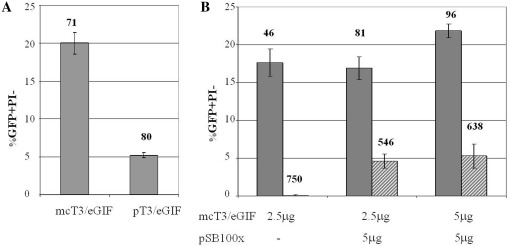
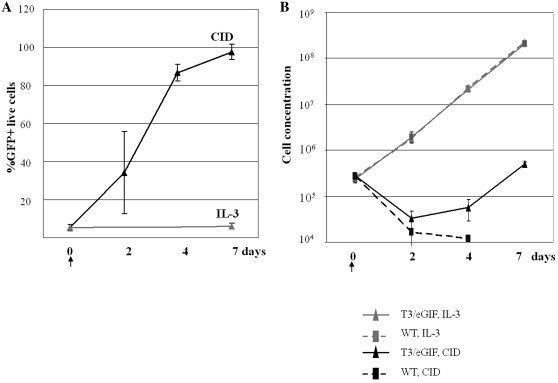
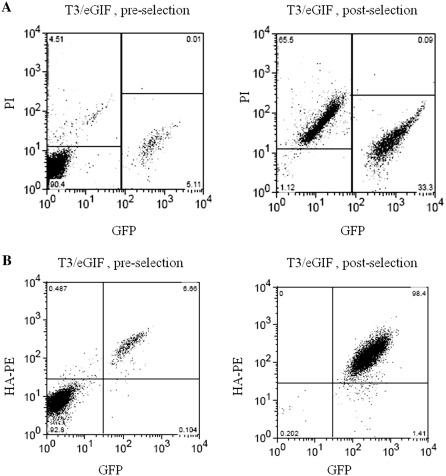
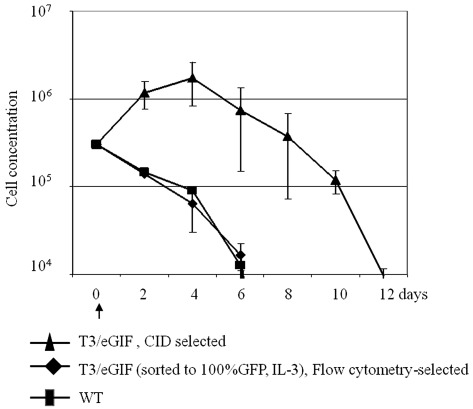
The main methods for producing genetically engineered cells use viral vectors for which safety issues and manufacturing costs remain a concern. In addition, selection of desired cells typically relies on the use of cytotoxic drugs with long culture times. Here, we introduce an efficient non-viral approach combining the Sleeping Beauty (SB) Transposon System with selective proliferation of engineered cells by chemically induced dimerization (CID) of growth factor receptors. Minicircles carrying a SB transposon cassette containing a reporter transgene and a gene for the F36VFGFR1 fusion protein were delivered to the hematopoietic cell line Ba/F3. Stably-transduced Ba/F3 cell populations with >98% purity were obtained within 1 week using this positive selection strategy. Copy number analysis by quantitative PCR (qPCR) revealed that CID-selected cells contain on average higher copy numbers of transgenes than flow cytometry-selected cells, demonstrating selective advantage for cells with multiple transposon insertions. A diverse population of cells is present both before and after culture in CID media, although site-specific qPCR of transposon junctions show that population diversity is significantly reduced after selection due to preferential expansion of clones with multiple integration events. This non-viral, positive selection approach is an attractive alternative for producing engineered cells.
产生基因工程细胞的主要方法使用病毒载体,但其安全性问题和制造成本仍然令人关注。此外,期望细胞的选择通常依赖于使用具有长培养时间的细胞毒性药物。在这里,我们介绍了一种高效的非病毒方法,该方法将 Sleeping Beauty(SB)转座子系统与通过化学诱导的生长因子受体二聚化(CID)对工程细胞进行选择性增殖相结合。携带含有报告基因转座子盒和 F36VFGFR1 融合蛋白基因的 SB 转座子盒的微环被递送到造血细胞系 Ba/F3 中。使用这种正选择策略,在 1 周内获得了>98%纯度的稳定转导的 Ba/F3 细胞群。通过定量 PCR(qPCR)的拷贝数分析表明,与流式细胞术选择的细胞相比,CID 选择的细胞中转基因的平均拷贝数更高,这表明具有多个转座子插入的细胞具有选择性优势。在 CID 培养基中培养前后都存在多种细胞,但转座子连接处的特异性 qPCR 显示,由于具有多个整合事件的克隆优先扩增,选择后群体多样性显著降低。这种非病毒的正选择方法是产生工程细胞的一种有吸引力的替代方法。