Flick Franziska, Lüscher Bernhard
Medical School, Institute of Biochemistry and Molecular Biology, RWTH Aachen University Aachen, Germany.
Front Pharmacol. 2012 Feb 28;3:29. doi: 10.3389/fphar.2012.00029. eCollection 2012.
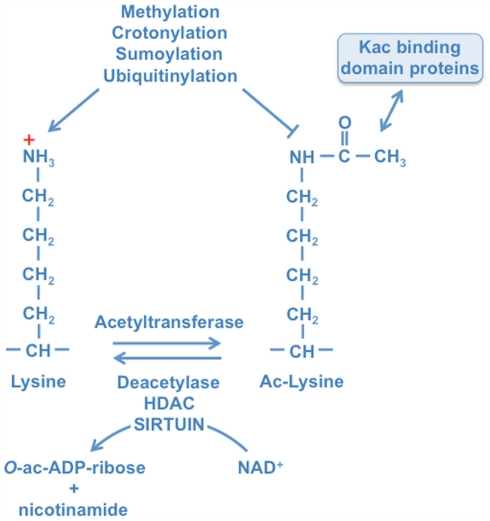
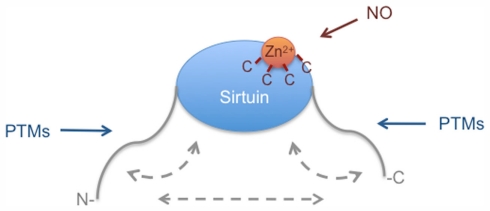
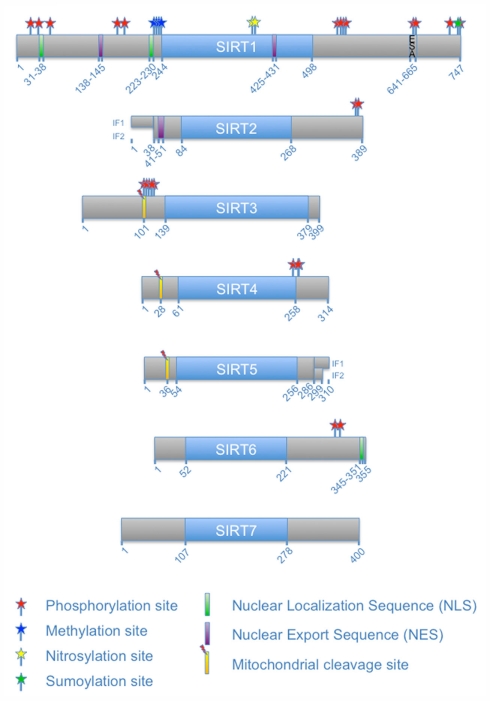
Sirtuins are homologs of the yeast silencing information regulator 2 protein, an NAD(+)-dependent (histone) deacetylase. In mammals seven different sirtuins, SIRT1-7, have been identified, which share a common catalytic core domain but possess distinct N- and C-terminal extensions. This core domain elicits NAD(+)-dependent deacetylase and in some cases also ADP-ribosyltransferase, demalonylase, and desuccinylase activities. Sirtuins have been implicated in key cellular processes, including cell survival, autophagy, apoptosis, gene transcription, DNA repair, stress response, and genome stability. In addition some sirtuins are associated with disease, including cancer and neurodegeneration. These findings suggest strongly that sirtuins are tightly controlled and potentially responsive to different signal transduction pathways. Here, we review the posttranslational regulation mechanisms of mammalian sirtuins and discuss their relevance regarding the physiological processes, with which the different sirtuins are associated. The available data suggest that the N- and C-terminal extensions are the targets of posttranslational modifications (PTM) that can affect the functions of sirtuins. Mechanistically this can be explained by the interaction of these extensions with the catalytic core domain, which appears to be controlled by PTM at least in some cases. In contrast little is known about PTM and regulation of the catalytic domain itself. Together these findings point to key regulatory roles of the N- and C-terminal extensions in controlling sirtuin functions, thus connecting these regulators to different signaling pathways.
沉默调节蛋白是酵母沉默信息调节因子2蛋白的同源物,一种依赖烟酰胺腺嘌呤二核苷酸(NAD⁺)的(组蛋白)脱乙酰酶。在哺乳动物中,已鉴定出七种不同的沉默调节蛋白,即SIRT1 - 7,它们共享一个共同的催化核心结构域,但具有不同的N端和C端延伸。这个核心结构域具有依赖NAD⁺的脱乙酰酶活性,在某些情况下还具有ADP - 核糖基转移酶、去丙二酰酶和去琥珀酰酶活性。沉默调节蛋白参与关键的细胞过程,包括细胞存活、自噬、凋亡、基因转录、DNA修复、应激反应和基因组稳定性。此外,一些沉默调节蛋白与疾病相关,包括癌症和神经退行性疾病。这些发现强烈表明,沉默调节蛋白受到严格控制,并可能对不同的信号转导途径产生反应。在这里,我们综述了哺乳动物沉默调节蛋白的翻译后调控机制,并讨论它们与不同沉默调节蛋白相关的生理过程的相关性。现有数据表明,N端和C端延伸是翻译后修饰(PTM)的靶点,这些修饰可以影响沉默调节蛋白的功能。从机制上讲,这可以通过这些延伸与催化核心结构域的相互作用来解释,至少在某些情况下这种相互作用似乎受PTM控制。相比之下,关于催化结构域本身的PTM和调控知之甚少。这些发现共同表明N端和C端延伸在控制沉默调节蛋白功能方面起着关键的调控作用,从而将这些调节因子与不同的信号通路联系起来。