Center for Integrative Genomics, University of Lausanne, Lausanne, Switzerland.
PLoS One. 2012;7(3):e32803. doi: 10.1371/journal.pone.0032803. Epub 2012 Mar 5.
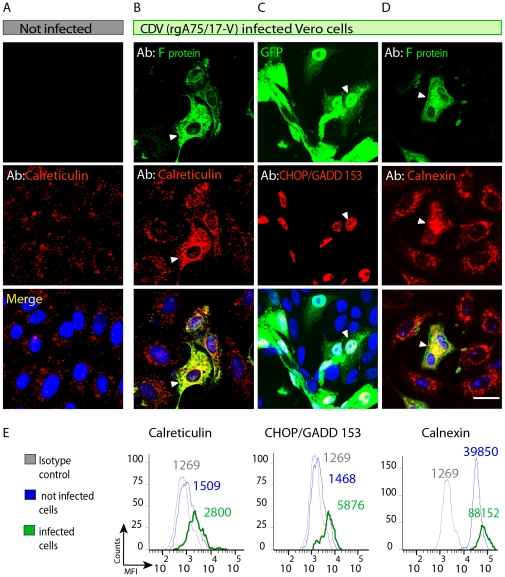
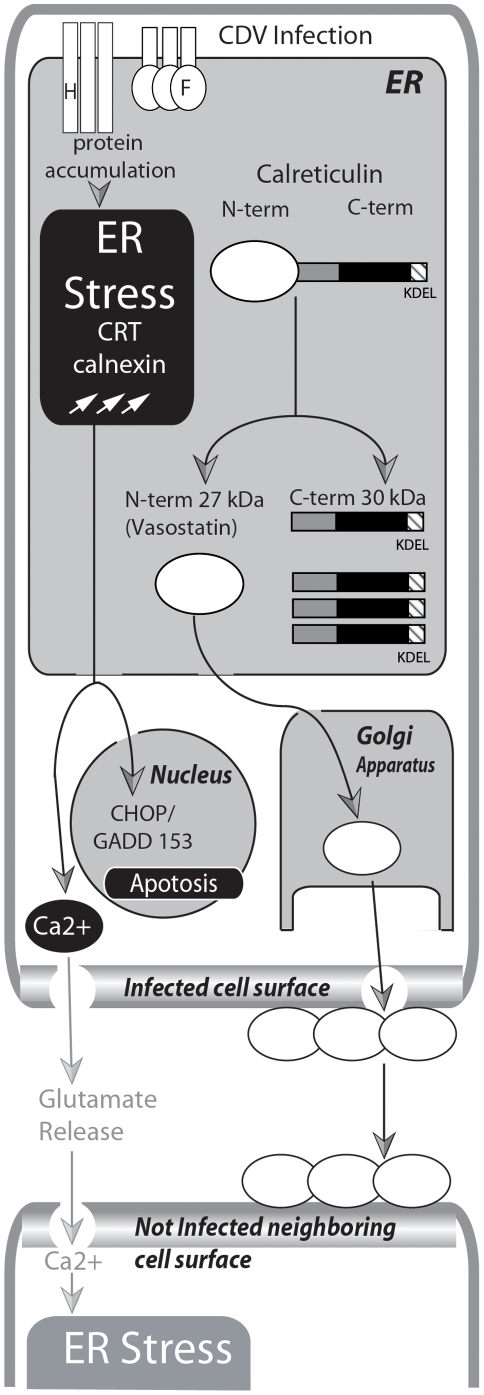
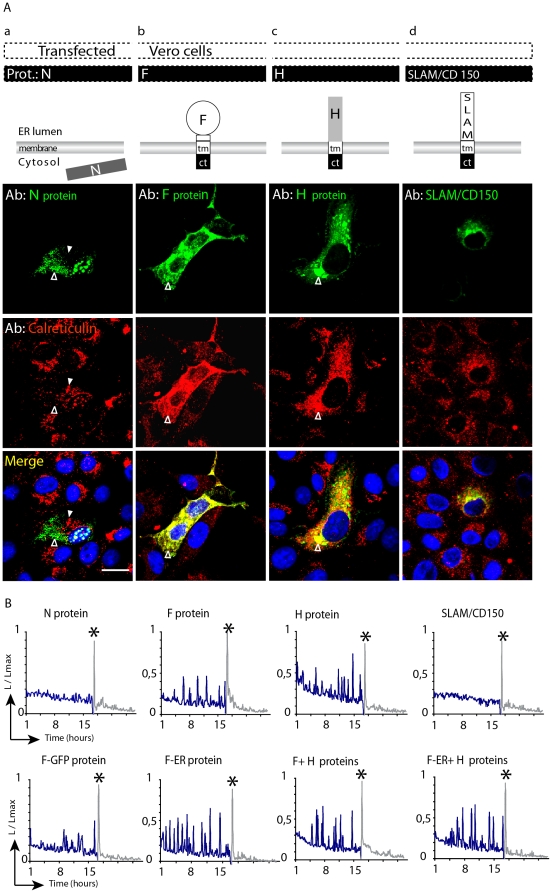
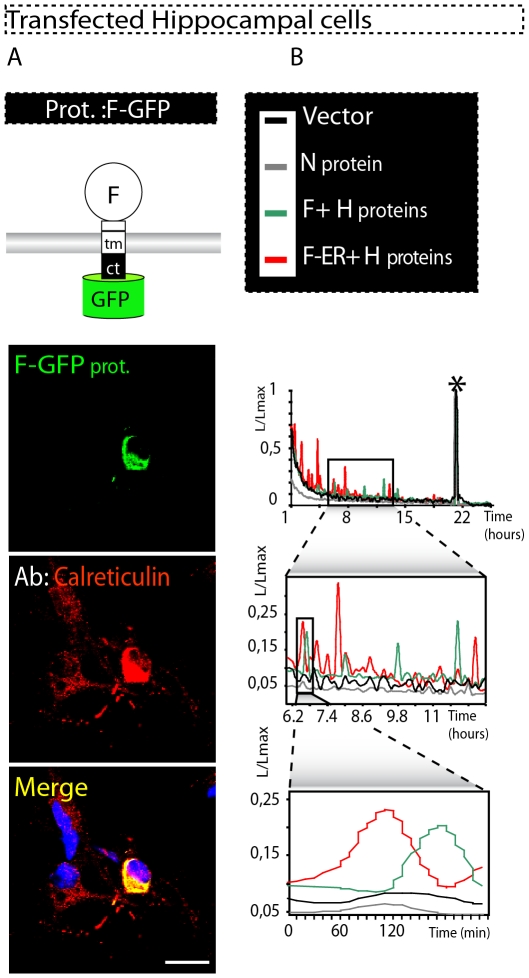
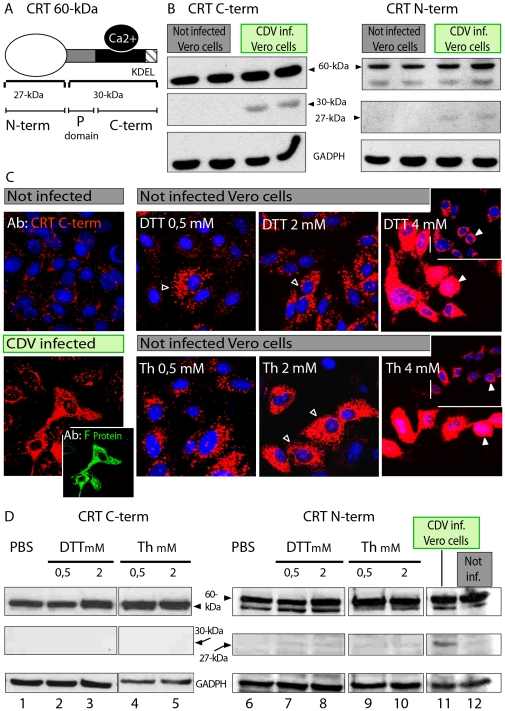
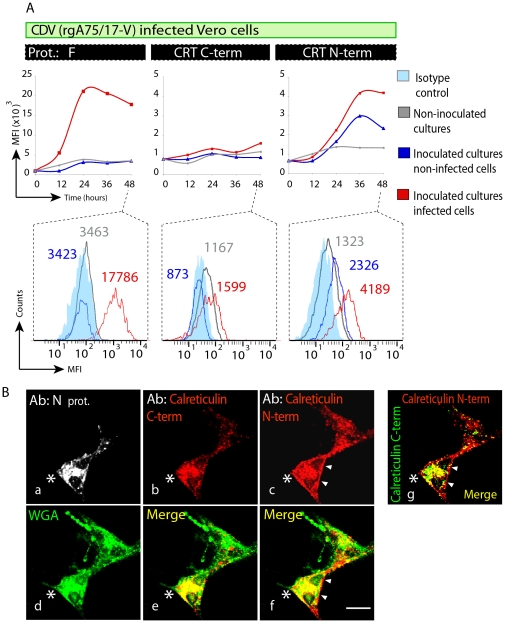
Although the pathology of Morbillivirus in the central nervous system (CNS) is well described, the molecular basis of neurodegenerative events still remains poorly understood. As a model to explore Morbillivirus-mediated CNS dysfunctions, we used canine distemper virus (CDV) that we inoculated into two different cell systems: a monkey cell line (Vero) and rat primary hippocampal neurons. Importantly, the recombinant CDV used in these studies not only efficiently infects both cell types but recapitulates the uncommon, non-cytolytic cell-to-cell spread mediated by virulent CDVs in brain of dogs. Here, we demonstrated that both CDV surface glycoproteins (F and H) markedly accumulated in the endoplasmic reticulum (ER). This accumulation triggered an ER stress, characterized by increased expression of the ER resident chaperon calnexin and the proapoptotic transcription factor CHOP/GADD 153. The expression of calreticulin (CRT), another ER resident chaperon critically involved in the response to misfolded proteins and in Ca(2+) homeostasis, was also upregulated. Transient expression of recombinant CDV F and H surface glycoproteins in Vero cells and primary hippocampal neurons further confirmed a correlation between their accumulation in the ER, CRT upregulation, ER stress and disruption of ER Ca(2+) homeostasis. Furthermore, CDV infection induced CRT fragmentation with re-localisation of a CRT amino-terminal fragment, also known as vasostatin, on the surface of infected and neighbouring non-infected cells. Altogether, these results suggest that ER stress, CRT fragmentation and re-localization on the cell surface may contribute to cytotoxic effects and ensuing cell dysfunctions triggered by Morbillivirus, a mechanism that might potentially be relevant for other neurotropic viruses.
虽然麻疹病毒在中枢神经系统(CNS)中的病理学已有详细描述,但神经退行性事件的分子基础仍知之甚少。作为探索麻疹病毒介导的中枢神经系统功能障碍的模型,我们使用犬瘟热病毒(CDV)接种到两种不同的细胞系统中:猴肾细胞系(Vero)和大鼠原代海马神经元。重要的是,在这些研究中使用的重组 CDV 不仅能够有效地感染这两种细胞类型,而且还能重现犬脑组织中强毒 CDV 介导的罕见非细胞裂解性细胞间传播。在这里,我们证明了 CDV 的两种表面糖蛋白(F 和 H)都明显在内质网(ER)中积累。这种积累引发了内质网应激,其特征是内质网驻留伴侣 calnexin 和促凋亡转录因子 CHOP/GADD 153 的表达增加。另一种内质网驻留伴侣钙网蛋白(CRT)的表达也上调,它在应对错误折叠蛋白和 Ca(2+)稳态中起着关键作用。重组 CDV F 和 H 表面糖蛋白在 Vero 细胞和原代海马神经元中的瞬时表达进一步证实了它们在 ER 中的积累、CRT 上调、内质网应激和 ER Ca(2+)稳态破坏之间存在相关性。此外,CDV 感染诱导 CRT 片段化,使 CRT 氨基末端片段(也称为 vasostatin)重新定位到感染和相邻未感染细胞的表面。总之,这些结果表明,内质网应激、CRT 片段化和再定位到细胞表面可能导致麻疹病毒引起的细胞毒性作用和随后的细胞功能障碍,这一机制可能与其他神经嗜性病毒有关。