Fistula Care Project, EngenderHealth, 440 Ninth Avenue, 13th Floor, New York, NY 10001, USA.
BMC Womens Health. 2012 Mar 20;12:5. doi: 10.1186/1472-6874-12-5.
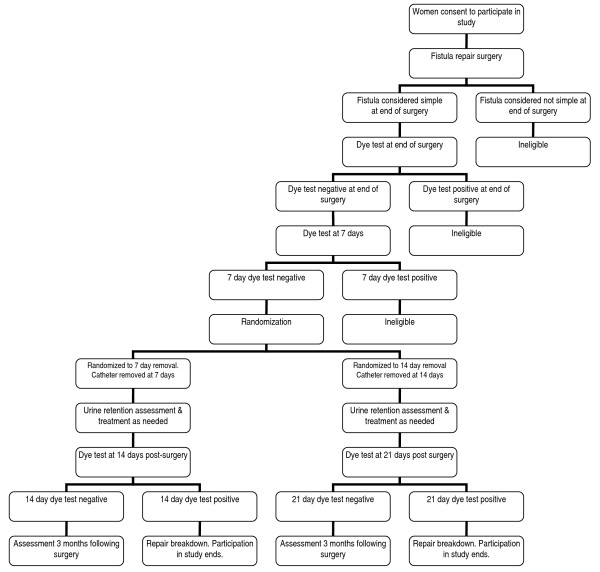
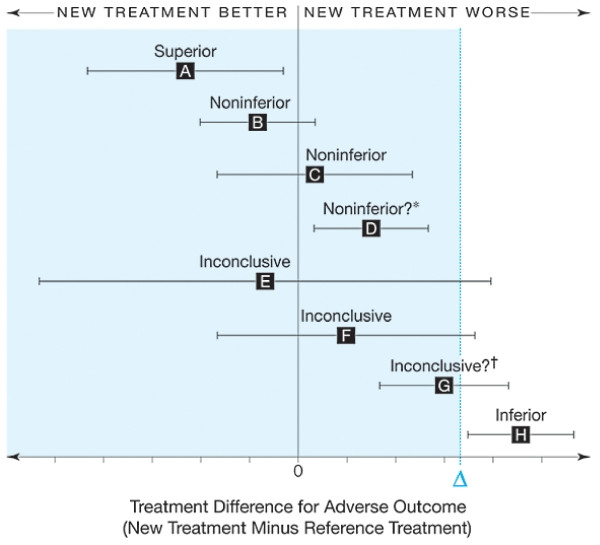
A vaginal fistula is a devastating condition, affecting an estimated 2 million girls and women across Africa and Asia. There are numerous challenges associated with providing fistula repair services in developing countries, including limited availability of operating rooms, equipment, surgeons with specialized skills, and funding from local or international donors to support surgeries and subsequent post-operative care. Finding ways of providing services in a more efficient and cost-effective manner, without compromising surgical outcomes and the overall health of the patient, is paramount. Shortening the duration of urethral catheterization following fistula repair surgery would increase treatment capacity, lower costs of services, and potentially lower risk of healthcare-associated infections among fistula patients. There is a lack of empirical evidence supporting any particular length of time for urethral catheterization following fistula repair surgery. This study will examine whether short-term (7 day) urethral catheterization is not worse by more than a minimal relevant difference to longer-term (14 day) urethral catheterization in terms of incidence of fistula repair breakdown among women with simple fistula presenting at study sites for fistula repair service.
METHODS/DESIGN: This study is a facility-based, multicenter, non-inferiority randomized controlled trial (RCT) comparing the new proposed short-term (7 day) urethral catheterization to longer-term (14 day) urethral catheterization in terms of predicting fistula repair breakdown. The primary outcome is fistula repair breakdown up to three months following fistula repair surgery as assessed by a urinary dye test. Secondary outcomes will include repair breakdown one week following catheter removal, intermittent catheterization due to urinary retention and the occurrence of septic or febrile episodes, prolonged hospitalization for medical reasons, catheter blockage, and self-reported residual incontinence. This trial will be conducted among 512 women with simple fistula presenting at 8 study sites for fistula repair surgery over the course of 24 months at each site.
If no major safety issues are identified, the data from this trial may facilitate adoption of short-term urethral catheterization following repair of simple fistula in sub-Saharan Africa and Asia.
ClinicalTrials.gov Identifier NCT01428830.
阴道瘘是一种毁灭性的疾病,估计在非洲和亚洲有 200 万女孩和妇女受到影响。在发展中国家提供瘘管修复服务存在许多挑战,包括手术室、设备、具有专业技能的外科医生的数量有限,以及当地或国际捐助者提供资金以支持手术和后续的术后护理。找到更有效和更具成本效益的提供服务的方法,同时不影响手术结果和患者的整体健康,是至关重要的。缩短瘘管修复手术后尿道置管的时间可以增加治疗能力,降低服务成本,并有可能降低瘘管患者的医疗保健相关感染风险。目前缺乏支持瘘管修复手术后尿道置管任何特定时间长度的经验证据。本研究将检验短期(7 天)尿道置管在瘘管修复手术后女性中是否不会比长期(14 天)尿道置管更差,其差异超过最小相关差异,表现在单纯性瘘管女性中简单性瘘管修复术的失败率方面。
方法/设计:这是一项基于机构的、多中心、非劣效性随机对照试验(RCT),比较新提出的短期(7 天)尿道置管与长期(14 天)尿道置管在预测瘘管修复失败方面的差异。主要结局是尿道置管去除后三个月内尿染料试验评估的瘘管修复失败。次要结局将包括导管去除后一周的修复失败、因尿潴留而间歇性导尿、发生脓毒症或发热发作、因医疗原因延长住院时间、导管堵塞以及自我报告的残余性尿失禁。这项试验将在 24 个月内,每个地点有 8 个地点进行瘘管修复手术的 512 名单纯性瘘管女性中进行。
如果没有发现重大安全问题,该试验的数据可能会促进在撒哈拉以南非洲和亚洲简单性瘘管修复后采用短期尿道置管。
ClinicalTrials.gov 标识符 NCT01428830。