Danobeitia Juan Sebastian, Sperger Jamie M, Hanson Matthew S, Park Elisa E, Chlebeck Peter J, Roenneburg Drew A, Sears Mallory L, Connor Jolien X, Schwarznau Alice, Fernandez Luis A
Department of Surgery, Division of Transplantation, University of Wisconsin-Madison, Madison, Wisconsin 53792-3236, USA.
J Surg Res. 2012 Aug;176(2):639-48. doi: 10.1016/j.jss.2011.10.042. Epub 2011 Nov 19.
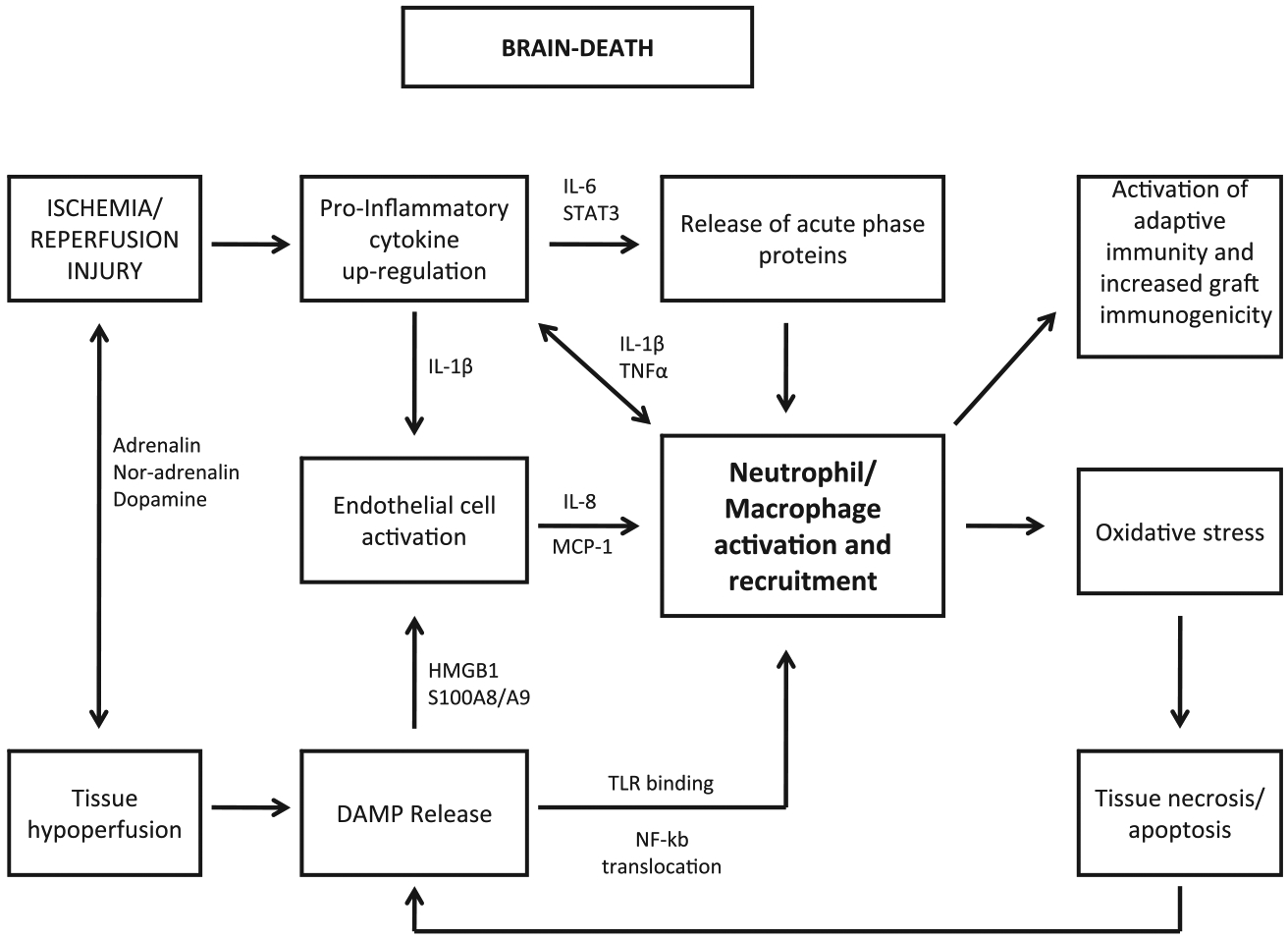
Donor brain death (BD) triggers a systemic inflammatory response that reduces organ quality and increases immunogenicity of the graft. We characterized the early innate immune response induced by BD in the liver and peripheral blood of hemodinamically stable non-human primates (NHP).
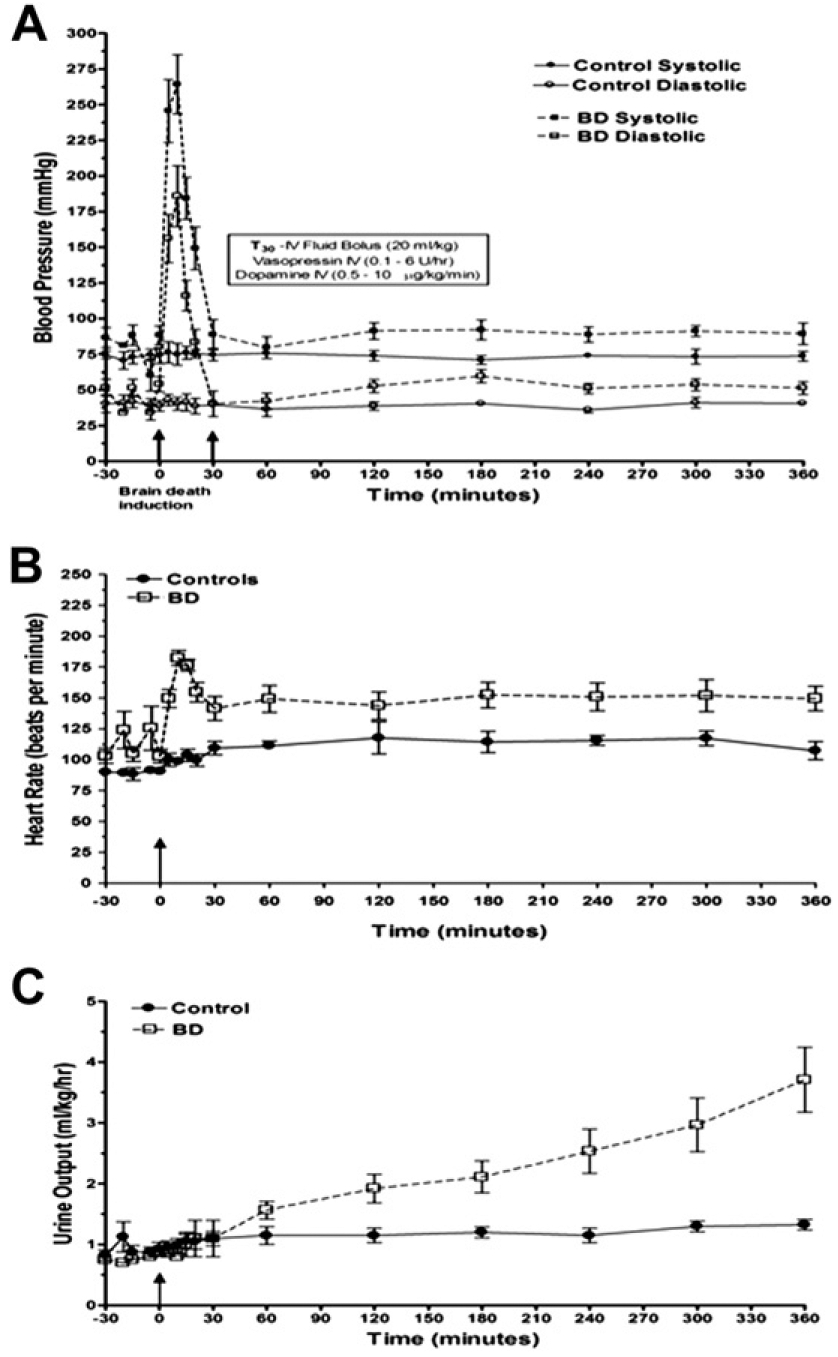
Rhesus macaques were assigned to either brain death or control group. BD was induced by inflation of a subdurally placed catheter and confirmed clinically and by cerebral angiography. Animals were monitored for 6 h after BD and managed to maintain hemodynamic stability.
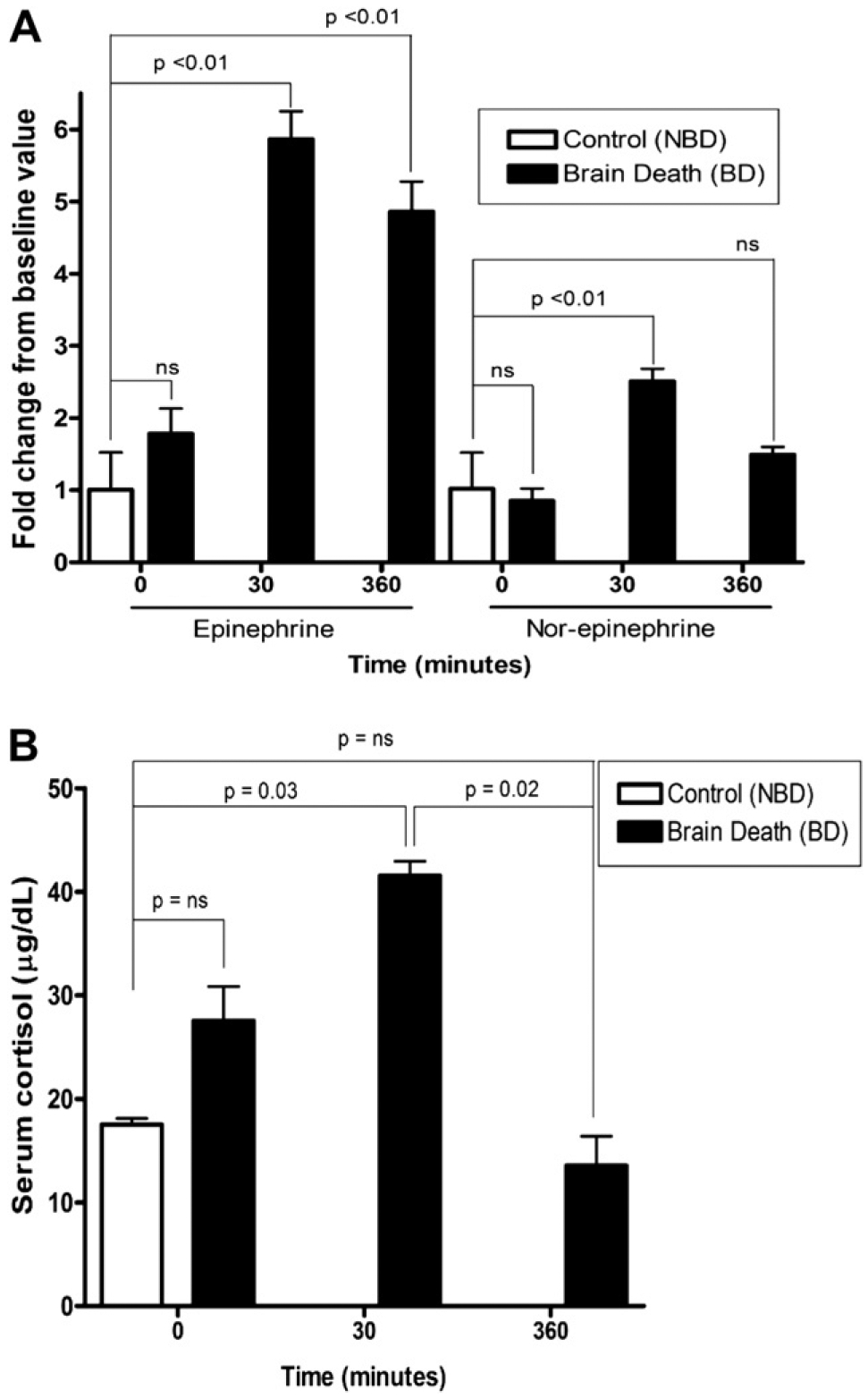
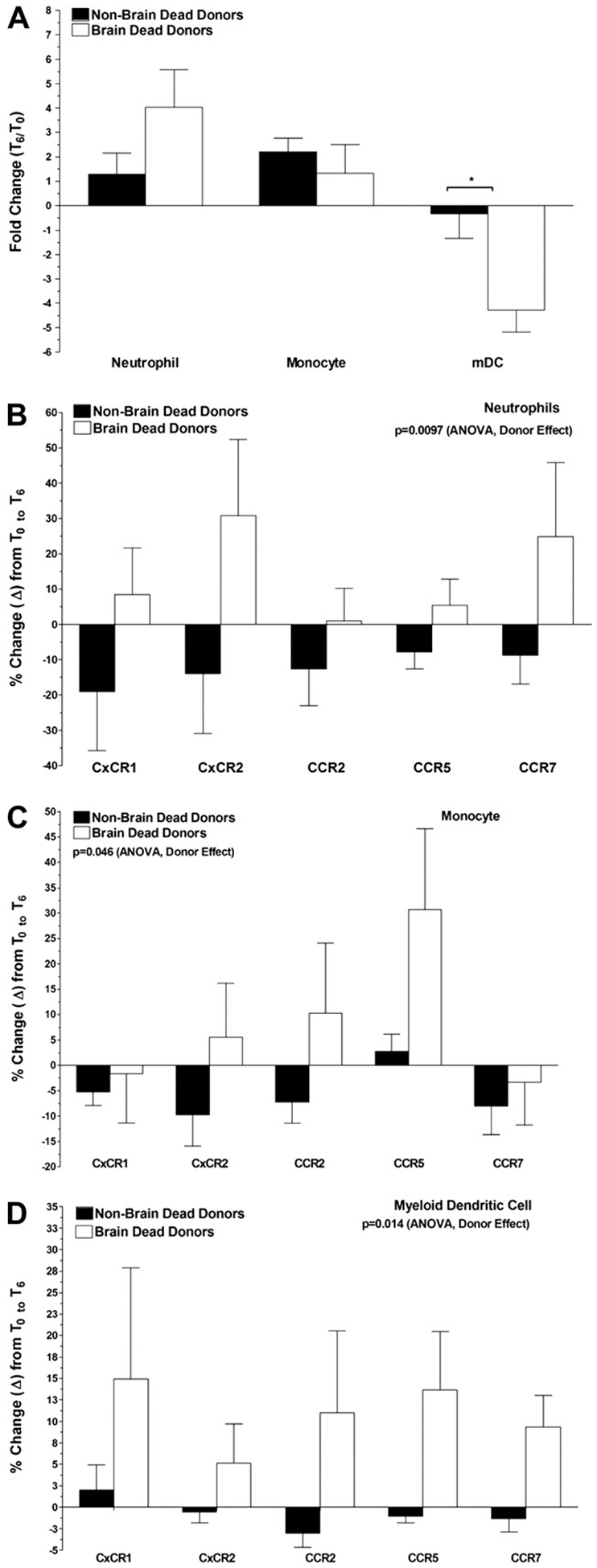
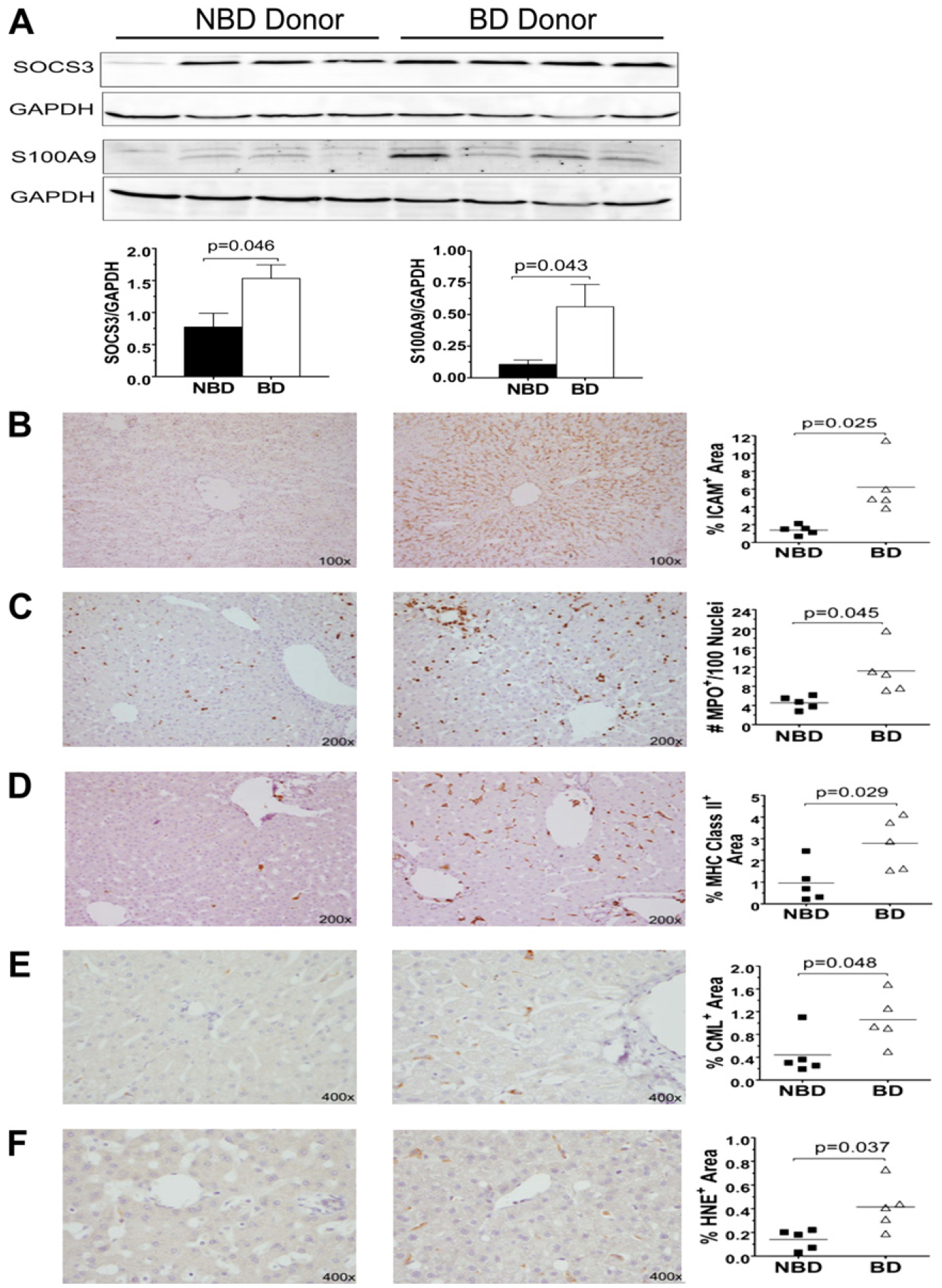
Cortisol, epinephrine, nor-epinephrine, and IL-6 levels were elevated immediately after BD induction. Neutrophils and monocytes significantly increased in circulation following BD induction, while dendritic cells were decreased at 6 h post-induction. Flow cytometry revealed increased expression of chemokine receptors CxCR1, CxCR2, CCR2, and CCR5 in peripheral blood leukocytes from NHP subjected to BD. Microarray analysis demonstrated a significant up-regulation of genes related to innate inflammatory responses, toll-like receptor signaling, stress pathways, and apoptosis/cell death in BD subjects. Conversely, pathways related to glucose, lipid, and protein metabolism were down-regulated. In addition, increased expression of SOCS3, S100A8/A9, ICAM-1, MHC class II, neutrophil accumulation, and oxidative stress markers (carboxy-methyl-lysine and hydroxynonenal) were detected by immunoblot and immunohistochemistry.
Activation of the innate immune response after BD in association with a down-regulation of genes associated with cell metabolism pathways in the liver. These findings may provide a potential explanation for the reduced post-transplant function of organs from brain dead donors. In addition, this work suggests potential novel targets to improve donor management strategies.
供体脑死亡(BD)引发全身炎症反应,降低器官质量并增加移植物的免疫原性。我们对血流动力学稳定的非人灵长类动物(NHP)肝脏和外周血中BD诱导的早期固有免疫反应进行了特征分析。
将恒河猴分为脑死亡组或对照组。通过硬膜下放置导管充气诱导BD,并通过临床检查和脑血管造影进行确认。BD诱导后对动物监测6小时,并维持血流动力学稳定。
BD诱导后立即出现皮质醇、肾上腺素、去甲肾上腺素和IL-6水平升高。BD诱导后循环中的中性粒细胞和单核细胞显著增加,而诱导后6小时树突状细胞减少。流式细胞术显示,BD处理的NHP外周血白细胞中趋化因子受体CxCR1、CxCR2、CCR2和CCR5的表达增加。微阵列分析表明,BD受试者中与固有炎症反应、Toll样受体信号传导、应激途径以及凋亡/细胞死亡相关的基因显著上调。相反,与葡萄糖、脂质和蛋白质代谢相关的途径下调。此外,通过免疫印迹和免疫组织化学检测到SOCS3、S100A8/A9、ICAM-1、MHC II类、中性粒细胞积聚和氧化应激标志物(羧甲基赖氨酸和羟基壬烯醛)的表达增加。
BD后固有免疫反应的激活与肝脏中细胞代谢途径相关基因的下调有关。这些发现可能为脑死亡供体器官移植后功能降低提供潜在解释。此外,这项工作提示了改善供体管理策略的潜在新靶点。