PET Center and Translational Imaging Laboratory, Children's Hospital of Michigan, Detroit, MI 48201, USA.
Nucl Med Biol. 2012 Oct;39(7):926-32. doi: 10.1016/j.nucmedbio.2012.01.010. Epub 2012 Mar 22.
Tryptophan oxidation via the kynurenine pathway is an important mechanism of tumoral immunoresistance. Increased tryptophan metabolism via the serotonin pathway has been linked to malignant progression in breast cancer. In this study, we combined quantitative positron emission tomography (PET) with tumor immunohistochemistry to analyze tryptophan transport and metabolism in breast cancer.
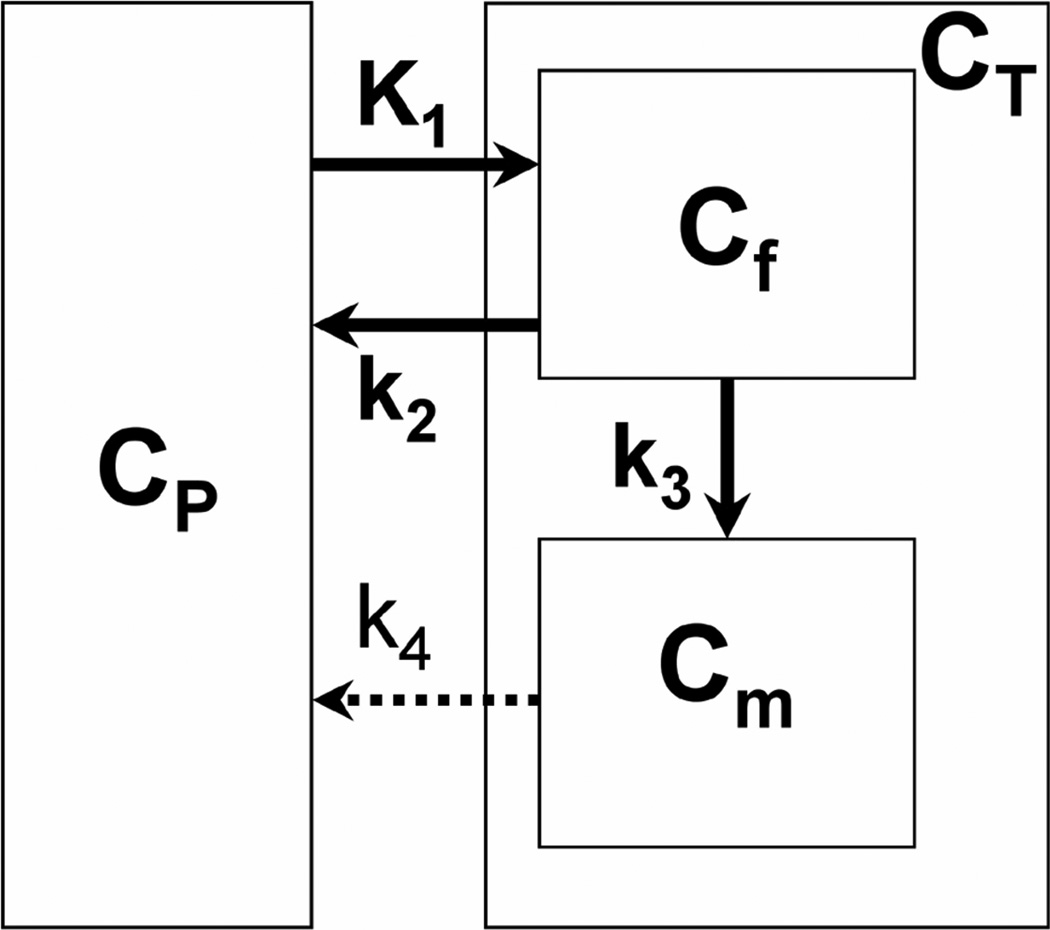
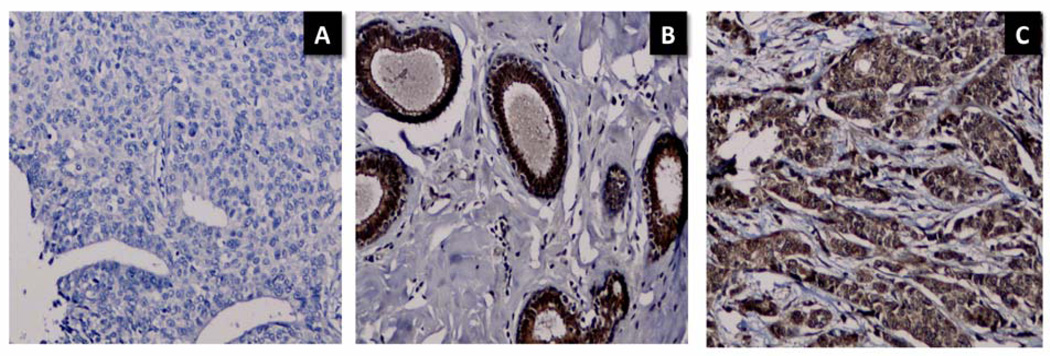
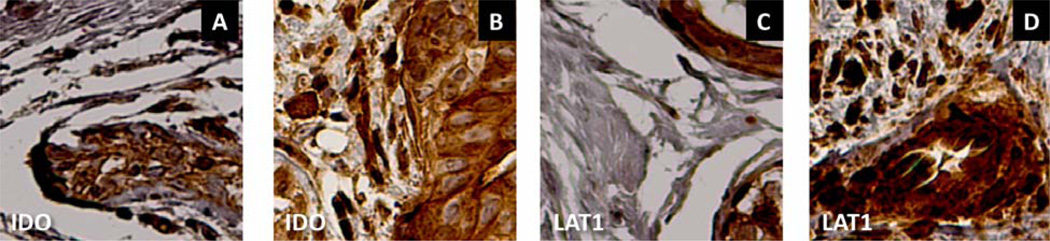
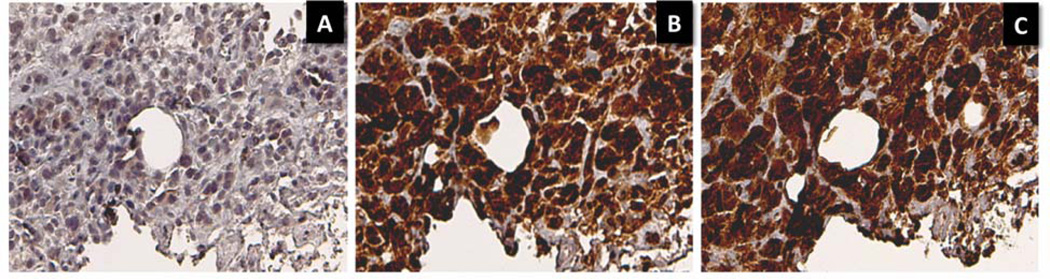
Dynamic α-[(11)C]methyl-l-tryptophan (AMT) PET was performed in nine women with stage II-IV breast cancer. PET tracer kinetic modeling was performed in all tumors. Expression of L-type amino acid transporter 1 (LAT1), indoleamine 2,3-dioxygenase (IDO; the initial and rate-limiting enzyme of the kynurenine pathway) and tryptophan hydroxylase 1 (TPH1; the initial enzyme of the serotonin pathway) was assessed by immunostaining of resected tumor specimens.
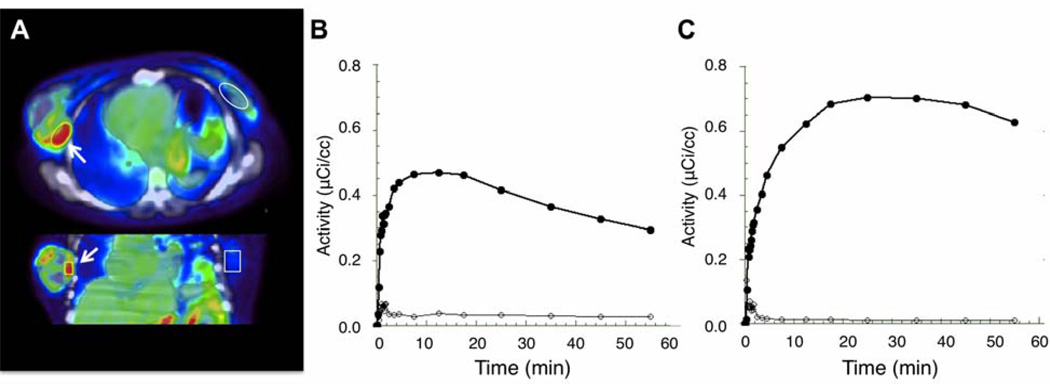
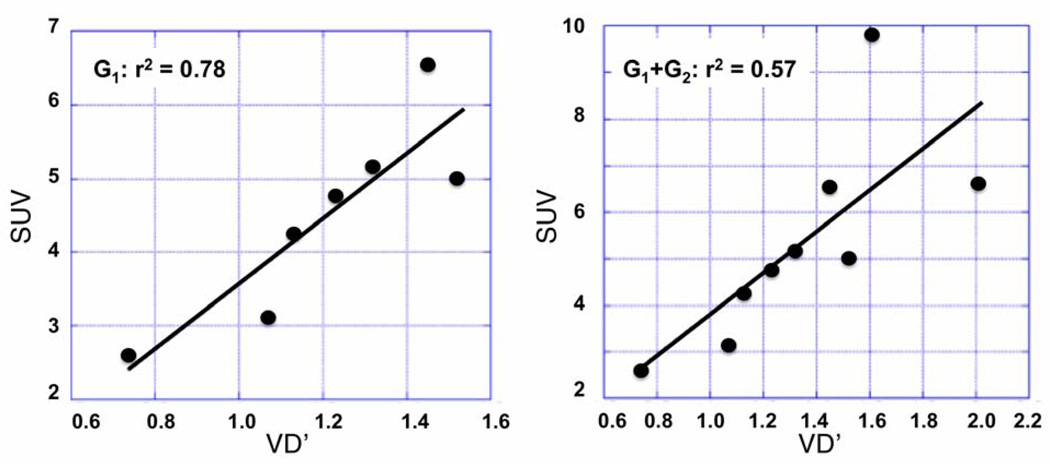
Tumor AMT uptake peaked at 5-20 min postinjection in seven tumors; the other two cases showed protracted tracer accumulation. Tumor standardized uptake values (SUVs) varied widely (2.6-9.8) and showed a strong positive correlation with volume of distribution values derived from kinetic analysis (P<.01). Invasive ductal carcinomas (n=6) showed particularly high AMT SUVs (range, 4.7-9.8). Moderate to strong immunostaining for LAT1, IDO and TPH1 was detected in most tumor cells.
Breast cancers show differential tryptophan kinetics on dynamic PET. SUVs measured 5-20 min postinjection reflect reasonably the tracer's volume of distribution. Further studies are warranted to determine if in vivo AMT accumulation in these tumors is related to tryptophan metabolism via the kynurenine and serotonin pathways.
色氨酸通过犬尿氨酸途径发生氧化是肿瘤免疫抵抗的一个重要机制。通过血清素途径增加色氨酸代谢与乳腺癌的恶性进展有关。在这项研究中,我们结合定量正电子发射断层扫描(PET)和肿瘤免疫组织化学来分析乳腺癌中的色氨酸转运和代谢。
对 9 名 II-IV 期乳腺癌女性患者进行动态α-[(11)C]甲基-l-色氨酸(AMT)PET。对所有肿瘤进行 PET 示踪动力学建模。通过对切除的肿瘤标本进行免疫染色来评估 L 型氨基酸转运蛋白 1(LAT1)、吲哚胺 2,3-双加氧酶(IDO;犬尿氨酸途径的初始和限速酶)和色氨酸羟化酶 1(TPH1;血清素途径的初始酶)的表达。
7 个肿瘤中,AMT 摄取在注射后 5-20 分钟达到峰值;另外两个病例显示示踪剂积累持续时间较长。肿瘤标准化摄取值(SUVs)差异很大(2.6-9.8),与从动力学分析得出的分布容积值呈强烈正相关(P<.01)。浸润性导管癌(n=6)显示出特别高的 AMT SUVs(范围,4.7-9.8)。大多数肿瘤细胞中检测到 LAT1、IDO 和 TPH1 的中等至强免疫染色。
乳腺肿瘤在动态 PET 上显示出不同的色氨酸动力学。注射后 5-20 分钟测量的 SUV 反映了示踪剂的分布容积。需要进一步研究以确定这些肿瘤中 AMT 的体内积累是否与色氨酸通过犬尿氨酸和血清素途径的代谢有关。